
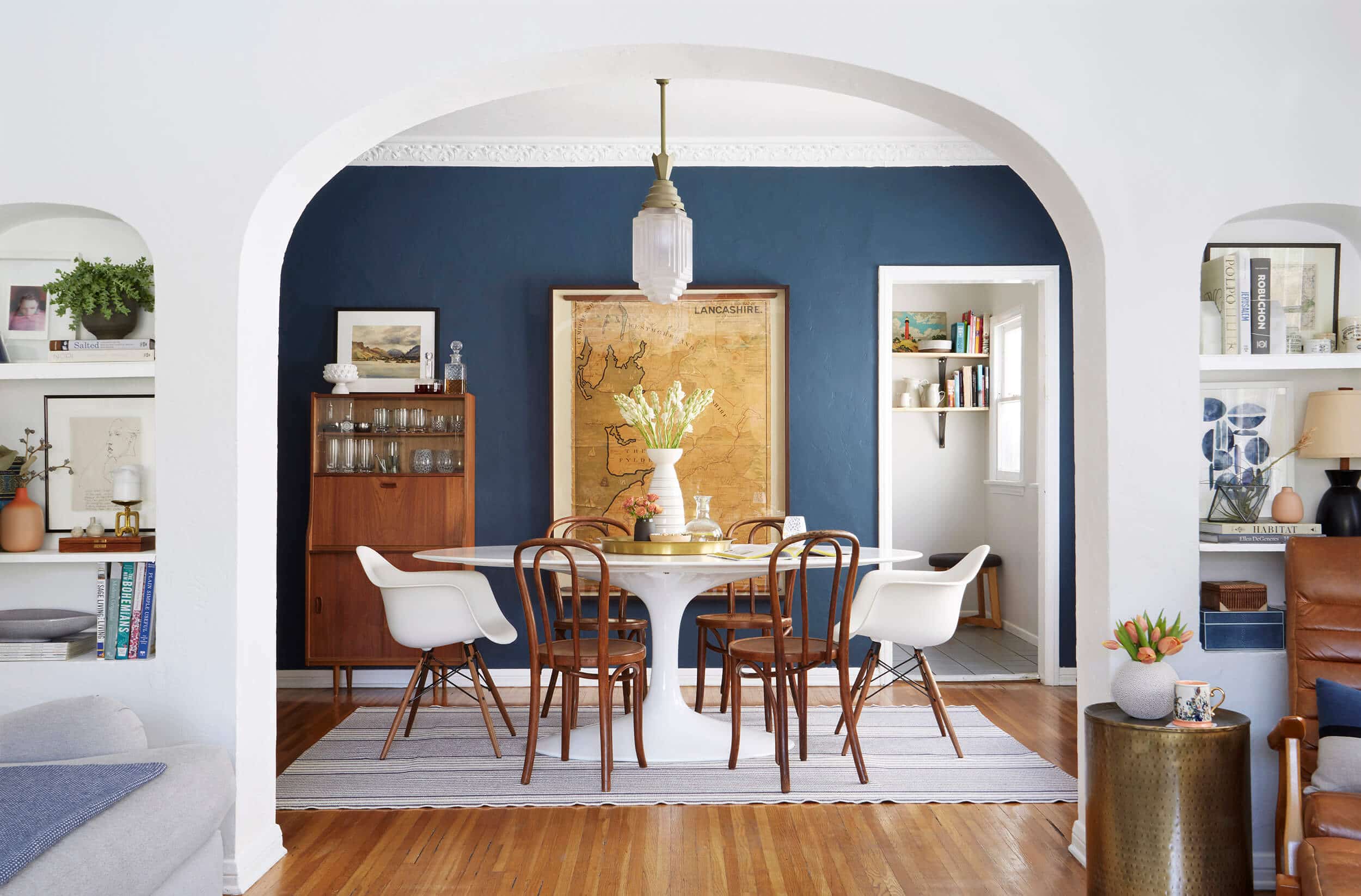
I fell in love with mixed dining chairs long before I had a “real” dining room. In my grandparents’ 1960s house, nothing felt precious, but everything felt thoughtful. A Danish-style table lived happily with whatever chairs were available, and somehow the whole room still read as mid-century. That collected, lived-in feeling is what I chase every time I drag home a lone thrifted chair that is too good to leave behind.
If you have ever scored two perfect chairs, then realized you need four more and the matching set is nowhere to be found, this guide is for you. Mixing mid-century modern dining chairs is less about breaking rules and more about choosing one or two things to keep consistent so the differences look deliberate, not chaotic.
The simple formula: pick your anchors
Before you think about specific chair styles, decide what will act as the visual “glue.” I like choosing two anchors from this list. Usually, two is enough. Once you go beyond that, the mix can start to feel busy instead of relaxed.
- Wood tone (walnut, teak, oak, painted black)
- Silhouette (all low-slung, all spindled, all sculptural)
- Seat material (all upholstery, all wood, all woven or cane)
- Leg shape (tapered legs, sled base, metal hairpin)
- Color story (all neutrals, or one bold accent repeated)
Example: If your table is walnut, you might anchor with warm woods plus simple tapered legs. That gives you freedom to mix backs, upholstery, and even decades while still reading as one intentional set.
Start with the table
The table is your biggest surface area, so it sets the tone. In a mid-century dining setup, the table usually falls into one of these camps:
- Warm wood slab (walnut or teak, rectangular or oval)
- Round pedestal (wood or laminate top with pedestal base)
- Laminate top (often with metal edging or wood trim)
- Glass top (with sculptural wood or metal base)
Once you name your table type, pick one “lead chair” style that feels most natural with it. This becomes your reference point for scale, seat height, and overall vibe.
Quick fit checks
- Seat height: As a typical starting point, many dining tables are around 28 to 30 inches tall, and many dining chairs land around 17 to 19 inches at the seat. When you mix chairs, keep seat heights close so no one looks perched or sunk.
- Arm clearance: If you want any armchairs, make sure they can slide under the table apron or sit comfortably at the ends without looking jammed.
- Visual weight: A thick, hefty table base needs chairs with some presence. A delicate table looks best with lighter, airier chairs.
Three mixing methods that work
1) Same family, different cousins
This is the easiest place to start. Keep chairs within the same general MCM language, then vary details.
- Mix spindle backs in two slightly different patterns
- Mix molded plywood styles with similar curves
- Mix Danish-inspired teak chairs with different back heights
This method is perfect if you want variety, but still want the room to read like a set from across the room.
2) Sides match, ends are special
Classic, timeless, and very forgiving. Use four matching chairs (or two pairs) on the long sides, then add two statement chairs at the head and foot of the table.
- Side chairs: simple teak frames with upholstered seats
- End chairs: sculptural armchairs, cane backs, or a bolder color
The end chairs can be your permission slip to introduce a new material like chrome, black painted wood, or even a subtle pattern.
3) Two pairs, alternating
If you thrift often, pairs happen more than full sets. Two pairs can look surprisingly polished when you alternate them.
- Alternate Pair A and Pair B around a rectangular table
- On a round table, group pairs across from each other for symmetry
Tip from my own dining nook: alternating works best when the two pairs share at least one anchor, like the same wood tone or similarly tapered legs.
How to mix wood tones
Mid-century rooms are famous for warm wood, but not all warm wood is the same. Teak often leans honey and orange. Walnut typically runs deeper and browner. Oak can skew golden. (And all of this depends on finish, age, and how much sun that piece has seen.)
A dependable approach
- Keep woods in the same temperature: warm with warm, cool with cool.
- Repeat the “odd one out”: if you introduce black chairs, use another black element nearby (a frame, a pendant, a credenza detail).
- Use a bridge material: cane, neutral upholstery, or metal legs can visually connect different woods.
If you are working with thrifted pieces and you are unsure what wood you are looking at, Century Hue’s guide to spotting authentic mid-century modern wood furniture is a helpful refresher. And if you are dating pieces across decades, I also lean on 1950s vs 1970s clues when I am trying to keep a dining set from feeling time-travel-y.
Mixing materials
Material mixing is where an eclectic dining setup gets that editorial, collected look. It is also where comfort shows up, which matters if you actually sit and linger at your table.
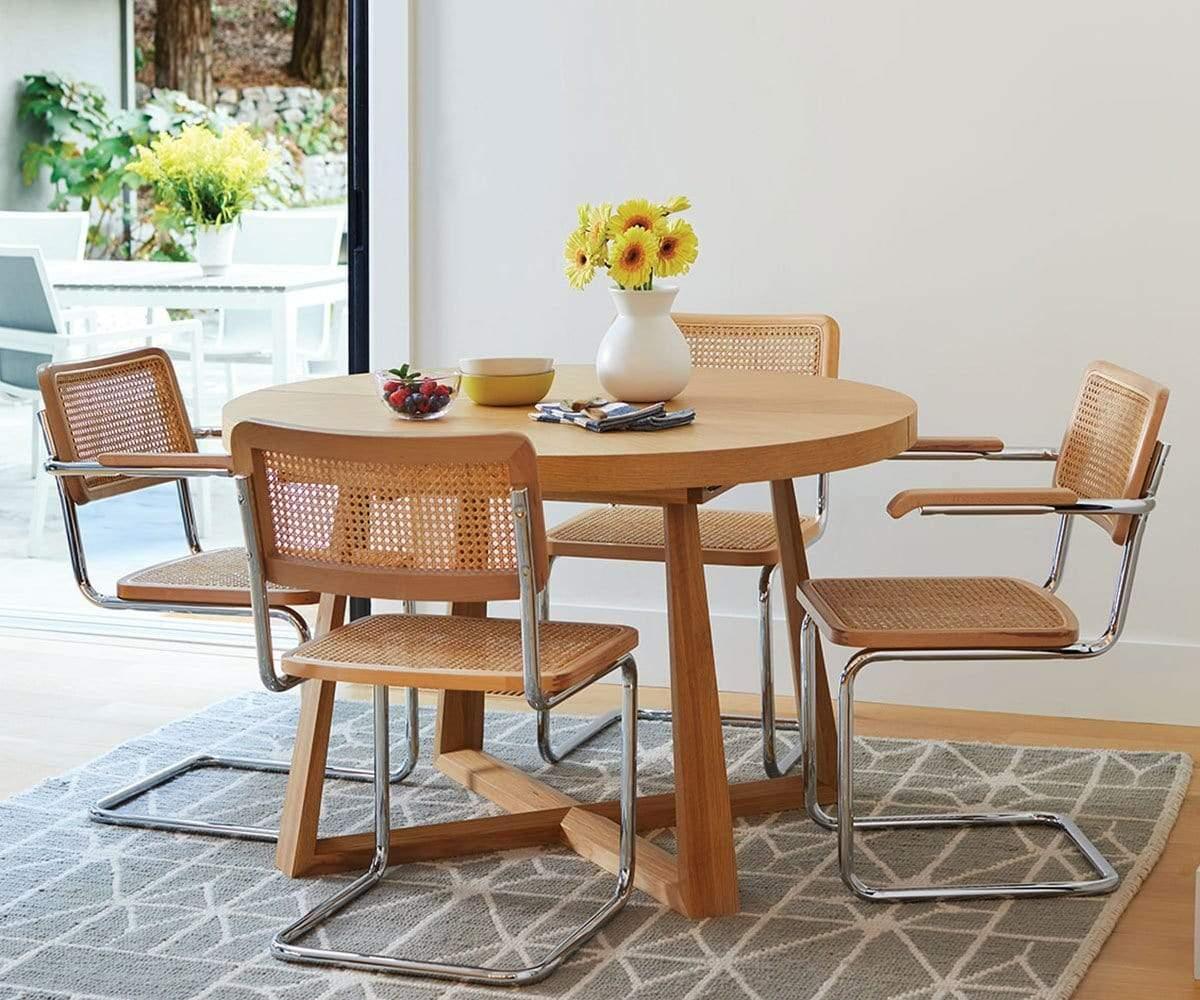
Cane and woven seats
- Best with: warm woods, soft neutrals, textured rugs
- Keep it pulled together by: repeating cane at least twice (two chairs, or chairs plus a cabinet door panel)
Upholstered seats
- Best with: mixed wood tones, when you need comfort, when your table is visually heavy
- Keep it pulled together by: using one upholstery color across multiple chairs even if the frames differ
All wood seats
- Best with: a clean, minimal MCM look, smaller spaces where you want visual simplicity
- Keep it pulled together by: matching sheen level (all matte, all satin) so the mix feels intentional
Metal frames
- Best with: laminate tops, glass tops, and more atomic-leaning rooms
- Keep it pulled together by: choosing one metal finish, or deliberately mixing finishes in a controlled way
If you love the look of mixed metals, you will want my full breakdown of mixing brass, copper, and chrome in mid-century modern style. The same “repeat it twice” rule that works for lighting also works for chair legs and hardware nearby.
Color strategy
If your chairs are all different, color is what keeps the room from feeling like a thrift store aisle. My personal rule of thumb is 70 percent neutral, 30 percent intentional color. It is not a law. It is just a reliable way to keep the mix calm.
Easy color recipes that feel mid-century
- Walnut plus cream plus olive (grounded and earthy)
- Teak plus warm white plus rust (sunny, 1960s cozy)
- Black accents plus tan plus brass (graphic and grown-up)
- Neutral chairs plus one saffron or teal pair (playful without shouting)
When I am torn between going earthy or going jewel-toned, I think about the rest of the room’s “temperature.” This piece on earth tones vs jewel tones in mid-century style explains that balancing act in a way that makes decision-making so much easier.
Scale and silhouette
You can mix almost anything if the chairs feel like they share a similar scale. That means:
- Back height: Keep them within the same general range. One dramatically taller chair can look like it wandered in from another room.
- Seat width: Mixed widths are fine, but avoid one chair that is significantly bulkier unless it is an end chair.
- Leg thickness: Spindly legs and chunky legs can mix, but use them with purpose, like chunkier chairs at the ends.
A quick trick I use
Stand behind your table and look at chair backs only. If the “horizon line” of the tops feels calm and intentional, you are in good shape. If it looks like a jagged skyline, swap chairs until it settles down.
Comfort and function
Mixed chairs should not just look good. They should feel good, too. When I am deciding whether a chair earns a spot at the table, I check a few comfort basics:
- Seat depth: If one chair has a much deeper seat, it can feel like you are leaning back while everyone else sits upright.
- Back angle and height: Two chairs can be the same style, but one might have a more reclined back. That is fine, but I try to group similar “sit feelings” on the same side of the table.
- One less-comfy chair: If I love it but do not love sitting in it for two hours, I use it as an end chair, a desk chair, or a “pull up when we need it” extra.
This is also why I never buy dining seating without a quick structure check. A tiny wobble becomes a daily annoyance fast, especially in a mixed set where you notice differences more. If you want a checklist, start with structural red flags to avoid.
Layout ideas
Rectangular table
- Safest: matching chairs on the long sides, statement chairs at the ends
- Eclectic: alternate two pairs along each side, keep end chairs matching
- Super collected: all different chairs, but repeat two anchors (like black frames plus cane seats)
Round table
- Safest: four matching chairs, or two matching pairs opposite each other
- Eclectic: three of one style plus one “odd” chair, but only if the odd chair repeats a color or material elsewhere in the room
Oval table
- Best mix: treat it like a rectangle but softer. Two special end chairs look especially good here because the table already has a gentle, sculptural feel.
Thrift-smart tips
Most of my favorite dining setups have been built slowly, one rescue at a time. If you are doing the same, a little strategy saves money and frustration.
- Buy the chair that fits your body first. Comfort is your baseline, especially if you work from the table or host long dinners.
- Photograph your table and bring measurements. Seat height and arm clearance matter more than a pretty backrest.
- Check joints and structure. A gorgeous chair with wobble becomes a project fast.
- Learn to price check before you commit. A single chair can be a steal or wildly overpriced. I keep this guide bookmarked: how to price check vintage mid-century thrift finds.
- Be open to reupholstery. Ugly fabric is often a gift, not a flaw. It can drop the price and give you freedom to choose your own color story.
If you are chasing pairs and singles online, the right wording makes all the difference. This post on secret search terms for mid-century modern on Facebook Marketplace is exactly how I find listings other people miss.
Finish and repair notes
Finish is one of those sneaky details that makes mixed chairs look either charming or slightly off. If I am mixing finishes, I try to make it a choice, not an accident.
- Oiled teak and walnut: If a piece looks dry and chalky, a light clean and re-oil can bring it back so it holds its own next to richer tones. If you want a deeper dive, restore a vintage teak sideboard finish covers the approach I use most often.
- Patina: I do not chase perfect. A little wear reads authentic, especially in a mixed set. I just want everything to look cared for.
- Sheen mismatch: Glossy polyurethane next to a soft oil finish can look like two different worlds even if the wood tones are similar. If you cannot refinish, I use a “bridge” (neutral cushions, a table runner, or a rug) to smooth the jump.
Kid and pet reality
If your dining room is a real-life zone (same), mixed chairs are actually your friend. You can choose comfort where you need it and durability where you need it.
- Wipeable fabrics: Tighter weaves and darker tones forgive a lot.
- Performance-style upholstery: Great if you want the softness of fabric without constant stress.
- Wood seats in the splash zone: If one side of your table gets the most spills, I like putting the easiest-to-wipe chairs there.
And if you are buying vintage upholstered chairs, this guide on buying vintage mid-century upholstered furniture is worth a quick read before you commit.
Common mistakes
Mistake: too many statement chairs
Fix: Let two chairs be special, then quiet the rest down with simpler frames or matching upholstery.
Mistake: mixing undertones that fight
Fix: If your woods feel off, add a neutral cushion or slip-on seat pad temporarily and see if bridging the tones calms everything down. If it does, you have a path forward with upholstery or refinishing.
Mistake: chair styles from wildly different design languages
Fix: Keep the mix within mid-century lanes. If one chair reads farmhouse or ornate traditional, it will look like an accident unless the whole room is intentionally eclectic.
Mistake: ignoring sheen
Fix: A glossy black chair next to matte oiled teak can look mismatched even if the shapes work. Try to keep sheen consistent, or make gloss a repeated accent.
My starter set
If you want a reliable blueprint, here is one I return to again and again, especially in real-life homes where kids, pets, and daily dinners happen.
- Table: warm wood (walnut or teak)
- Side chairs (4): simple teak frames with upholstered seats in a neutral
- End chairs (2): black painted or darker walnut armchairs, or cane-back chairs
- Unifier: one rug that ties the woods together, plus a simple centerpiece that repeats the darkest tone
It looks collected, it hides the fact that you did not buy a matching set, and it still feels unmistakably mid-century modern.
FAQ
Do dining chairs have to match the table wood?
No. They just need to look like they are in conversation. If the chairs do not match the table, repeat a connecting element somewhere else, like a similar wood tone in a credenza, picture frames, or a lamp base.
Can I mix eras, like 1950s chairs with a 1970s table?
Absolutely, and it can look fantastic. Keep your anchors consistent, and watch the silhouette. A chunkier 1970s table often pairs best with chairs that have a bit more visual weight.
How many different chair styles is too many?
For most dining rooms, three styles is the sweet spot. Four can work if you repeat colors and keep silhouettes similar. Beyond that, it usually reads more hectic than relaxed.
If you are building your dining set the way I do, one lucky find at a time, give yourself permission to be a little imperfect. Mid-century homes were lived in. The magic is in that mix of practicality and personality, when your chairs look like they all have stories, even if they did not start out together.
And if you are hunting for the next two “missing” chairs, estate sales are still my favorite way to find mid-century seating that can be less picked over than some shops, depending on your area. This guide to estate sales for mid-century modern decor is how I plan my weekends when I am serious about scoring something good.