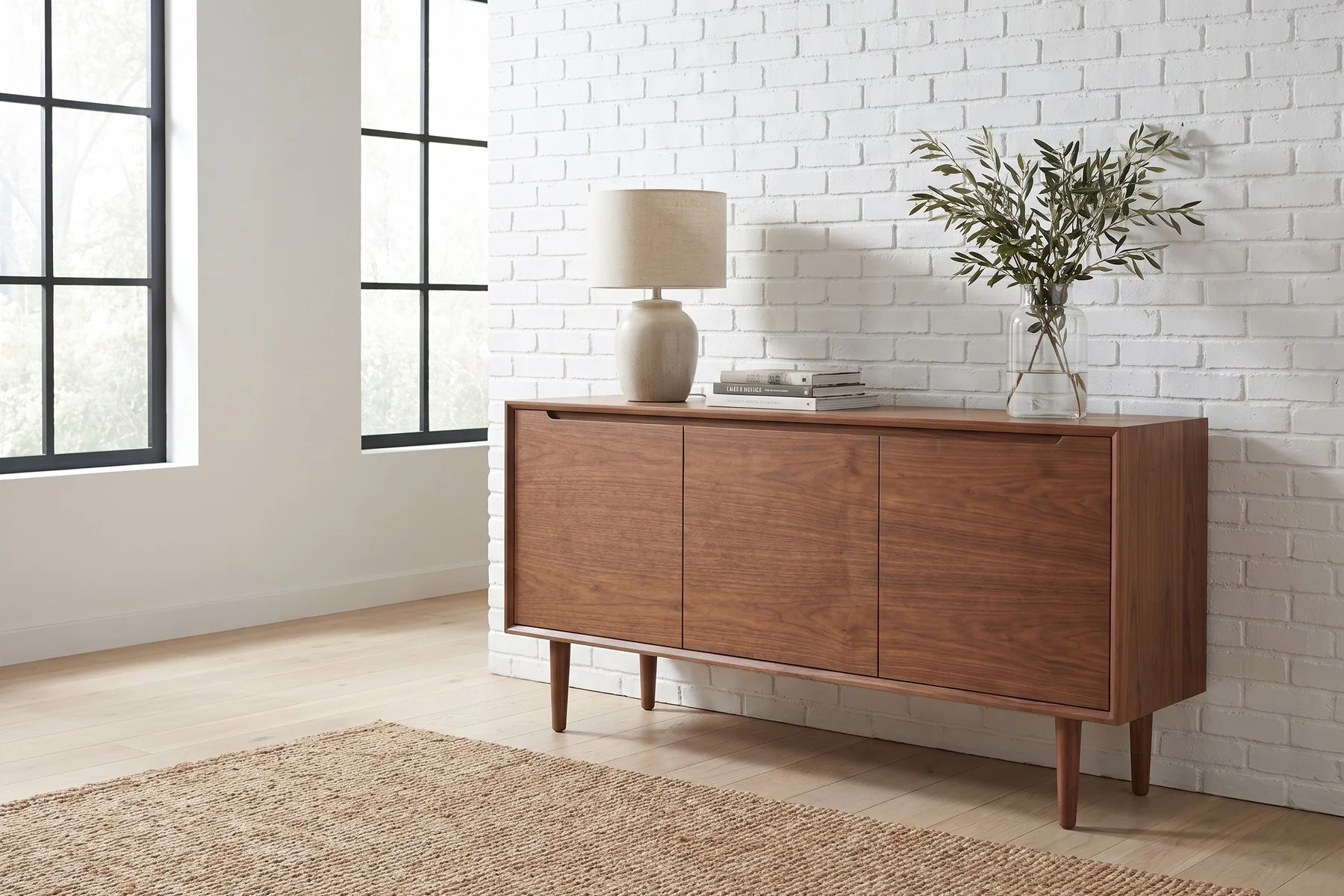

I still remember running my fingers along my grandparents’ walnut coffee table as a kid, tracing the soft curve of its edge like it was a secret map. Years later, I do the same thing in thrift stores and estate sales, except now I’m hunting for clues. Is this a true 1950s piece with that optimistic, postwar lightness, or a 1970s cousin with heavier shapes and warmer, moodier finishes?
The tricky part is that both decades get lumped into “mid-century” in listings and price tags. This guide is how I date thrift finds fast, using the design shifts you can actually see and feel: silhouettes, materials, hardware, and construction details that tend to whisper their decade if you know what to listen for.
Think in vibes first: 1950s vs. 1970s at a glance
Before you flip anything over to look for stamps, take ten seconds to absorb the overall vibe. It sounds unscientific, but it works because each decade had a different design mood, and most pieces follow the mood of their moment even when details overlap.
| Clue | More common in the 1950s | More common in the 1970s |
|---|---|---|
| Overall feel | Light, airy, optimistic, minimal | Cozy, grounded, loungey, “conversation pit” energy |
| Silhouette | Long lines, tapered legs, floating forms | Chunkier bases, deeper seats, heavier visual weight |
| Wood tone | Natural-looking finishes, often medium-toned woods | Warmer amber clears or darker stains, sometimes higher contrast |
| Materials | Solid wood + veneer, subtle brass, early plastics | Laminate shows up more often, acrylic, smoked glass, upholstered volume |
| Patterns | Atomic, boomerangs, starbursts, small-scale geometrics | Large-scale geometrics, earthy florals, bold stripes, textural weaves |
If a piece feels like it belongs beside a slim-legged Danish credenza and a Sputnik clock, I start with “50s.” If it feels like it wants shag, smoked glass, and a low, deep sofa you could melt into, I start with “70s.” Then I confirm with details.
Silhouettes that date a piece fast
Legs and bases
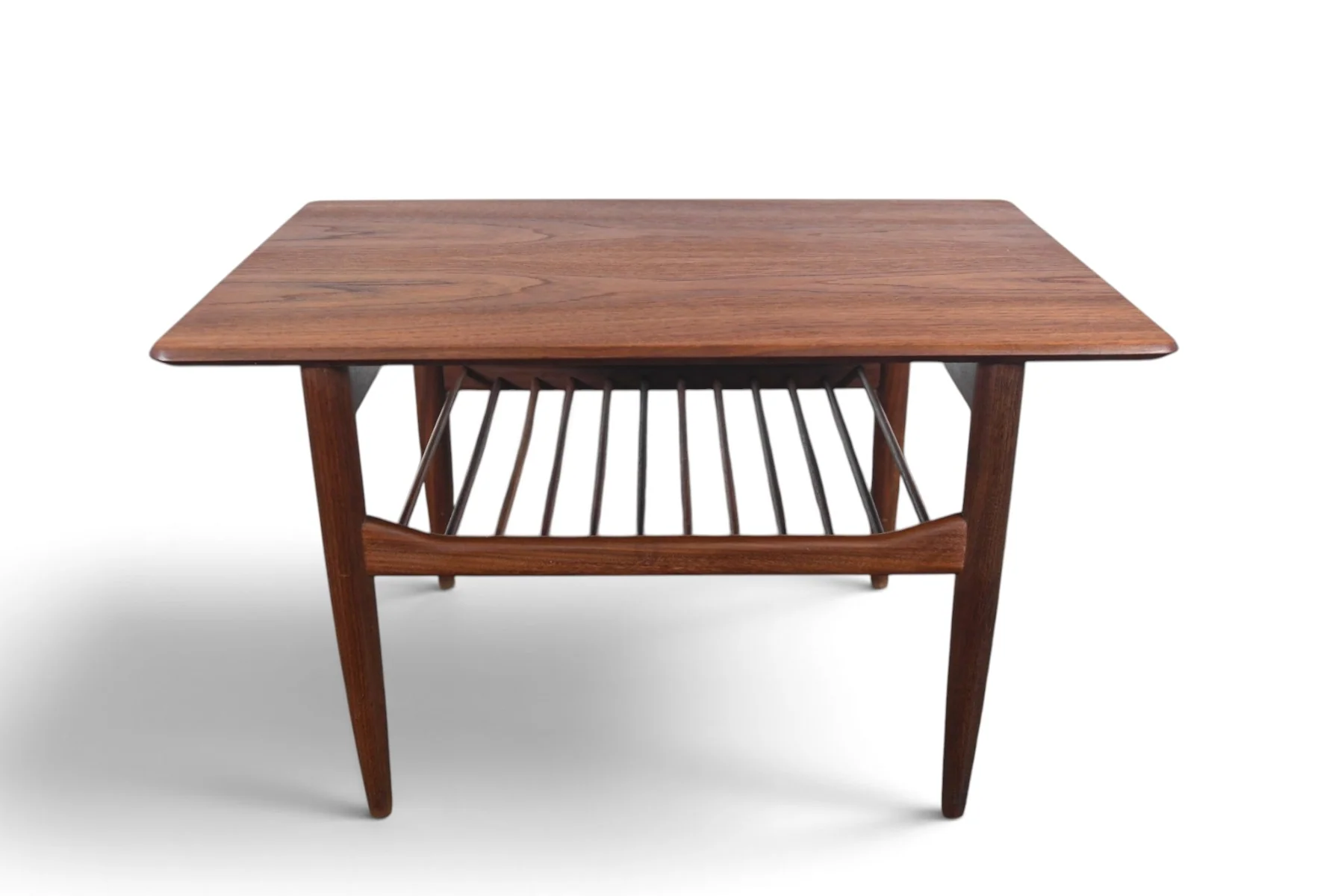
- 1950s: Tapered legs, angled “compass” legs, delicate stretchers, furniture that looks like it’s hovering. Even larger case pieces often sit on slender legs or a lighter-looking apron that keeps visual weight off the floor.
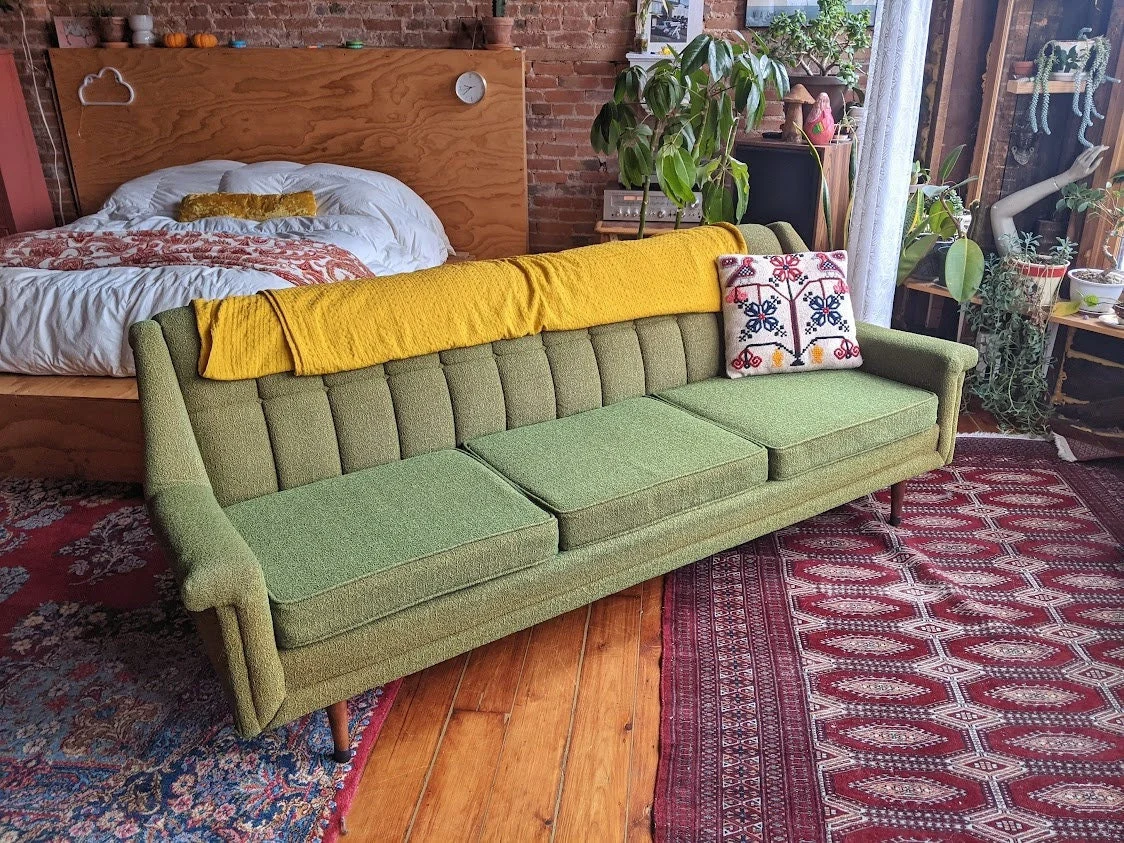
- 1970s: Full plinth bases, sled bases, pedestal forms, or blockier legs. You’ll also see more pieces sitting lower and feeling more grounded, especially lounge seating.
Edges and profiles
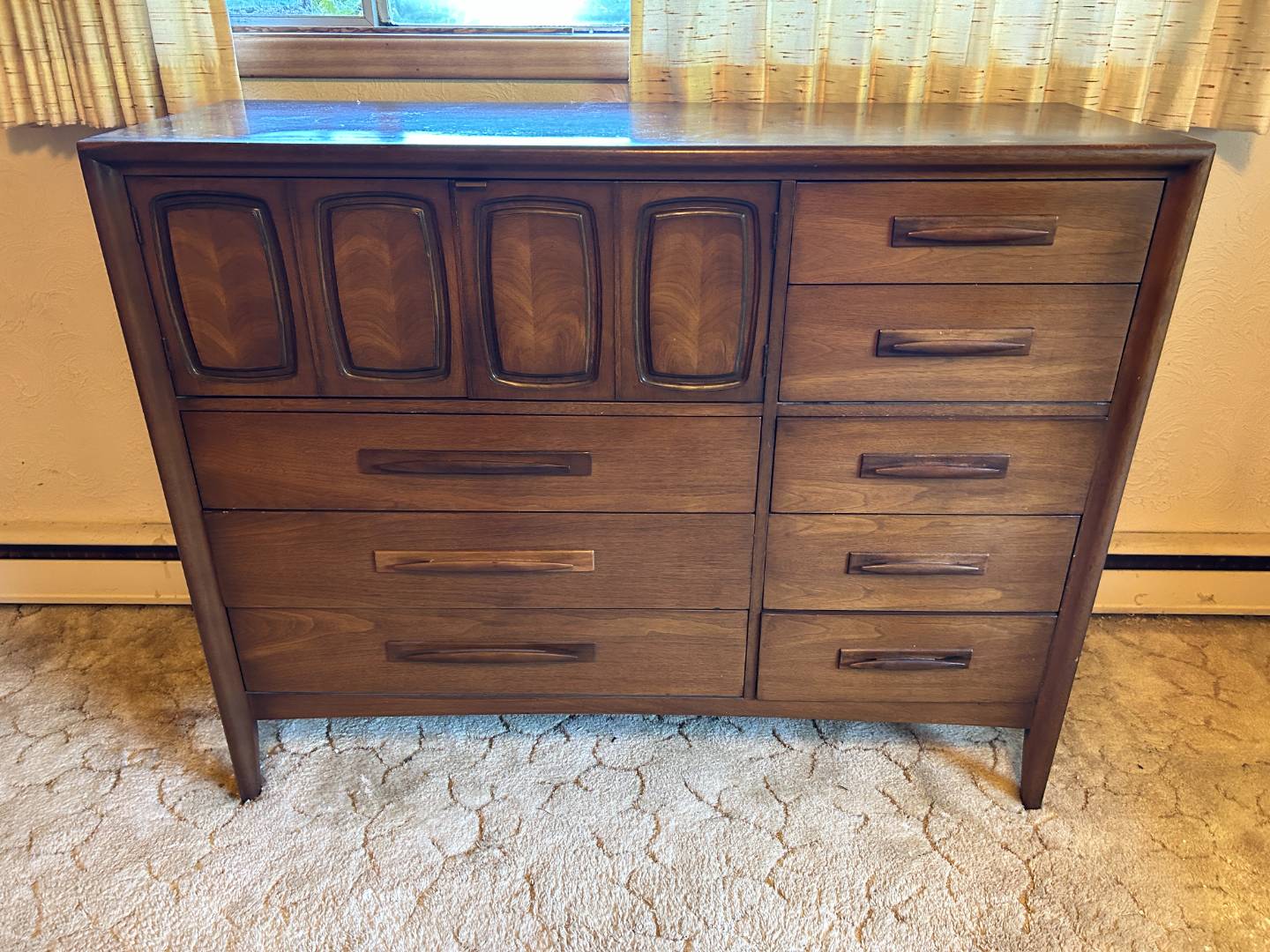
- 1950s: Refined edge details, gentle round-overs, thinner-looking tops, sculpted pulls, and profiles that feel tailored.
- 1970s: Thicker tops, bolder rounding, chunkier rails, and “softer” visual mass. Even when it is modern, it often reads cushier and more substantial.
Seating proportions
- 1950s: Higher seat heights, slimmer arms, tighter upholstery, more exposed wood frames.
- 1970s: Deeper seats, wider arms, more overstuffed forms, and modular sectionals. If it looks built for a long record listening session, I start leaning 70s.
Materials and finishes: what your hands can tell you
Wood species and veneer habits
Both decades used veneer heavily, so veneer alone does not date a piece. What helps is how the veneer is used, what it is paired with, and which market the piece seems to come from.
- 1950s: In a lot of U.S. furniture, walnut is a very common tell, along with maple, birch, oak, and mahogany depending on the maker and region. Teak shows up too, and it becomes especially noticeable as Scandinavian and Danish modern influence ramps up in the later 1950s and into the 1960s. You’ll often see thoughtfully matched veneer patterns on drawer fronts and cabinet doors.
- 1970s: Stained finishes are common, and you see mixed-material looks more often, especially in mass-market lines. Laminate appears frequently on some case goods, and a warmer, amber-clear finish can push everything toward honeyed tones even when the wood underneath varies.
Metal and glass clues
- 1950s: Brass accents show up, along with understated metal details and clearer glass that keeps things visually light.
- 1970s: Chrome and shiny metal elements are popular in many 70s interiors, but chrome alone is not a decade stamp since it appears across modern design for decades. The stronger 70s combo is chrome plus smoked glass or mirror, paired with low, loungey proportions.
Plastic and molded forms
Early plastics appear earlier than people think, but the look shifts over time.
- 1950s: Crisper, “space age” molded shapes and cleaner, brighter colors often read earlier.
- 1970s: More earth-toned plastics, acrylic moments, and forms that feel thicker, more rounded, or more sculptural.
If you’re styling your find once you get it home, finishes change the whole room. I keep my color decisions grounded using the ideas in Earth Tones vs. Jewel Tones in Mid-Century Style and my broader favorites in Color Palettes & Styling.
Hardware: the tiny parts that give away the decade
If I’m only allowed one clue in a thrift store, I pick hardware. Pulls, hinges, and drawer slides are like the piece’s fingerprints. They also tend to survive refinishing better than surfaces do.
Drawer pulls
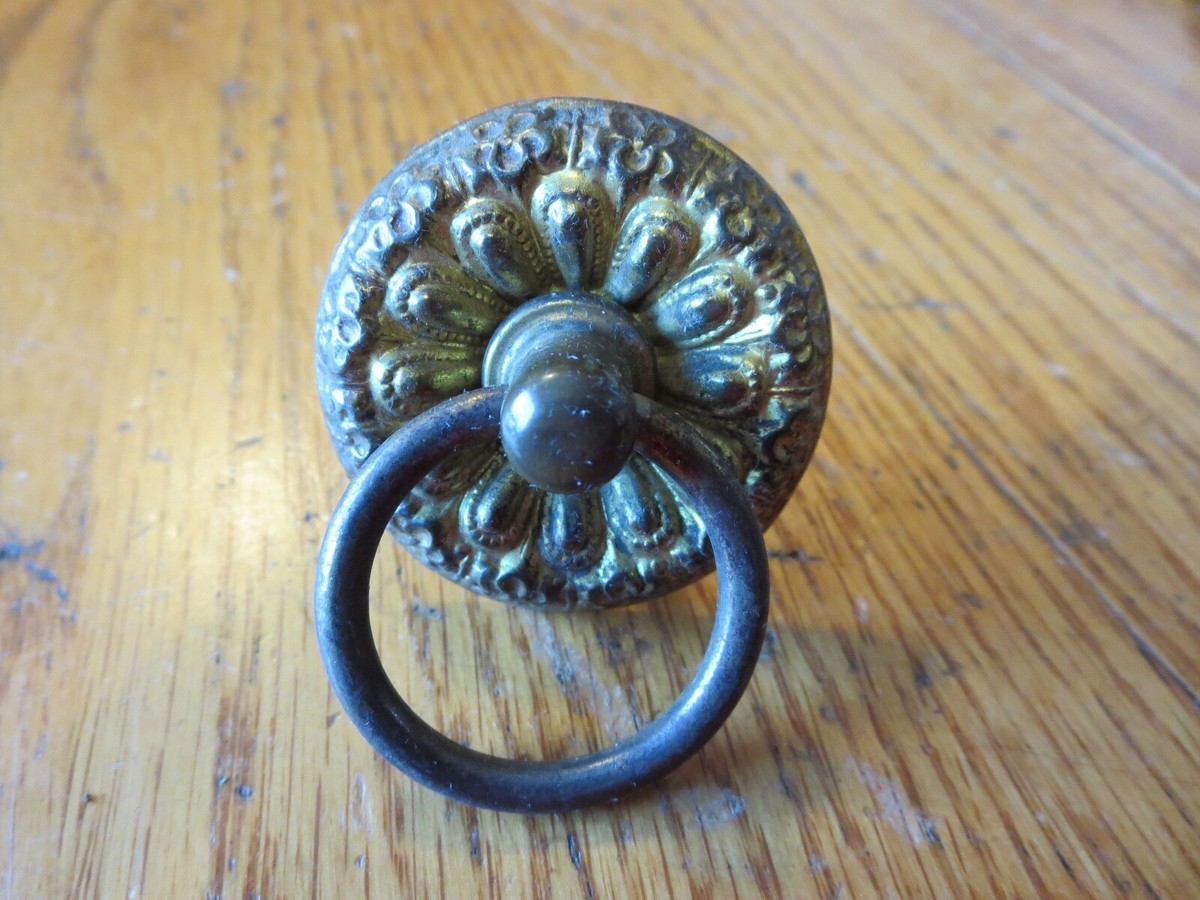
- 1950s: Simple wood pulls, sculpted “wishbone” style pulls, small brass knobs, or minimal recessed pulls. The overall look is usually restrained and integrated.
- 1970s: Bigger pulls are common, including chunkier metal and more pronounced backplates. On many mass-produced case pieces, hardware gets more standardized and more “statement” forward.
Hinges and door catches
- 1950s: Often cleaner-looking door fronts with less visually dominant hardware, depending on the build. You may see a mix of catch types across brands and price points.
- 1970s: You’ll often notice more standardized, mass-produced hardware systems and more consistency from piece to piece within the same furniture line, including magnetic catches and Euro-style hinge solutions on some later examples.
Drawer slides and inside construction
Open the drawer. Look at what the maker didn’t expect you to photograph.
- 1950s: Wood-on-wood slides are common, and better builds often have solid-wood drawer boxes and careful joinery, even when the exterior is simple.
- 1970s: Metal drawer glides show up frequently, and you may see more composite materials in some ranges. It varies a lot by maker and price tier, so I treat it as a supporting clue, not a rule.
If you want a deep dive on what to look for before you buy, I walk through my full inspection routine in Buying Vintage Mid-Century Upholstered Furniture: What to Check.
Construction and joinery: flip it, tilt it, peek underneath
I’m not precious about it in the store. If it is safe to do so, I gently tip and inspect. The underside often tells the truth when the top has been refinished, altered, or swapped.
What often reads earlier (1950s)
- Visible craftsmanship and cleaner interior finishing, even if simple
- Solid wood components in stress areas (legs, rails, drawer boxes)
- Well-fitted drawers with less wobble
- Veneer work that looks intentionally matched rather than random
What often reads later (1970s)
- Composite panels on backs and bottoms are common in many mass-market pieces (and composites exist earlier too, so look for a pattern of clues)
- More standardized fasteners and repeatable construction methods across a product line
- Heavier builds designed for deep upholstery or modular configurations
None of this makes a piece “bad.” Some 70s construction is excellent, and some 50s construction is surprisingly modest. The point is simply dating, so you can price and style it realistically.
Labels, stamps, and maker marks: your best hard proof
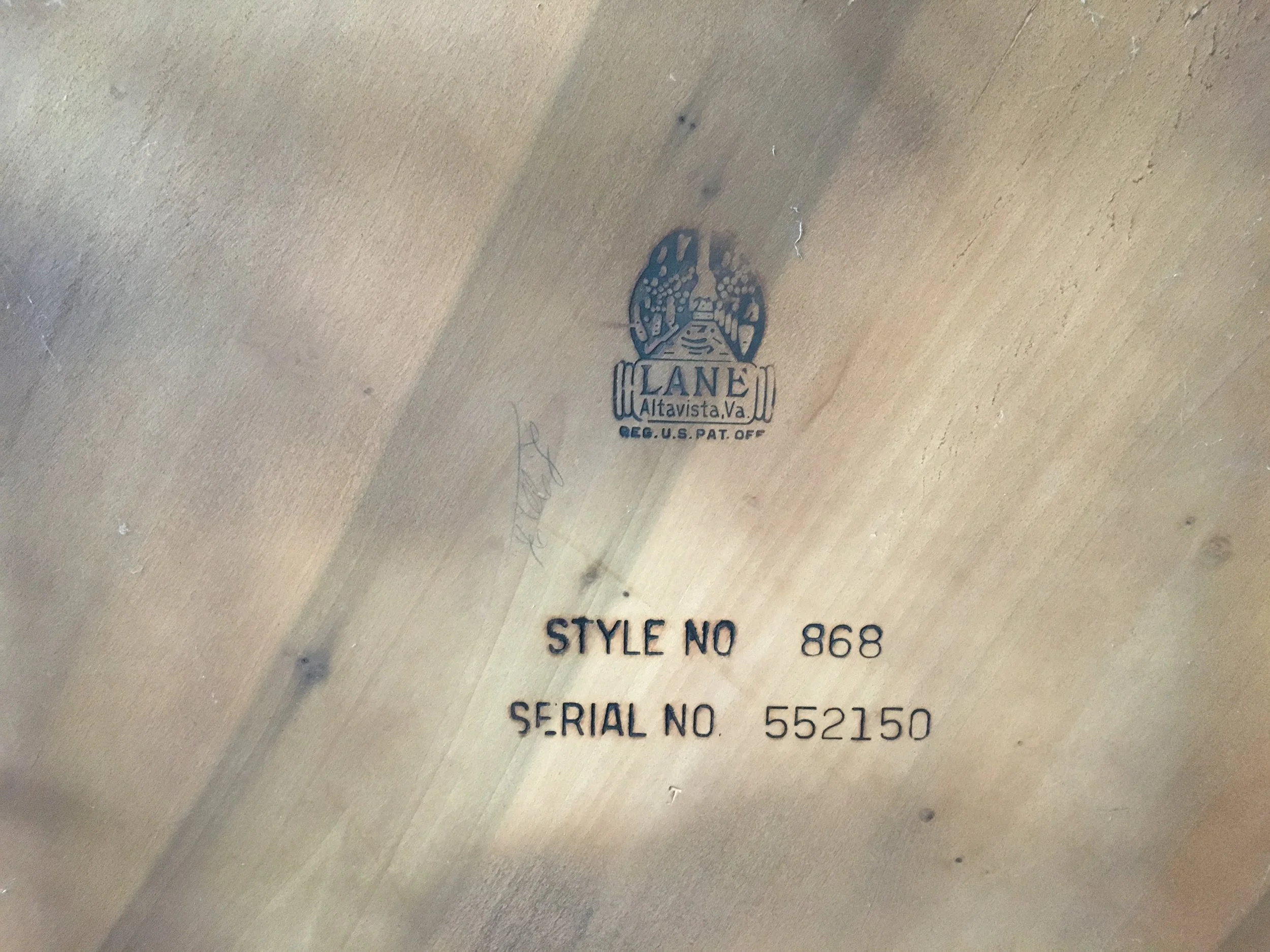
When a find has a mark, I treat it like a mini time capsule. Look under tabletops, inside drawers, on the back of case goods, and along the underside of chair frames.
- Paper labels can be fragile and missing, but when they exist they may include an address, logo, or line name that helps narrow down the era.
- Stamps and branded burns are common on wood pieces and can survive refinishing better than paper.
- Serial numbers sometimes help, especially if the manufacturer’s numbering system is documented by collectors.
I keep a running checklist for marks in my head, but if you want the full walkthrough, start with Mid-Century Maker Marks, Tags, Stamps, and Serial Numbers.
Patterns and color cues
Small thrift finds can be easier to date than furniture because patterns swing dramatically by decade. Lamps, textiles, and ceramics often give you cleaner decade “tells” than a dresser that has been sanded three times.
1950s pattern tells
- Atomic motifs, boomerangs, starbursts, biomorphic shapes
- Playful contrast colors that feel optimistic (turquoise, chartreuse, coral)
- Graphic simplicity with plenty of negative space
1970s pattern tells
- Larger-scale geometrics and bolder repeats
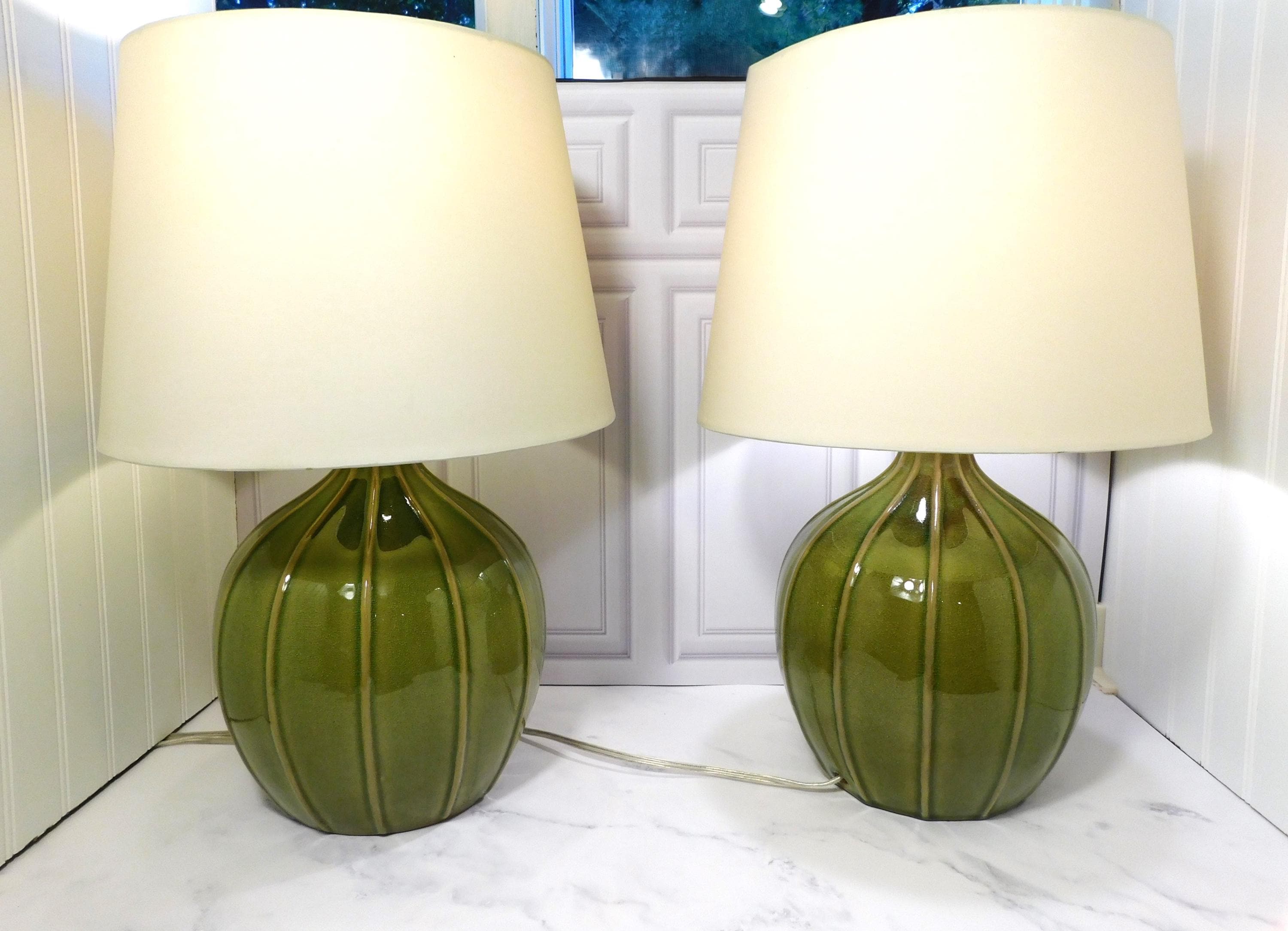
- Earthy palettes (avocado, harvest gold, rust, chocolate, warm cream)
- Texture-forward materials like chunky weaves, macramé, and shaggy pile
If you love hunting the smaller pieces that give a room its soul, you’ll probably enjoy Thrifting Mid-Century Ceramics and Art Glass.
Overlap years and mixed clues
If you keep running into pieces that feel like a 50s silhouette with 70s finishes, you’re not imagining it. Design does not flip like a light switch on January 1.
- Late 1950s into the 1960s: Danish modern influence grows, teak becomes more visible in many markets, and lines can look especially clean and architectural.
- Late 1960s into early 1970s: Proportions start to relax. Seating gets deeper, bases get heavier, and finishes warm up, but a lot of “modern” DNA stays.
- Market differences matter: Scandinavian, U.S., and U.K. production can use different woods, hardware habits, and construction methods in the same years. That’s why I like to stack clues instead of betting on a single detail.
A quick store checklist
When I have five minutes and a shopping cart that already has something ridiculous in it, this is the order I go in:
- Silhouette: tapered and airy (lean 50s) vs. low and chunky (lean 70s).
- Materials: natural wood tones and refined veneer work (often earlier) vs. warmer clears, darker stains, laminate, chrome with smoked glass (often later).
- Hardware: small and integrated (often earlier) vs. larger and more standardized (often later).
- Construction: peek underneath, check drawer slides, look for a pattern of composite parts, check joinery.
- Marks: labels, stamps, serial tags, and any original store stickers.
Once you have a confident decade, pricing gets much easier. My process for sanity-checking value is in How to Price Check Vintage Mid-Century Thrift Finds.
Common look-alikes
“Danish modern” vs. “Danish inspired” 1970s pieces
Plenty of 70s furniture borrowed the clean Danish look, but it can get bulkier. If the piece has Danish-ish lines but feels heavier, with darker stain and chunkier pulls, I consider 70s first, then I hunt for a mark to confirm.
Refinished surfaces that erase the decade
A sand-and-stain makeover can make a 70s piece look lighter, or a tinted polyurethane can make a 50s piece look much darker. That’s why I rely on underside construction and hardware, not just color.
Newer reproductions with mid-century silhouettes
New pieces can still be great, but dating matters when you are paying vintage prices. Reproductions often have very uniform materials, modern screw hardware, and machine-perfect symmetry. True vintage usually has small quirks if you look close.
FAQ
Is 1970s furniture considered mid-century modern?
It can be, especially early 70s designs that continue modernist lines. In the thrift world, “mid-century modern” often gets used as an umbrella. I like to date it honestly because styling and value can differ between decades.
What is the single best way to confirm the decade?
A maker mark or label is the cleanest confirmation. After that, hardware plus construction tends to be the most reliable combo, especially if the exterior finish has been altered.
What if my find shows mixed clues?
That’s normal, especially around overlap years and across different countries of production. If you see both 50s and 70s tells, weigh the “hard” evidence (marks, joinery, drawer slides) more than the “soft” evidence (color and finish).
Where I find the best dateable pieces
For dating practice, estate sales are unbeatable because pieces often come with context, like matching sets, original paperwork, or a home that clearly froze in time. I share my approach in Estate Sales for Mid-Century Modern Decor.
And if you want more places to hunt (especially the less obvious ones), start with 7 Overlooked Local Spots to Score Authentic Mid-Century Modern Furniture and the broader hub at Vintage Hunting & Thrifting.