
I still remember the first time I flipped a thrifted walnut side table upside down in the middle of a crowded estate sale. There it was: a faint ink stamp and a jumble of numbers that felt like a secret message from 1962. I took a quick photo, paid my twenty bucks, and spent that night decoding it at my kitchen table like it was a little design mystery.
That is the fun part of vintage hunting, but it is also the part that can get confusing fast. Maker marks can be missing, half rubbed off, or hiding in the least convenient spot imaginable. Let us walk through exactly where to look, what different types of marks mean, and how to interpret the ones you will see constantly from mid-century brands like Lane, Broyhill, and Kent Coffey.
What counts as a maker mark
When collectors say “maker mark,” they are usually talking about any clue a manufacturer left behind to identify the piece. In the mid-century era, that could include:
- Paper labels (often gold, silver, or black, and often missing)
- Foil or metal tags (nailed, stapled, or glued)
- Ink stamps (black or dark brown ink directly on the wood)
- Burned brands (a heat-stamped logo or name)
- Impressed stamps (pressed into the wood, sometimes without ink)
- Serial numbers, style numbers, and lot numbers
- Drawer stamps or drawer pull labels (especially on case goods)
One important reality check: plenty of authentic mid-century furniture has no surviving mark at all. Labels fall off. Ink fades. Refinishing can erase evidence. That is why your best approach is a mix of stamp hunting and construction detective work.
Where to look first (my 2-minute flip-and-check routine)
If I have only a minute with a piece at a sale or thrift store, this is the order I check, because these are the most common locations and the easiest to miss.
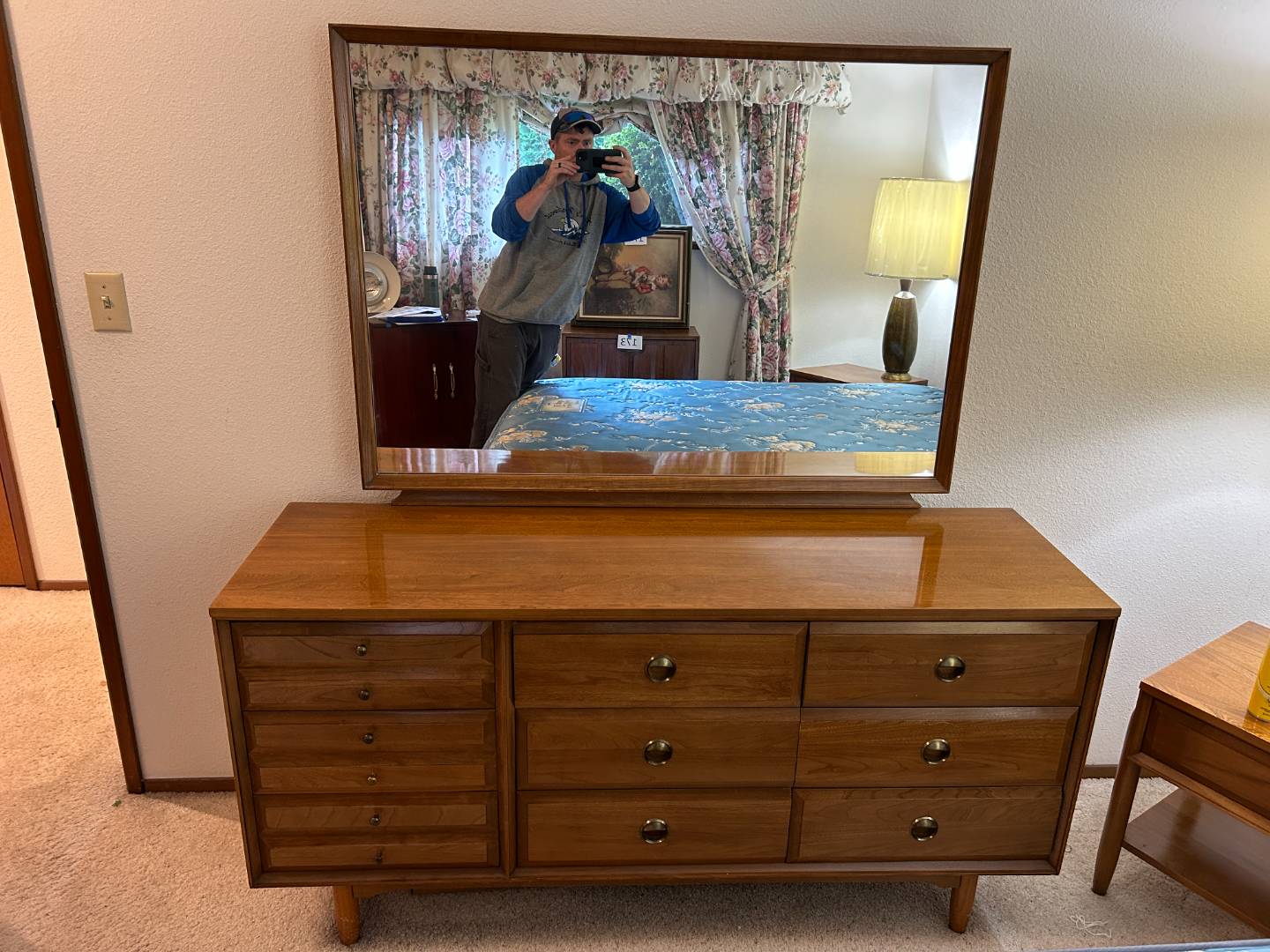
Case goods: dressers, credenzas, nightstands
- Back panel near the bottom edge (inside or outside)
- Inside the top drawer on the side wall or drawer bottom
- Behind the top drawer on the cabinet frame rail
- Underside of the case, especially near a corner
- Inside doors and on the door edge (less common, but it happens)
Once you find a mark, snap photos before you move the piece. I take one close shot and one wider shot that shows the mark’s location on the furniture, because location can matter for authenticity.
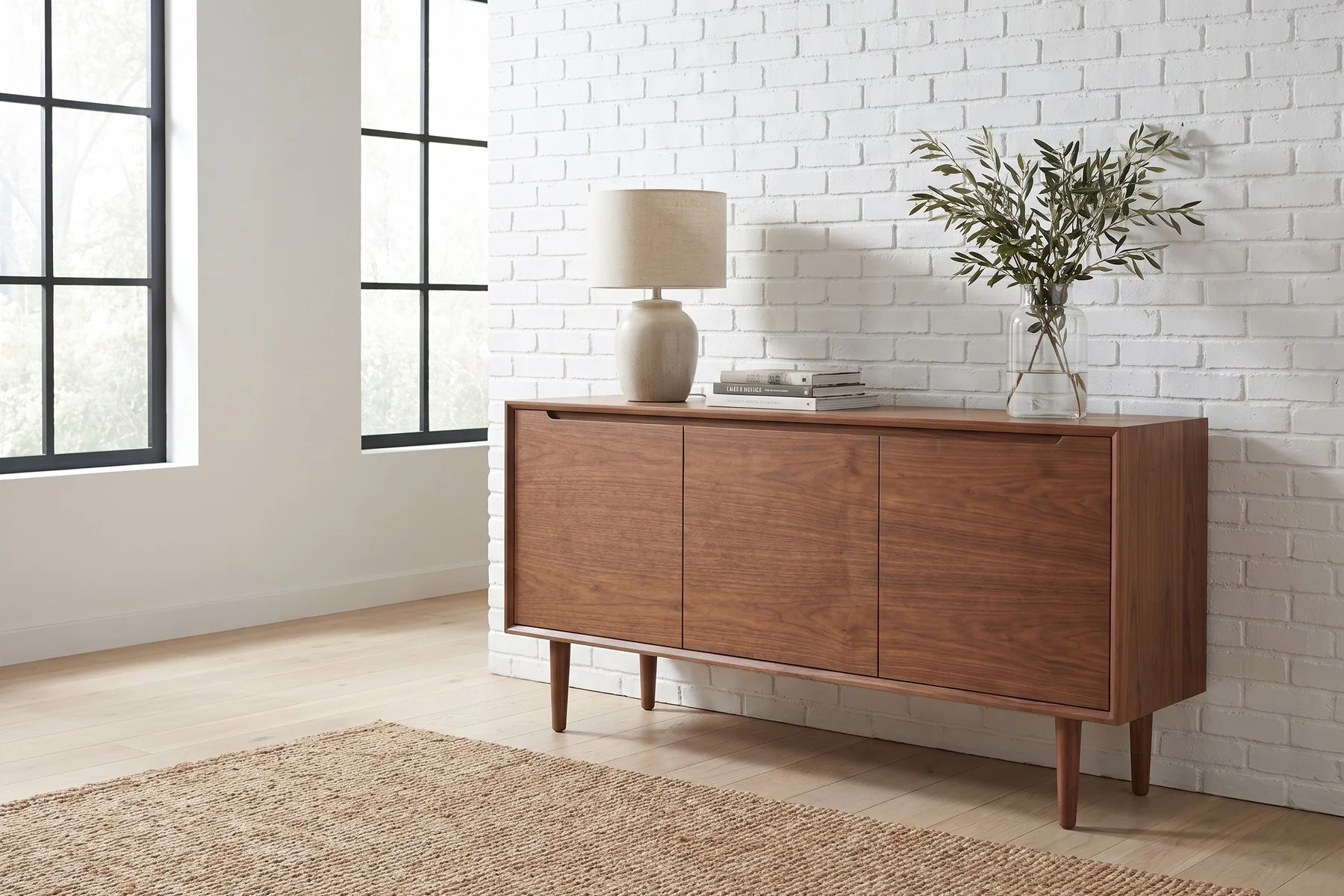
If you are styling a credenza and want it to look original even after you clean it up, you might also like my approach to arranging vintage objects in How to Style a Mid-Century Credenza With Vintage Decor.
Tables: dining tables, coffee tables, end tables
- Underside of the top, especially along the apron
- On the frame near where the legs attach
- Leaf storage area on extension tables
- Under a stretcher or support brace
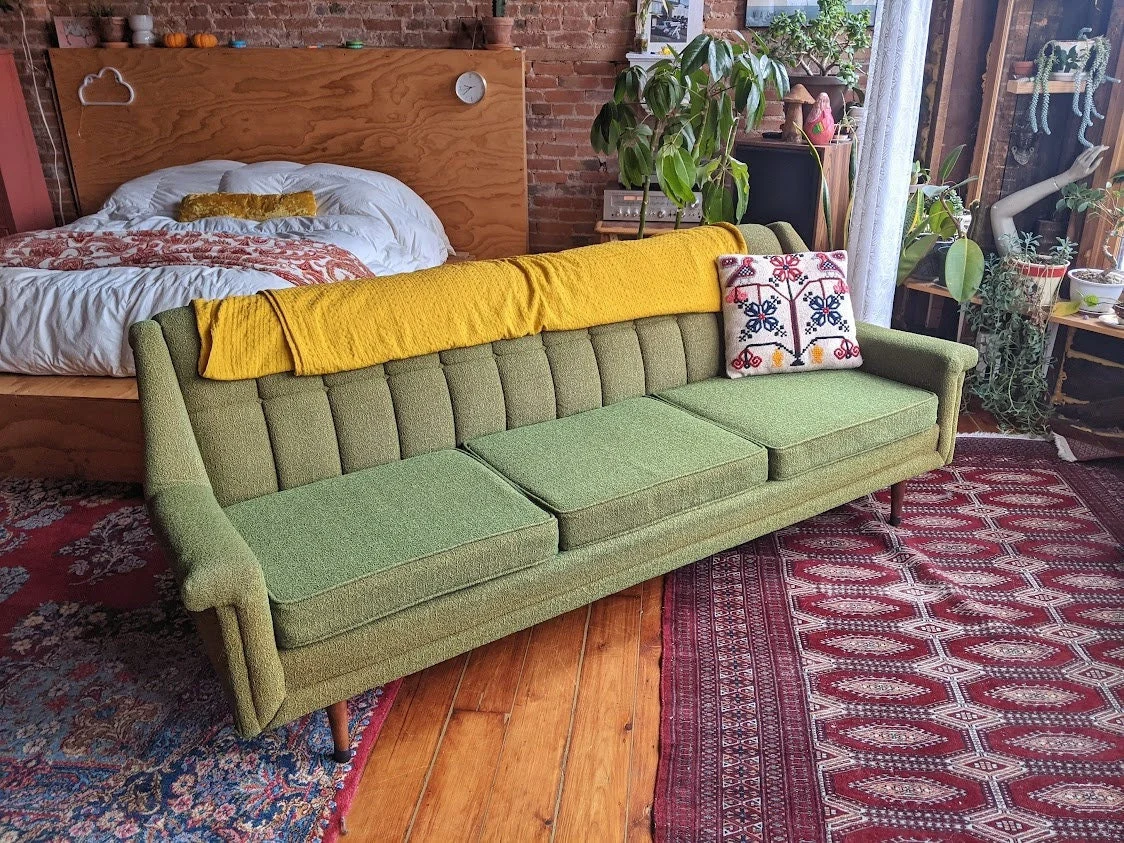
Seating: chairs, loungers, sofas
- Under the seat on the frame (tilt and peek with a flashlight)
- Under dust cover fabric (do not tear it, just look at edges)
- Under cushions on the deck or frame
- Inside the frame near springs on upholstered pieces
With chairs especially, you may find no label but very telling details like dowel joinery, stamped hardware, or period-correct webbing and fasteners.
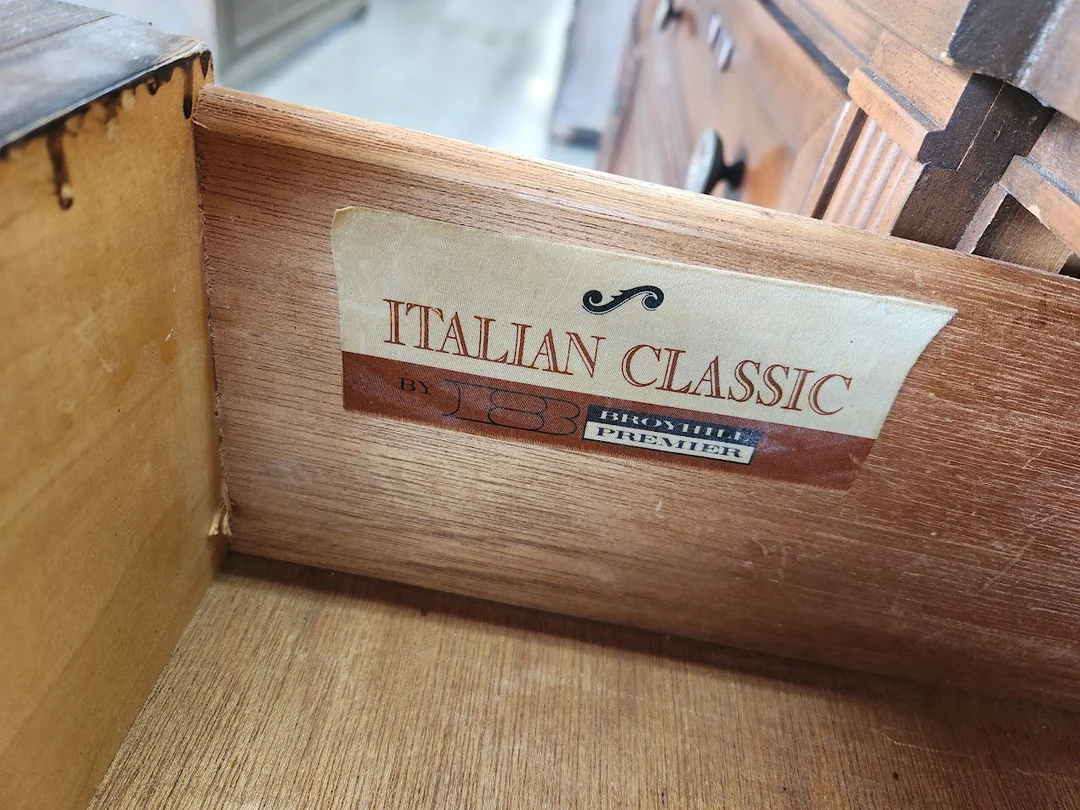
How to read a stamp when you find one
Most maker marks are not just a logo. They are a cluster of clues. Here is how I break it down on the spot.
1) Brand name or logo
This might be obvious (LANE) or subtle (a crown logo, a script emblem). If it is only a logo, search it later using your photo and compare it to confirmed examples.
2) Style number or model number
Style numbers can help you match a piece to catalog images, ads, and collector references. They are usually short and may be labeled “Style,” “No.,” or sometimes just a standalone number.
3) Serial number or batch number
This is where dating sometimes becomes possible. Some brands used serial systems that can be decoded, while others used internal tracking numbers that are harder to translate into a year without supporting evidence.
4) Plant location or manufacturer line
You may see a city and state, “Made in USA,” or a factory designation. This does not automatically mean it is older or more valuable, but it helps confirm the era and company identity.
5) Construction clues nearby
Before you declare victory, look around the stamp area for:
- Veneer edges and how they are finished
- Staple type and hardware patina
- Joinery (dovetails, dowels, corner blocks)
- Drawer slides (wood, metal, or plastic guides)
A crisp, modern sticker on a piece with brand new screws and bright raw wood often means the mark is not telling the full story.
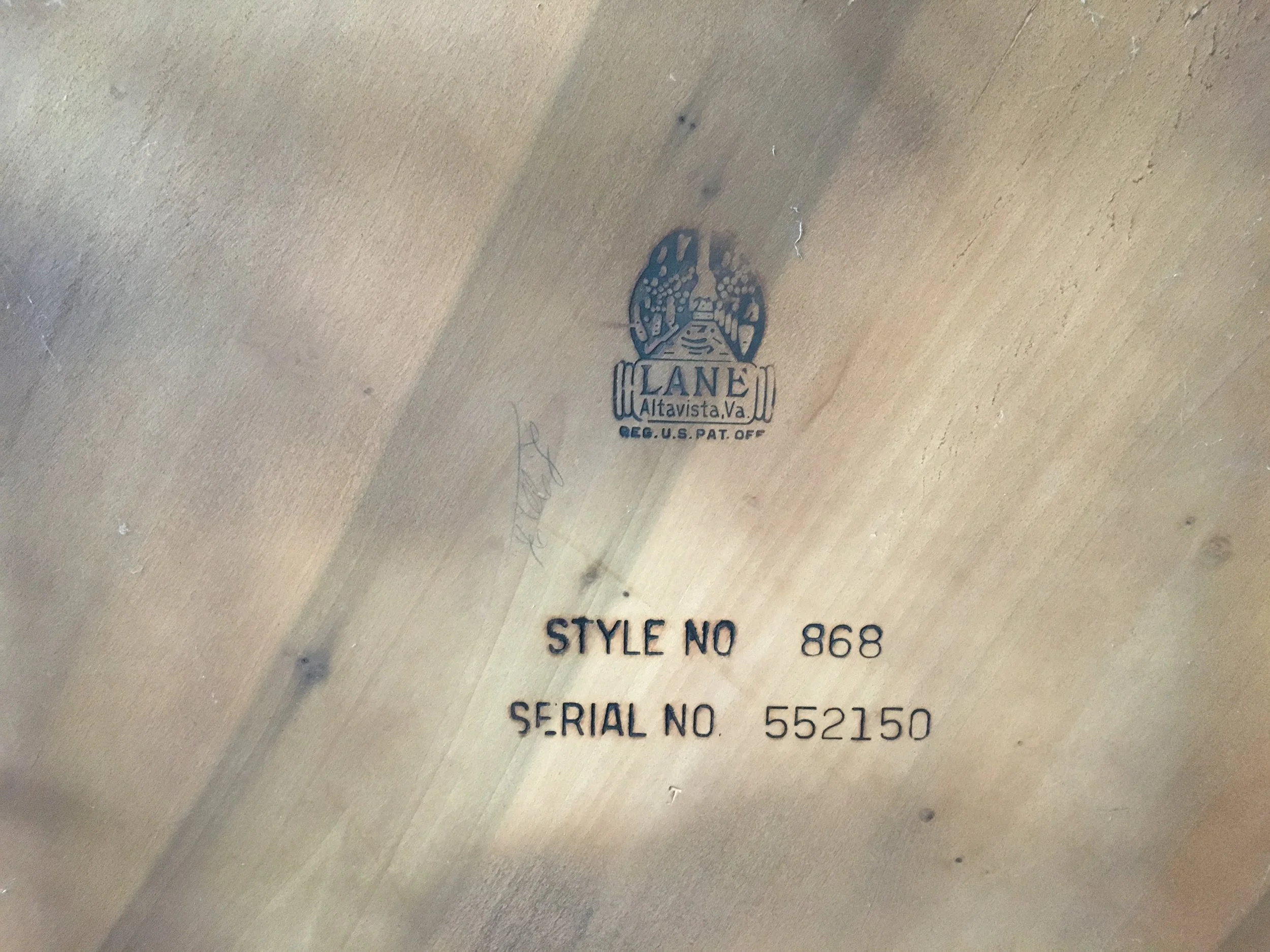
Decoding Lane stamps (the famous reversed date trick)
Lane is one of the happiest stamp finds because many Lane pieces include a serial number that can be used as a date code. The classic collector tip: on many vintage Lane pieces, the serial number is a date written backward.
How it works
If you see a serial number like 15709, reverse it to 90751, then read it as 9/7/51 (September 7, 1951). Many mid-century Lane case goods and tables follow this system, especially in the 1950s and 1960s.
What to watch for
- Not every Lane piece uses the same format. Some numbers are not a clean date when reversed.
- Look for context words. Lane marks often include “Lane” plus “Altavista, Virginia,” and may show “Style” and “Serial.”
- Match the style. If the stamp decodes to 1951 but the piece screams late 1970s, trust your eyes and investigate further.
When the date trick works, it is a great way to confidently describe a piece when you resell it or build out a room with era-appropriate mixes.
Broyhill marks: what you will typically see
Broyhill pieces are common thrift-store victories, and the marks vary by line. Instead of one universal “date code,” you will more often find:
- Paper or foil labels on the back of case pieces
- Stamped logos inside drawers or on the back panel
- Collection names (sometimes present, sometimes missing)
- Style numbers that can help you identify a line
Because Broyhill’s mid-century output spans multiple looks, I rely on a combo of the label and the build details. A true mid-century Broyhill piece usually shows thoughtful proportion, a clean silhouette, and period-correct hardware, even if the label is half gone.
Quick Broyhill authenticity checks
- Drawer construction: look for solid joinery and older drawer bottoms that show age consistent with the case.
- Hardware wear: original pulls tend to show gentle wear in the finish where hands touched for decades.
- Back panels: thin backs are common, but they should look aged, not bright and freshly stapled.
Kent Coffey stamps: common locations and clues
Kent Coffey is another brand where you will often find a stamp or label rather than a clean date code. Typical spots include the back of dressers and inside drawer areas.
What the mark may include
- Kent Coffey name and sometimes a logo
- Style or model number
- Furniture type description (occasionally)
Because labels can be inconsistent, your best friend with Kent Coffey is the overall design language. Many pieces have a distinct “look” within a collection, so if you can identify one confirmed piece, you can often match related pieces by hardware shape, leg profile, and wood tone.

When the mark is missing: how to ID mid-century construction and details
Some of my favorite finds were completely unmarked. If you are stampless, you are not out of luck. Here are the telltale details I lean on.
Wood and veneer patterns
- Walnut veneer was a mid-century staple. Look for bookmatched grain on larger surfaces.
- Teak often has a warm honey tone and a straight, tight grain. It is frequently associated with Danish modern imports.
- Mixed materials like walnut with lighter oak or pecan accents can signal certain American makers and lines.
Joinery and drawer construction
- Dovetail joints can be a quality signal, but not exclusive to mid-century.
- Wood drawer slides and older stop blocks are common on earlier pieces.
- Uniform, modern staples and bright new plywood can suggest a newer reproduction or a heavily rebuilt interior.
Hardware and leg shapes
- Original pulls tend to have softened edges and finish wear that looks natural.
- Tapered legs, sled bases, and integrated pulls are common mid-century motifs.
If you are building a cohesive mid-century look room by room, it helps to keep your metals and finishes feeling intentional. I have a full breakdown in Mixing Brass, Copper, and Chrome in Mid-Century Modern Style.
Red flags that a stamp might not mean what you think
I have seen plenty of pieces where the presence of a label made shoppers assume it was mid-century modern, even when the design clearly was not. A maker mark is a clue, not a magic spell.
- A too-perfect label on a heavily “distressed” piece can mean the piece was altered and the label was added back on or moved.
- Stamps on newly sanded bare wood may be reproduction branding or a transferred mark.
- Inconsistent aging (brand-new screws, fresh MDF, shiny new corner braces) can signal a rebuild.
- “Mid-century style” store tags are not the same as a manufacturer mark from the era.
How I document marks while thrifting (so I can decode later)
If you want to get good at this fast, treat every stamp like a tiny record you are collecting. My system is simple and works on a phone.
- Photo 1: close-up, straight on, with the stamp as sharp as possible
- Photo 2: wider shot showing where the stamp sits on the furniture
- Photo 3: one overall photo of the entire piece for silhouette and proportions
- Notes: dimensions, wood tone, any damage, and where you found it
Once you are home, compare your mark to confirmed examples. If you are restoring, keep your photos, because refinishing can lighten or erase faint ink marks.
FAQ
Are all mid-century modern pieces marked?
No. Many authentic pieces were never labeled, and many labels disappeared over time. Use marks when you have them, and construction plus design cues when you do not.
Does a maker mark guarantee it is valuable?
Not automatically. Value is a mix of brand, rarity, condition, demand, and how well the piece fits a recognizable design era. A clean, well-made unmarked piece can outperform a marked piece in rough shape.
What should I do if the stamp is too faded to read?
Take a photo in natural light at an angle, then try another with a flashlight held low to create shadows that reveal impressed lettering. Avoid scrubbing. Gentle cleaning can erase what is left.
Is it safe to remove drawers to look for stamps?
Usually yes, especially on case goods. Pull slowly, support the drawer bottom with your other hand, and do not force anything stuck. If it feels jammed, check for stops or broken guides.
Keep hunting, but trust your eyes
Maker marks are incredibly satisfying, especially when you crack a Lane serial number and suddenly have a real date in your hand. But some of the best mid-century rooms are built from a mix of labeled classics and unlabeled gems with the right lines, woods, and proportions.
If you are spending more weekends in thrift aisles and estate sales lately, you will feel right at home in Vintage Hunting & Thrifting. That is where I keep all my best “flip it over and look” advice, plus the little tricks I learned the hard way in my 1958 ranch house.