
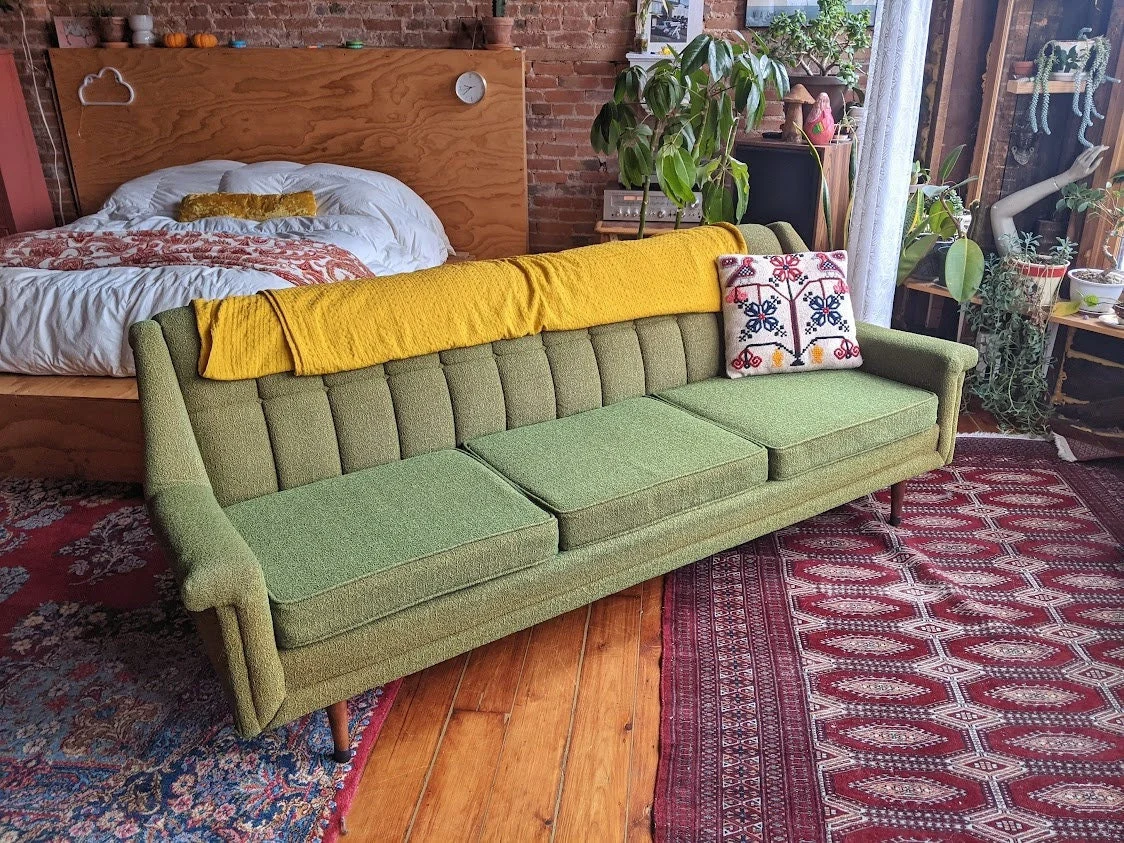
I can spot a mid-century silhouette from across a thrift store aisle. The low arms, the tidy skirtless base, the little hint of walnut legs. But if there is one category that has taught me humility over the years, it is upholstered vintage. A teak credenza mostly tells you the truth at first glance. A 1960s sofa can look charming, photograph beautifully, and still hide a pancake-flat seat, broken webbing, and fifty years of mystery odors.
This is the checklist I run through before I hand over cash for a vintage mid-century upholstered chair or sofa. It is focused on the three big deal-makers and deal-breakers: foam degradation, spring health, and fabric condition, plus a few sneaky issues that affect comfort and cost.
My two-minute triage (before you fall in love)
If I only have a minute at an estate sale, I do these fast checks first. They tell me whether the piece is a simple refresh or a full upholstery project.
- Sit test: Sit in the most-used spot. If you bottom out hard or feel a bar across your thighs, you are dealing with foam collapse, spring issues, or both.
- Sniff test: Put your face near the seat and back. Musty basement smell, smoke, or pet urine can be extremely difficult to remove from old padding.
- Wiggle test: Grip the back and gently rock. Any sway or creak can mean loose joints, cracked rails, or a previous repair failing.
- Underside peek: Look under the piece for sagging webbing, missing springs, rust, or rodent evidence.
If it fails the sniff test or the frame feels unstable, I usually walk. Everything else becomes a math problem.
Foam and cushion fill: how to spot breakdown
Mid-century upholstery often used foam wrapped in batting, sometimes over springs, sometimes over webbing. Foam does not age gracefully. It oxidizes, dries out, and turns to dust or stiff crumbs. Even when it looks fine, it can be “dead” and offer no support.
What degraded foam looks and feels like
- The squeeze test: Press down with your palm and hold for a second. Healthy foam springs back quickly. Dead foam rebounds slowly, stays dented, or feels crunchy.
- The edge test: Sit on the front edge. If it collapses like a hammock, the seat foam or support layer is failing.
- Unevenness: Lumpy areas can mean foam fractures or shifted stuffing.
- Dust clues: If you see yellow powder or crumbly bits inside a zipper opening or seam gap, the foam is actively disintegrating.
Check if cushions are reversible and removable
Removable cushions are friendlier to repair. I look for zippers, hand-stitched slip openings, or evidence the cushion insert can be replaced. Tight seats and tight backs can still be redone, but labor costs climb quickly because everything is built in.
Down, polyfill, and mixed fills
Some vintage pieces have down or feather wraps. That can feel lovely, but it also means you might be dealing with escaping feathers, uneven fill, and allergens. Polyfill can clump. Neither is a deal-breaker, but I factor in time for restuffing or insert replacement.
Springs and support: the hidden comfort system
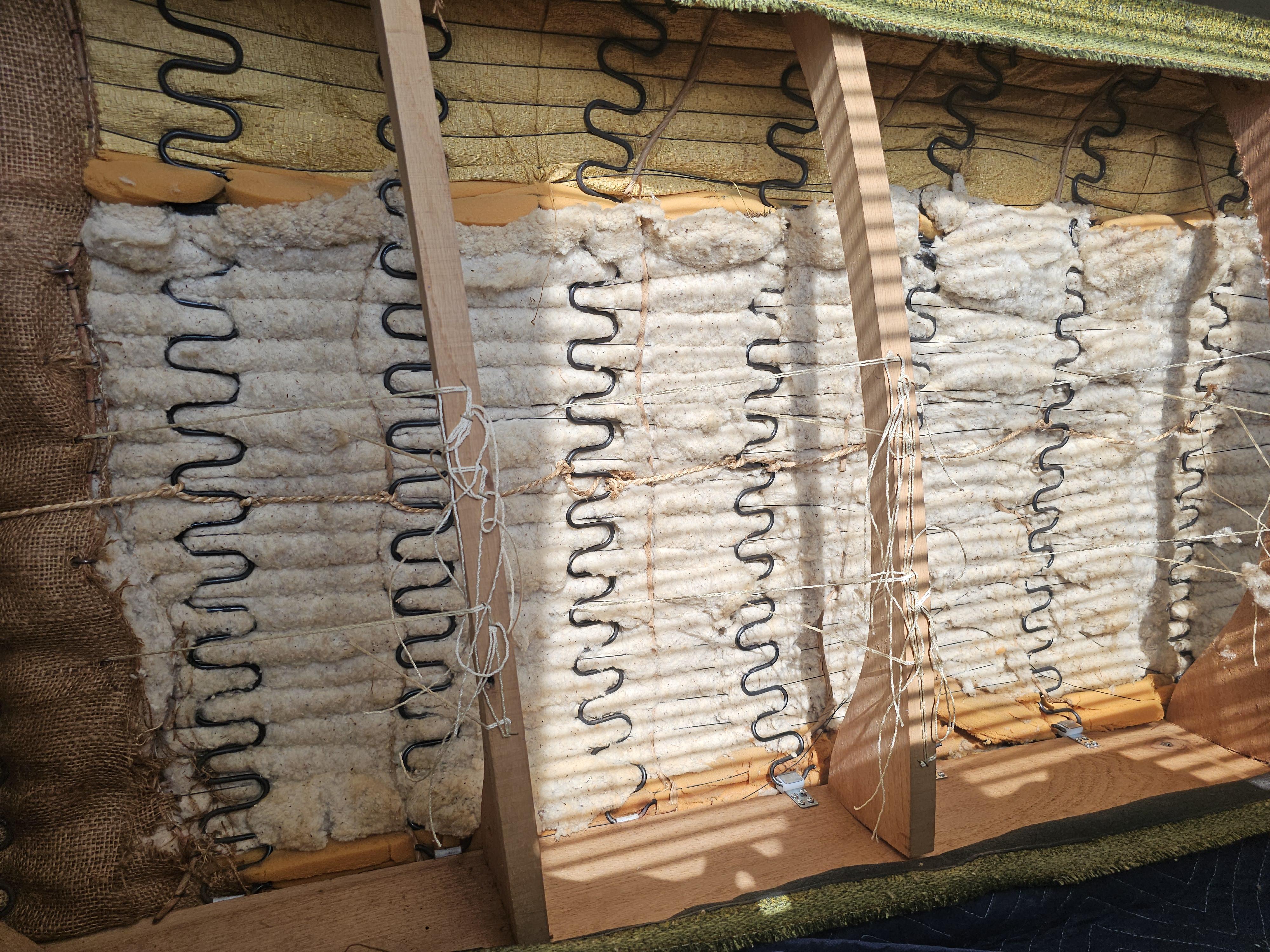
The best-looking upholstery in the world cannot compensate for a collapsed support system. Mid-century pieces commonly used sinuous springs (the S-shaped ones), webbing, or a combination of both. Earlier pieces and some higher-end makers used eight-way hand-tied coils, but that is less common in mainstream MCM seating.
How to check spring health in a store or sale
- Listen: Slow, deliberate sits. Loud pinging or grinding usually means broken springs or metal-to-metal rubbing.
- Feel: Run your hand across the seat. You should not feel sharp points, loose wires, or a ridge that feels like a rod.
- Look underneath: Torn dust covers are annoying but useful. If you can see the springs, check for breaks, missing clips, or heavy rust.
- Press from below: If possible, push up on the seat from underneath. Springs should offer resistance and return evenly.
Webbing tells a story
Webbing that is sagging, frayed, or stapled in a patchwork of newer strips often means the chair has already been “fixed” once. That is not automatically bad, but it tells you to inspect the rest carefully. If the webbing is slack, your body weight will force the foam to work overtime, and it will feel flat no matter how pretty the fabric is.
When springs are fine but it still sags
Sometimes the springs are intact, but the foam layer above them is toast. The sit feels low and tired, but you do not feel a sharp failure point. That is the best-case scenario for comfort restoration because you can often rebuild cushions without major spring work.
Fabric condition: wear, fiber content, and surprises
I love original fabric when it is clean and structurally sound. It is a time capsule. But fabric is also where you can get stuck paying for a full reupholstery when you thought you were buying a simple weekend project.
High-wear zones to inspect first
- Front edge of the seat cushion and seat deck
- Top front corners of arms
- Outside arms where hands rub
- Upper back where hair oils and sun exposure hit
- Piping and seams, especially at corners
Pull test for seam strength
Gently pinch fabric on both sides of a seam and tug just enough to see how it behaves. If you hear stitching pop or see the seam gap widen easily, the thread may be rotted or stressed. That often happens when fabric has been stored in heat or sun.
Sun fading and dry rot
Sun damage can be sneaky. Check the back side, under cushions, and the side facing a window. If one area is dramatically lighter, assume the fibers are weaker there too. Some older fabrics can feel papery or brittle, which is a red flag for tearing once you start using the piece.
Stains, odors, and what they really mean
- Water rings and brown tide lines: Often indicate an old spill that soaked into padding. Even if you clean the surface, odor can linger in foam.
- Smoke: The smell lives in padding and wood. It can be reduced, but it is rarely fully erased without stripping the upholstery.
- Pet odor or urine: I treat this as a reupholstery-level issue unless the piece has removable, washable covers and the smell is clearly recent.
Be cautious with vintage vinyl
Mid-century vinyl can crack and flake with age. Check for tiny fissures along the seat edge and arm tops. Once vinyl starts splitting, repairs are usually cosmetic at best unless you re-cover it.
Frame and joinery: the part that should outlive you
Even if you plan to reupholster, the frame has to be worth saving. Most mid-century upholstered pieces have hardwood frames, but I have also seen plenty of softwood surprises and rushed repairs.
What I check
- Racking: With both hands on the arms or back, gently twist. A solid frame barely moves. A loose one shifts and squeaks.
- Leg stability: Check for wobble at each leg, especially on sofas. Loose legs can mean stripped hardware or split corner blocks.
- Cracks at stress points: Look where arms meet the seat rail and where the back uprights join the base.
- Evidence of past repairs: Extra screws, metal braces, or messy glue lines are not always bad, but they signal you should inspect more carefully.
If a piece has exposed wood arms or legs, I also check for veneer lifting, deep gouges, and water damage. Cosmetic wear is fine. Structural splitting is not.
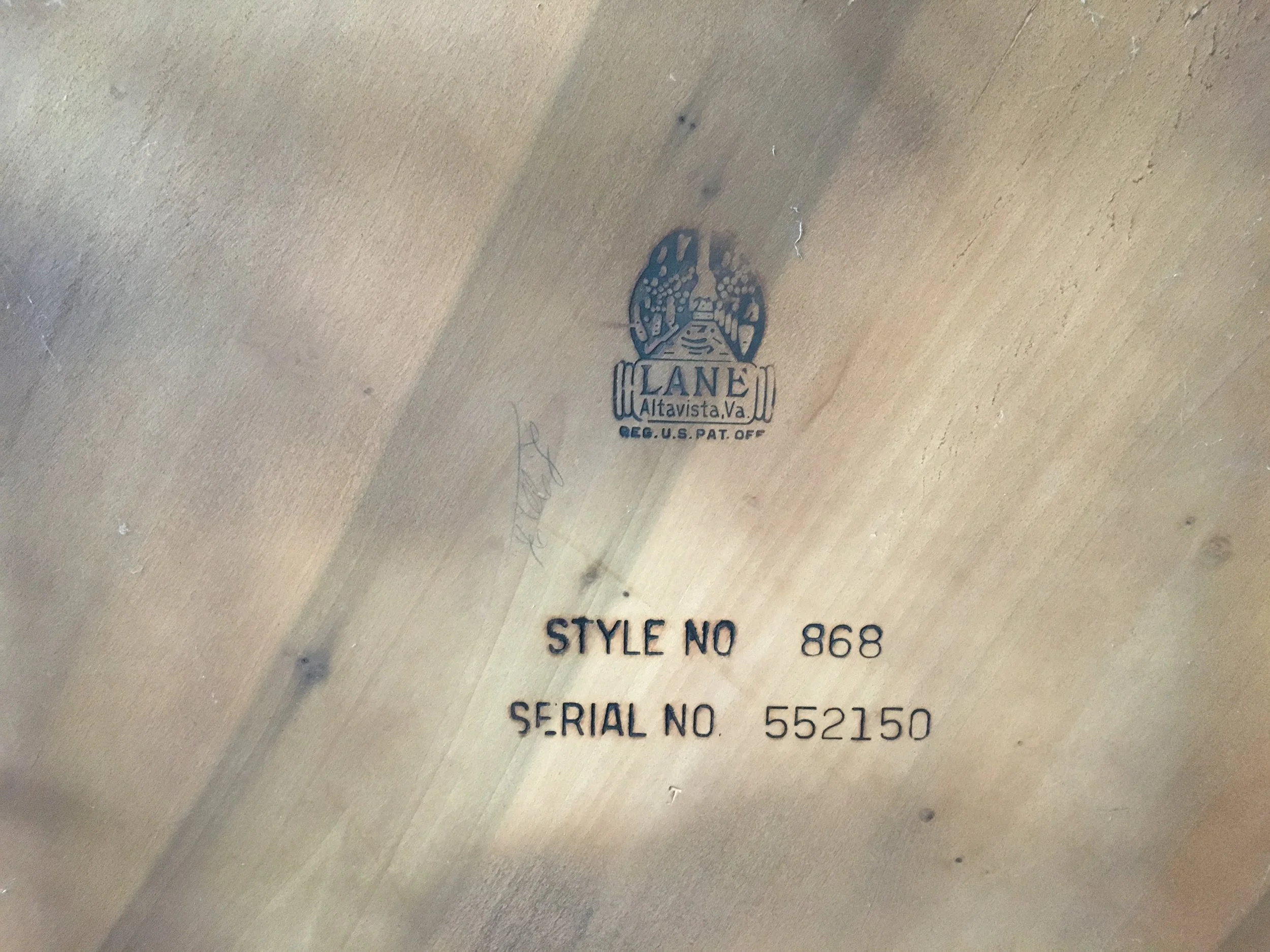
If you enjoy identifying makers, my guide to mid-century maker marks, tags, stamps, and serial numbers can help you figure out what you are looking at and whether the construction matches the name.
Cushion construction details that affect cost
Two sofas can look nearly identical and have very different restoration price tags. These details change the level of work involved.
- Tight back vs loose back cushions: Tight backs are harder to rebuild and often require partial reupholstery to do correctly.
- Tufting, buttons, and channels: Beautiful, but labor-intensive. Missing buttons can be recreated, but it is not a quick fix.
- Skirts and welt cord: Welt hides wear and looks crisp, but replacing it adds time and expense.
- Integrated wood frames: Sofas with exposed wood rails or arms require extra care so the upholstery and wood finish look cohesive.
How to decide: live with it, refresh it, or reupholster
“Live with it” is reasonable when
- Foam still rebounds well and the sit feels supportive
- Fabric has only minor wear and no persistent odor
- Springs are quiet and even
- You love the color and texture as-is
A “refresh” usually means
- Replace foam inserts in removable cushions
- Add new batting or wrap
- Repair a dust cover
- Tighten legs and hardware
- Spot clean or professionally clean fabric that is structurally sound
Full reupholstery is likely when
- Fabric is torn, brittle, or heavily stained
- Odor is embedded in padding
- Springs or webbing are broken or sagging
- The piece has a tight seat or tight back and feels collapsed
My thrifting rule of thumb: if you are buying it because it is a bargain, do not accidentally turn it into a high-end custom upholstery bill unless you truly love the frame.
Questions I ask sellers (and what the answers tell you)
- “Do you know where it was used?” Living room use is different from a smoking den, basement, or sunroom.
- “Has it been in storage?” Storage can mean mustiness, pests, and foam breakdown from heat.
- “Any pets?” Not just for hair, but for odor absorbed into cushion cores.
- “Has it been reupholstered?” If yes, ask when and by whom. Amateur recovering over bad foam is common.
- “Are the cushions original?” Replacement cushions can be a plus if they were done well.
Bring-this-with-you checklist for vintage upholstery shopping
I keep a tiny kit in my car for upholstery buys. Nothing fancy, just things that help me inspect honestly.
- Phone flashlight (for underside inspection)
- Measuring tape (doorways, seat depth, cushion size)
- Thin work gloves (dust covers can be gritty)
- Old sheet or painter’s plastic (to protect your car if you do buy)
- Small notepad for measurements and notes
If you need help finding pieces worth inspecting in the first place, I keep a running list of overlooked local spots to score authentic mid-century modern furniture. The best upholstery deals rarely come from the first obvious stop.
Quick comfort checks for true mid-century proportions
Mid-century seating can be lower and firmer than modern lounge furniture. That is part of the look, but you still want it to feel good.
- Seat height: If your knees sit above your hips, it may feel too low for daily use.
- Seat depth: Deep seats can be cozy, but if you are short, you may feel like you cannot use the back comfortably.
- Back angle: Some vintage chairs are more upright than you expect. Decide if it is a reading chair or a lounging chair.
I always remind myself: a gorgeous profile is not enough if you dread sitting on it.
FAQ
Is it bad if a vintage sofa has a torn black fabric on the bottom?
Not necessarily. That black fabric is usually a dust cover. Tears are common and relatively easy to replace. What matters is what the tear reveals. If you see sagging webbing, broken springs, or rodent droppings, that is a bigger issue than the fabric itself.
Can I just add a seat board to fix sagging?
A seat board can temporarily improve comfort on some designs, but it is a band-aid and can change how the piece wears. If the springs or webbing are failing, the better long-term fix is repairing the support system and rebuilding the foam layer.
What is the biggest red flag?
For me, it is strong pet urine odor or heavy smoke smell. Comfort issues can be repaired. Odor that has soaked into foam, fabric, and wood is a much bigger gamble.
Where this fits in your vintage-hunting routine
Upholstered pieces are absolutely worth buying vintage, especially when the frame and lines are right. I just approach them like a detective: sit, sniff, flip, listen, and inspect the high-wear zones before I let the silhouette charm me into ignoring the basics.
For more hands-on thrifting advice and sourcing tips, you can browse the Vintage Hunting & Thrifting section here on Century Hue.