
The first time I walked into an estate sale with mid-century potential, I swear I could smell it before I saw it. That warm mix of old paperbacks, lemon oil, and walnut. I was there “just to look,” and I left hugging a teak magazine rack like it was a rescued puppy.
Estate sales can feel fast, crowded, and a little intimidating, especially when you’re hunting for mid-century modern decor and everyone else suddenly has the same idea. But once you know the rhythm, estate sales become one of the best ways to bring home authentic pieces with real history, usually for less than you’d pay in a curated vintage shop.
This guide is how I approach estate sales when I’m looking for mid-century modern (MCM) furniture, lighting, and the little styling details that make a room feel like 1962 in the best possible way.
How estate sales actually work
An estate sale is usually an in-home sale run by a company or family to liquidate the contents of a home. The key detail is that you’re shopping where the items lived, which is why you can still find complete sets, original paperwork, and those glorious “time capsule” rooms.
Common formats you’ll see
- Company-run, multi-day sales: Often two to four days long, sometimes Thursday through Sunday, sometimes Friday through Sunday. Pricing and markdowns vary by company and by sale.
- Family-run sales: Less formal, sometimes better prices, sometimes less organization.
- Online estate auctions with pickup: Good for bidding on bigger pieces, but you often can’t inspect as closely.
If you’re newer to thrifting, estate sales are a perfect bridge between casual thrift store browsing and higher-stakes vintage buying. For more general hunting tips, I keep a growing collection on Vintage Hunting & Thrifting.
Read the listing first
I know, I know. You want to see the photos, sprint to the address, and let fate decide. But five minutes of scrolling can save you a wasted morning and a parking lot existential crisis.
What I look for in photos
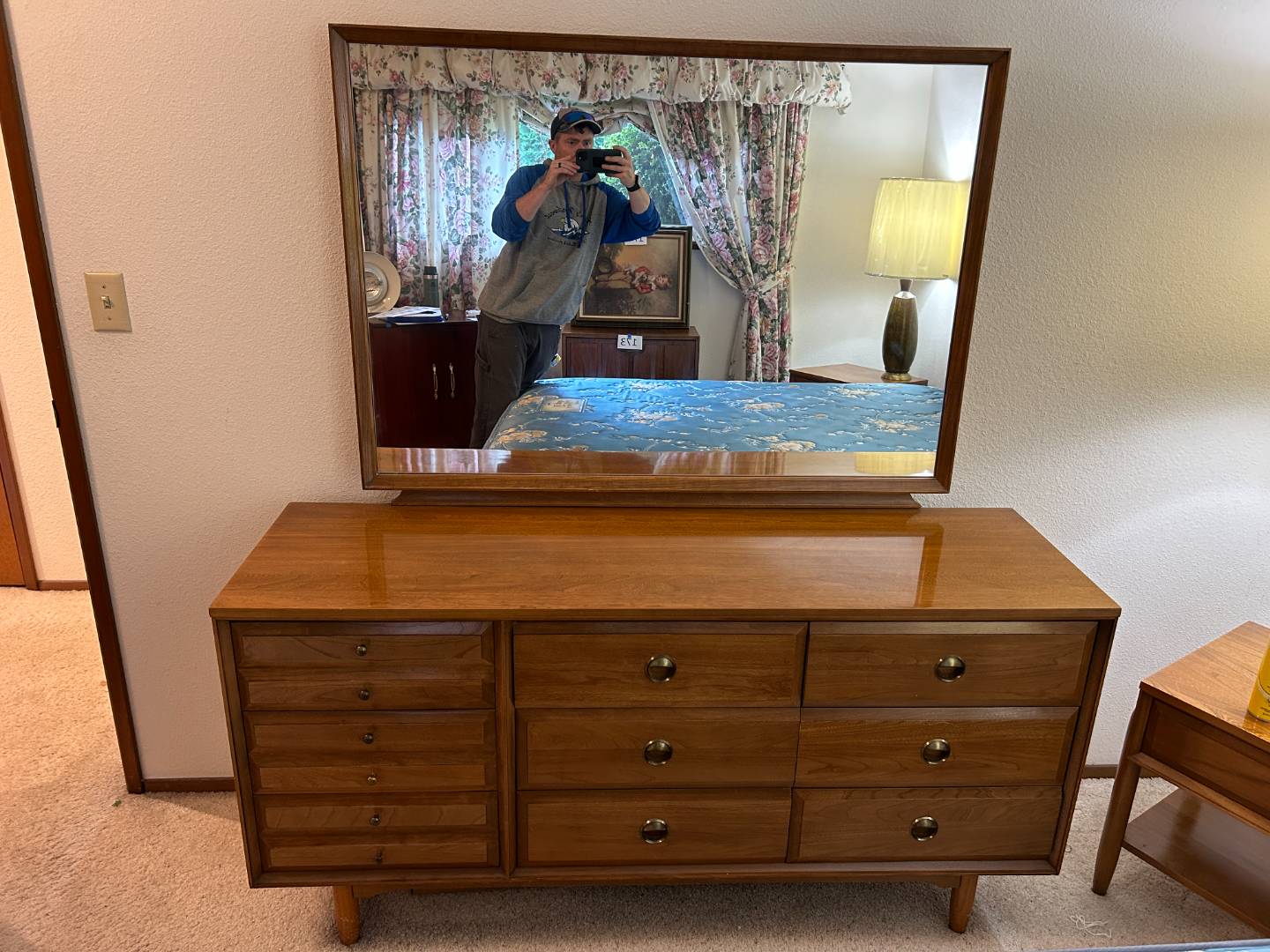
- Wood grain and scale: Long, low case pieces (credenzas, dressers, consoles) and warm teak or walnut tones tend to photograph a certain way.
- Legs and bases: Tapered legs, splayed legs, and sculptural bases are quick tells.
- Lighting glimpses: If you spot a ceramic base, brass details, or a clean-lined shade, it’s worth showing up early.
- The “forgotten corners”: Basements, dens, and garages are where the good planters and patio pieces hide.
Helpful keywords (with a grain of salt)
Listings aren’t always accurate, but words like “teak,” “walnut,” “Danish,” “tapered,” “credenza,” “Lane,” “Broyhill,” or “Drexel” usually make me pay attention. If the listing says “mid-century” and the photos are all fluffy farmhouse, I adjust expectations accordingly.
Prep like a pro
The secret to feeling calm at an estate sale is doing your thinking ahead of time, not at 7:01 a.m. on a stranger’s driveway.
What to bring
- Measuring tape: A must for credenzas, dining tables, and lampshades.
- Small flashlight: For looking underneath furniture, inside drawers, and into dim basements.
- Phone charger or battery pack: You’ll use your phone constantly for measurements, photos, and quick research.
- Cash and a card: Some sales have spotty signal for card readers.
- Blue painter’s tape: Handy for marking a piece “sold” if the company uses a tag system and allows it.
- Thin gloves: For dusty garages and sharp hardware.
- Blankets and tie-downs in your car: Even if you “are not buying furniture.” (You are.)
Quick home prep checklist
- Measure your doorways, stair turns, and vehicle cargo opening.
- Make a short wish list: one or two big targets and a few small “bonus” finds like lamps, art, or barware.
- Decide your max spend before the adrenaline hits.
Arrive early
For MCM pieces, early matters because the best furniture and lighting tends to go in the first wave.
Timing strategy
- If you want the statement piece: Arrive 45 to 90 minutes early on day one.
- If you want a calmer shop: Go a little after opening, or aim for the second day when the initial rush has passed.
- If you want markdowns: Later days can bring discounts, but the best MCM may already be gone.
Some sales do a number system where you get a spot in line. Others are first come, first served. If it’s company-run, look for instructions in the listing.
Rules and etiquette
Every estate sale has its own quirks. I’ve learned to assume nothing and ask once, politely, right at the start.
- Checkout and holds: Some sales have a hold table, some don’t. Some require you to pay immediately for big-ticket items.
- Testing policy: Some companies don’t allow plugging in lamps or using outlets. If testing is allowed, I still treat vintage electrical as “inspect now, evaluate later.”
- Bags and strollers: Many sales limit large bags, big totes, and bulky strollers because the house is tight and fragile stuff is everywhere.
- Shoe covers: If they hand you booties, wear them. You’ll be glad you did when the basement stairs are slick.
- Be gentle: Open drawers with care, don’t stack items on furniture, and don’t block doorways while you text your spouse twelve photos of one lamp.
Spotting real MCM fast
When a house is full and people are moving, you need quick tells. I do a fast scan first, then circle back to inspect.
Fast visual cues
- Wood tones: Walnut, teak, rosewood, and oak with warm, tight grain. (Lots of 1970s orange pine is a different vibe.)
- Legs: Tapered legs, splayed legs, hairpin legs, and sculpted bases.
- Silhouettes: Low, long credenzas. Slim armrests. Gentle curves on lounge chairs.
- Hardware: Simple pulls, recessed handles, brass accents, or minimalist wood finger pulls.
- Construction: Smooth drawer glide, solid frames, quality veneer work, and joinery that looks intentional.
Check for maker marks
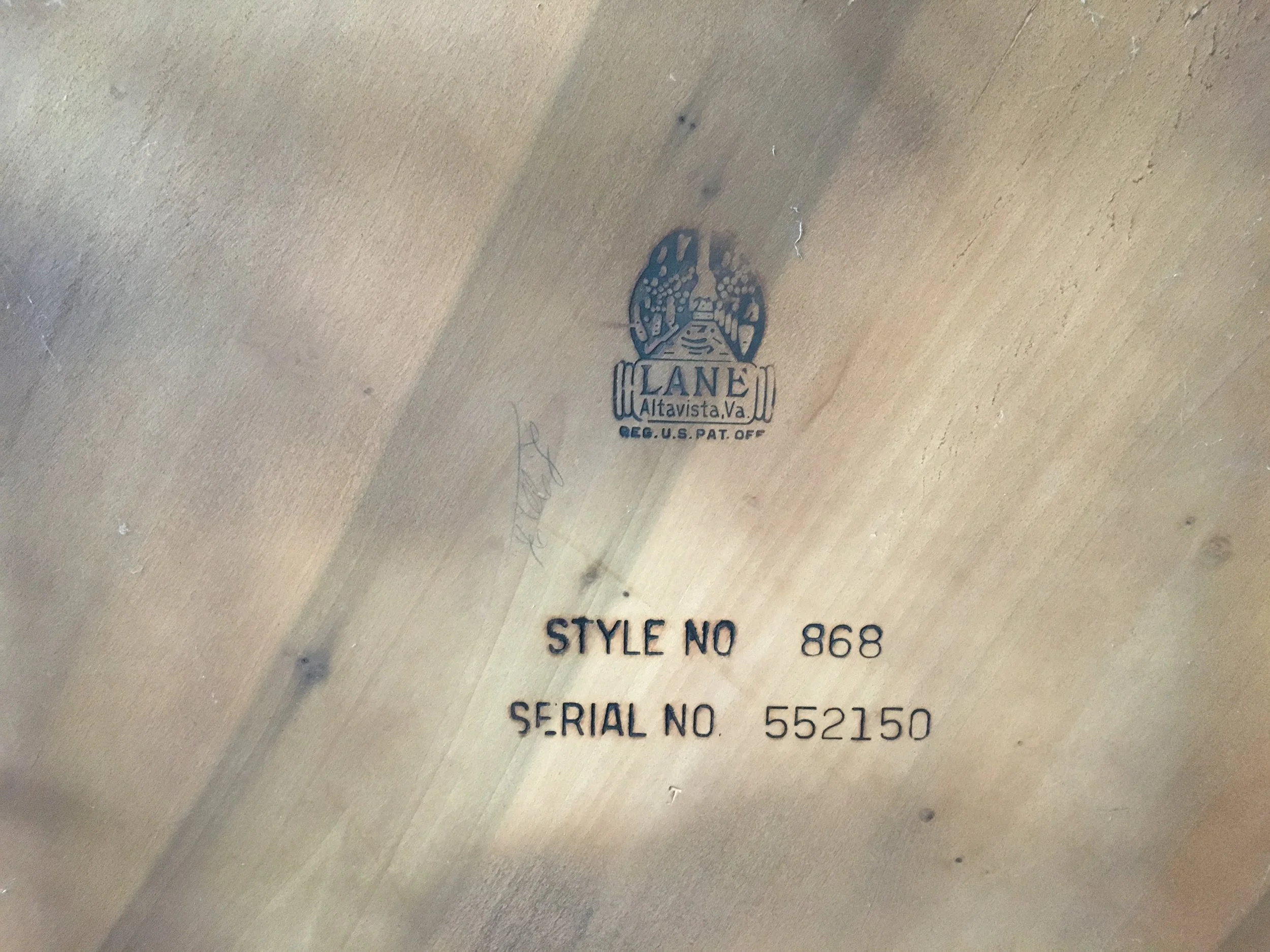
Flip it, open it, pull the drawer out. Many MCM pieces have stamps, foil labels, or paper tags that help confirm age and origin. If you want a deep dive on what to look for and where, I wrote a dedicated guide: Mid-Century Maker Marks, Tags, Stamps, and Serial Numbers.

My inspection routine
MCM furniture is often totally worth saving, but you want to know what you’re signing up for. I’ve bought “minor fixer-uppers” that turned into month-long projects, and I’ve learned to inspect with loving skepticism.
Furniture: what I check fast
- Wobble test: Grab a corner and gently rock. Loose joints are fixable, but factor the time.
- Veneer condition: Look for bubbling, lifting, missing corners, and water rings.
- Drawer function: Sticking drawers can mean swelling, misalignment, or debris in the runners.
- Smell: Musty odor can mean moisture or mold. Heavy smoke smell is hard to fully remove.
- Underside clues: Staples, plywood, and even some early particleboard can show up across decades, including later MCM-era production and budget lines. I treat construction as one clue, not a verdict. Labels, hardware, proportions, patina, and overall build quality matter more than any single material.
Lighting and electric pieces: safety first
I adore vintage lamps and anything that plugs in, but old wiring isn’t romantic. It’s a fire hazard when it’s cracked, brittle, or poorly repaired.
- Inspect cords for cracking, stiffness, or taped repairs.
- Check plugs and sockets for scorch marks, looseness, or heat damage.
- If a piece has an older cloth or rubber cord, I assume it may need rewiring and I budget for it.
- When in doubt, I have a professional evaluate it before it becomes part of my daily routine.
Upholstery: be picky on purpose
Reupholstery can cost more than the chair, so I decide upfront whether I’m buying the frame or the finished piece.
- Press cushions and arms for crumbling foam.
- Look underneath for webbing condition.
- Check for pet damage along the lower edges.
Pests: a quick, calm check
I’m not here to scare you off vintage, but I am here to keep you from bringing home problems. With upholstered pieces, rugs, and baskets, I do a quick seam-and-underside inspection, look for spotting or shed skins, and pass if anything seems off. If I’m unsure, I skip it. There will be other chairs.
What’s worth grabbing
Even if the sofa is gone, estate sales are a goldmine for the MCM “supporting cast” that makes a room feel complete.
My favorite high-impact small finds
- Lamp bases and shades: Especially ceramic, brass, and walnut bases.
- Wall art and frames: Look for textured abstracts, prints with age, and quality frames.
- Mirrors: Simple wood frames or brass edges that play nicely with MCM lines.
- Barware: Lowball glasses, decanters, ice buckets, and trays.
- Planters: Pedestal planters, ceramic pots, and indoor-outdoor stands.
- Books: Vintage cookbooks, design books, and travel books for shelf styling.
If you do score a credenza, styling it is half the fun. I walk through my go-to approach here: How to Style a Mid-Century Credenza With Vintage Decor.
Pricing and negotiating
Estate sale pricing can be all over the place. Some companies price at retail. Others price to move. Your goal is to be respectful and strategic, not aggressive.
Know the discount pattern
Many multi-day sales discount as they go, but the schedule varies. I’ve seen fixed-percentage markdowns (like 25 percent off day two, 50 percent off day three), case-by-case dealmaking, and also zero discounts until the final hours. If it matters to you, check the listing details or ask at checkout before you commit to “I’ll come back tomorrow.”
My negotiation script
If it’s late in the day, or the piece has flaws, I keep it simple and friendly:
- “Would you consider $___ for this since the veneer is lifting on the corner?”
- “If I buy the chair and the lamp, could you do $___ for both?”
- “I can take it today and carry it out myself. What’s your best price?”
A good rule: negotiate more confidently later in the sale. On the first morning, the answer is often “it’s priced as marked,” especially for hot mid-century items.
Claim and check out
This is where people lose pieces. They set something down, wander off, and it disappears into someone else’s arms.
Do this when you commit
- Ask staff what their “sold” process is and follow it exactly.
- Pay as soon as possible for high-demand items.
- Keep your receipt with you, especially for larger items you’ll pick up later.
Furniture pickup tips
- Ask about pickup windows and whether they help load.
- Bring a friend for heavy pieces. Most companies won’t provide labor beyond basic assistance.
- Bring tools: a screwdriver set and a small wrench can help remove table legs or doors for safe transport.
Clean and quarantine
I love the thrill of bringing vintage home. I also love not bringing home surprises.
My simple “new to me” routine
- Hard goods (ceramics, glass, metal): Warm soapy water, then a careful dry. For brass, I clean gently and let some patina stay.
- Wood: Dust first, then a mild cleaner. I avoid soaking veneer. If I plan to restore, I test products in an inconspicuous spot.
- Upholstery: Vacuum thoroughly. If I’m keeping it, I’ll consider professional cleaning depending on fabric and condition.
- Anything from a basement: I keep it in the garage or sunroom for a few days if I’m unsure about odor or pests.
Once it’s clean, the fun part is making it look intentional. If you’re balancing color in a room, you might like Earth Tones vs Jewel Tones in Mid-Century Style or Mixing Brass, Copper, and Chrome in Mid-Century Modern Style.
Quick cheat sheet
If you remember nothing else, remember this order. It saves time and regret.
- Scan the big rooms first for the statement pieces: living room, dining room, primary bedroom.
- Head for lighting because it’s easy to carry and sells fast.
- Check the walls for art, mirrors, and clocks.
- Then do the drawers for flatware, bar tools, linens, and the little treasures people forget.
- Finally, hit the garage for planters, patio pieces, and toolboxes full of vintage hardware.
Common mistakes
- Buying for the deal, not the space: A $40 chair isn’t a deal if it stresses you out for years.
- Ignoring measurements: Measure twice, especially credenzas and dining tables.
- Forgetting transport logistics: If you can’t lift it or load it, have a plan before you pay.
- Not inspecting veneer: Veneer repair is doable, but missing veneer is harder than it looks.
- Overpaying out of panic: There will be other estate sales. There will be other lamps.
FAQ
What time should I show up to get MCM furniture?
If the listing photos show true MCM pieces, I aim for 45 to 90 minutes early on day one. If you’re okay with missing the “star” items but want a calmer shop, arrive 30 to 60 minutes after opening.
How do I tell if a piece is MCM or a newer reproduction?
Look underneath and inside. Authentic pieces often show age-consistent wear, thoughtful proportions, and build details that make sense for the era. Maker marks help a lot, which is why I always check drawers and backs.
Should I buy a vintage sofa or upholstered chair at an estate sale?
Only if you love the frame and you’re realistic about reupholstery costs. If the upholstery is questionable, price it like a project, not a finished piece.
Do estate sale companies negotiate?
Many do, especially later in the sale. Some are strict early on, then more flexible once they see what’s moving and what isn’t. When in doubt, I ask politely and I’m ready to hear “no.”
One last thing
The goal isn’t to “win” an estate sale. The goal is to bring home pieces that make your everyday life feel warmer, more personal, and a little more mid-century. When I walk into my 1958 ranch and catch the glow of teak at sunset, I don’t think about the line I stood in. I think about how lucky we are that good design survives, waiting for someone to love it again.
If you want more places to hunt beyond estate sales, I rounded up my favorites here: 7 Overlooked Local Spots to Score Authentic Mid-Century Modern Furniture.