
Why MCM ceramics and art glass are the easiest thrift win
The first mid-century piece I ever brought home was not a chair or a lamp. It was a heavy little pottery vase in a peppery brown glaze, tucked between chipped mugs and a cookie jar shaped like a goose. I paid a few dollars, set it on my 1958 ranch house mantel, and suddenly the whole room felt more intentional. That is the quiet superpower of thrifted ceramics and art glass. They are small enough to carry, usually affordable, and they add that unmistakable mid-century mood in seconds.
If you are new to hunting “smalls,” this guide will help you spot the real vintage gems, understand the lookalikes, and avoid the most common heartbreaks like hairline cracks, repaired chips, and modern imports that borrow the style but not the quality.
If you are building your overall thrifting rhythm, start with our hub on Vintage Hunting & Thrifting. It is where I keep the mindset and routines that make weekend hunts actually pay off.
What counts as mid-century here?
When I say mid-century modern in the thrift aisle, I am usually using a shopper’s definition: pieces made roughly from the mid-1940s through the mid-1970s. (You will absolutely see some late 1970s pieces that still read very mid-century, especially in ceramics and glass.)
- Form: clean silhouettes, sculptural handles, bottle necks, bud vases, asymmetry, and shapes that feel “designed,” not purely utilitarian.
- Surface: matte and lava glazes, thick drips, speckles, satin finishes, thick clear overglazes, and rich color blocking.
- Color: earthy browns, olive, mustard, persimmon, teal, cobalt, smoky amber, and milky white opaline tones.
- Feel: older pieces often have a density and a confidence to the finishing (a clean foot ring, a softened edge from hand-finishing, a glaze with real depth). That said, weight and “feel” are clues, not proof. Plenty of modern studio pottery is beautifully heavy, and some vintage pieces are surprisingly light.
My thrift kit for glass and pottery
I keep a small kit in my car because ceramics and glass are the category where one quick check can save you from a piece that will not survive the trip home.
- Phone flashlight: for spotting hairlines, internal cracks, and cloudy repairs.
- Soft cloth or tissue: to wipe dust off marks on the base and check the glaze.
- Reusable tote with a flat bottom: so pieces ride home upright.
- Thin bubble wrap sheet: optional, but it has saved more than one vase during a “one more stop” kind of day.
One quick etiquette note: I always support pieces with two hands, keep them over the shelf (not the floor), and skip any “tests” that involve tapping or spinning if the shop feels crowded or the item feels risky. A thrift win is only a win if it makes it home.
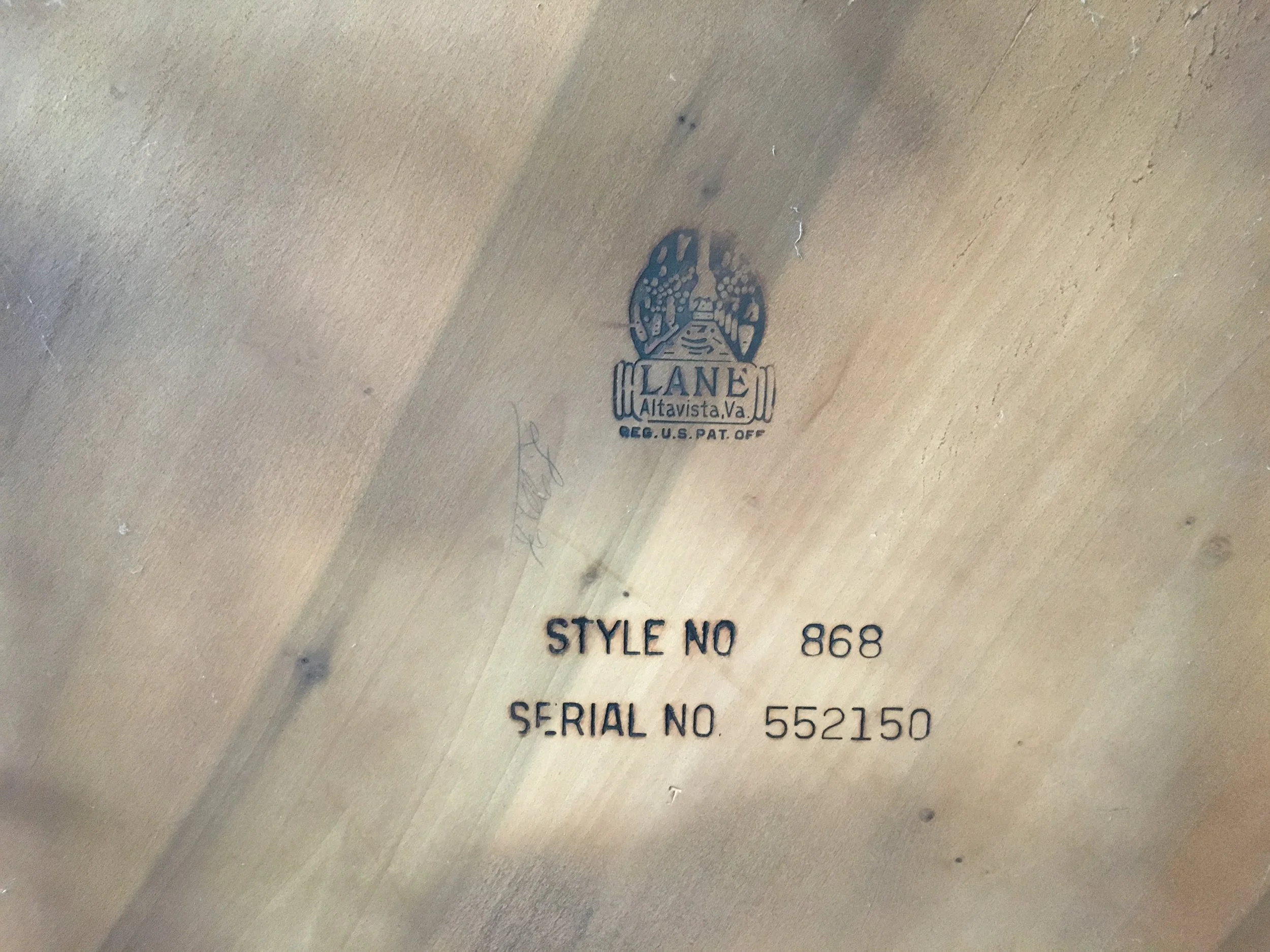
If you want to level up your ID skills beyond ceramics and glass, bookmark our guide to mid-century maker marks, tags, stamps, and serial numbers. A quick base check is one of the fastest ways to separate vintage from “vintage-inspired.”
How I scan a shelf fast
Crowded shelves are overwhelming until you train your eye. I do one quick pass for shape, then I slow down for surface and quality.
Step 1: Look for sculptural silhouettes
- Bud vases with long necks and pinched waists
- Bulbous bottles with tiny openings
- Handled vessels with exaggerated loops
- Low, wide bowls with a strong footed base
- “Space age” forms that look like they belong next to a starburst clock
Step 2: Look for effects that are hard to fake
- True fat lava texture that feels raised, not printed
- Layered glazes with depth, pooling, or subtle transitions
- Controlled drips that end naturally, not like a painted stripe
- Thoughtful finishing on art glass bases (more on pontils below)
Step 3: Flip it over
The base tells stories. You are checking for maker marks, country marks, felt pads that hide damage, and the condition of the foot ring.
Step 4: Have a “maybe” plan
If I am not sure, I set the piece back neatly, take one quick photo of the base and overall shape, and circle back after I finish the aisle. If it still sticks in my brain five minutes later, that is usually my answer.
Beginner-friendly tells for vintage
There is no single magic test, but a handful of small clues together usually gets you to a confident yes.
Maker marks and labels (and when they are missing)
Vintage pieces may have an impressed stamp, an ink mark, a paper label, or nothing at all. Missing marks do not automatically mean “modern,” especially for studio pottery and some export pieces. What matters is whether the rest of the object backs up the era.
- Impressed stamps: often crisp, sometimes partially filled with glaze.
- Foil labels: common on glass and some ceramics, but easily lost.
- Hand-signed bases: can indicate studio work. Look for age-consistent wear on the foot.
Wear patterns that make sense
A legitimate vintage vase that has lived a life often shows gentle shelf wear on the base and tiny scuffs consistent with age. Be cautious with pieces that look artificially distressed, especially if the wear does not match how the object would naturally sit or be handled.
Sound and “tests” (use caution)
You will sometimes hear people talk about a “ring test” for glass. In my experience, sound varies wildly by thickness, shape, and glass composition, and tapping can chip a rim in a heartbeat. I do not rely on it, and I usually skip it entirely. A careful visual check with a flashlight tells you more and keeps the piece safer.
Murano at the thrift store
Let’s talk about the word “Murano,” because it gets tossed around constantly. Murano is an island near Venice known for glassmaking. Authentic Murano glass exists, but the thrift aisle is also full of pieces described as “Murano style” or incorrectly labeled online as Murano.
What to look for in Murano-style glass
- Sommerso look: layered colors that appear suspended within clear glass, often with a thick, smooth feel.
- Controlled bubbles: evenly distributed bubbles can be a design feature, not a flaw.
- Organic, confident shaping: intentional curves and asymmetry, not wobbly mass production.
- Pontil area that looks finished: many handmade pieces have a pontil area that is ground smooth, and sometimes polished to a higher shine. You may still see a circular “scar,” but it should not look jagged or freshly broken.
Common caution flags
- Very rough, unfinished pontil: this can be a sign of lower-end decorative glass, but it is not a verdict on its own. Some genuine pieces are ground but not fully polished, and some factory pieces can be quite smooth.
- Painted-on color that scratches: many newer imports use surface paint rather than colored glass.
- “Murano” sticker that looks brand new: stickers can be reproduced. Treat it as one clue, not proof.
If you want a reliable baseline for Murano history and terminology, the MuranoNet glossary and articles are helpful for understanding techniques and common styles, even if you are just browsing for visual references.
West German pottery
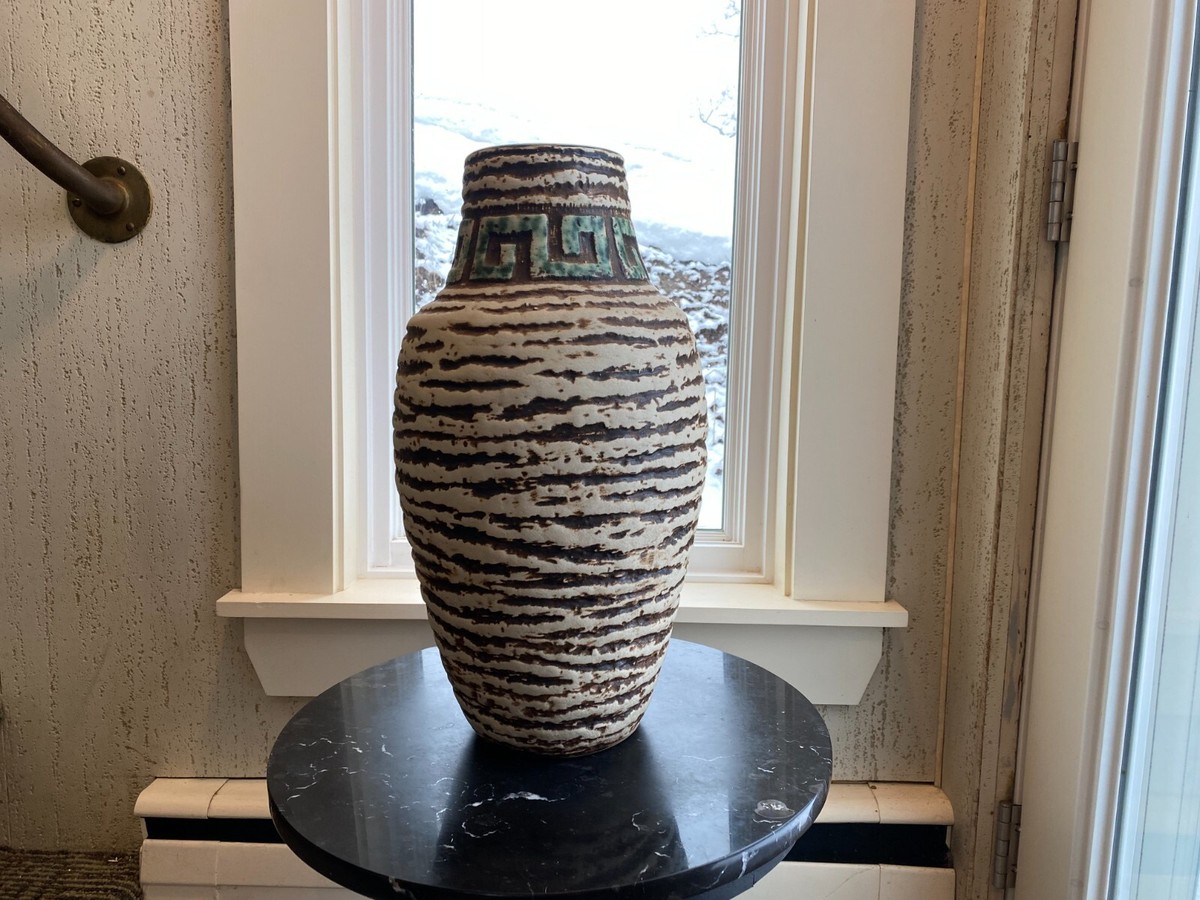
West German pottery is one of my favorite categories to thrift because it is often durable, visually bold, and still sometimes priced like “random vase.” Many pieces were produced in West Germany from the 1950s through the 1970s and exported widely.
Easy identifiers
- “W. Germany” mark: sometimes printed or impressed on the base.
- Numbering systems: you may see a form or model number plus a size number separated by a dash. Often the size refers to height in centimeters, but conventions vary by maker.
- Fat lava and drip glazes: textured, raised surfaces and dramatic glaze movement.
- Strong shapes: amphora-like forms, narrow necks, and sculptural handles.
What to check before you buy
- Hairline cracks at the neck: these are common where stress happens.
- Chips on the rim: run a finger gently around the mouth of the vase.
- Glaze pops: tiny crater-like spots can be manufacturing quirks, but larger areas may be damage. If the piece will hold water, know that poor glaze fit can sometimes worsen with moisture and temperature changes.
For a deeper rabbit hole on specific marks and numbering, the database at WGermanPottery.com can help you compare shapes and base markings when you get home.
Bitossi and Bitossi-style
Bitossi is an Italian ceramics maker closely associated with bold mid-century forms and textured surfaces, including pieces designed by Aldo Londi. In the thrift world, you will see true Bitossi, but you will also see plenty of Bitossi-inspired ceramics.
Bitossi-style cues worth learning
- Rimini Blue vibe: rich blue glazes with incised or stamped texture and a chalky, matte-meets-gloss finish.
- Graphic patterning: repeated marks, lines, dots, and carved motifs.
- Architectural forms: cylinders, tapered necks, and strong, simple bodies that show off the surface design.
How to avoid overpaying
If a thrift piece screams “Bitossi look” but has no mark, treat it as a beautiful decorative piece and pay a price that feels fair for unverified origin. You can still style it like a dream.
When you want to research marks and designers, the Bitossi site is a good reference for the brand’s history and aesthetics.
Other thrift categories I love
I focused on Murano, West German pottery, and Bitossi because they are three of the most common “wait, is this something?” moments in real-life thrift aisles. But they are not the only fun ones. A few more categories that show up often:
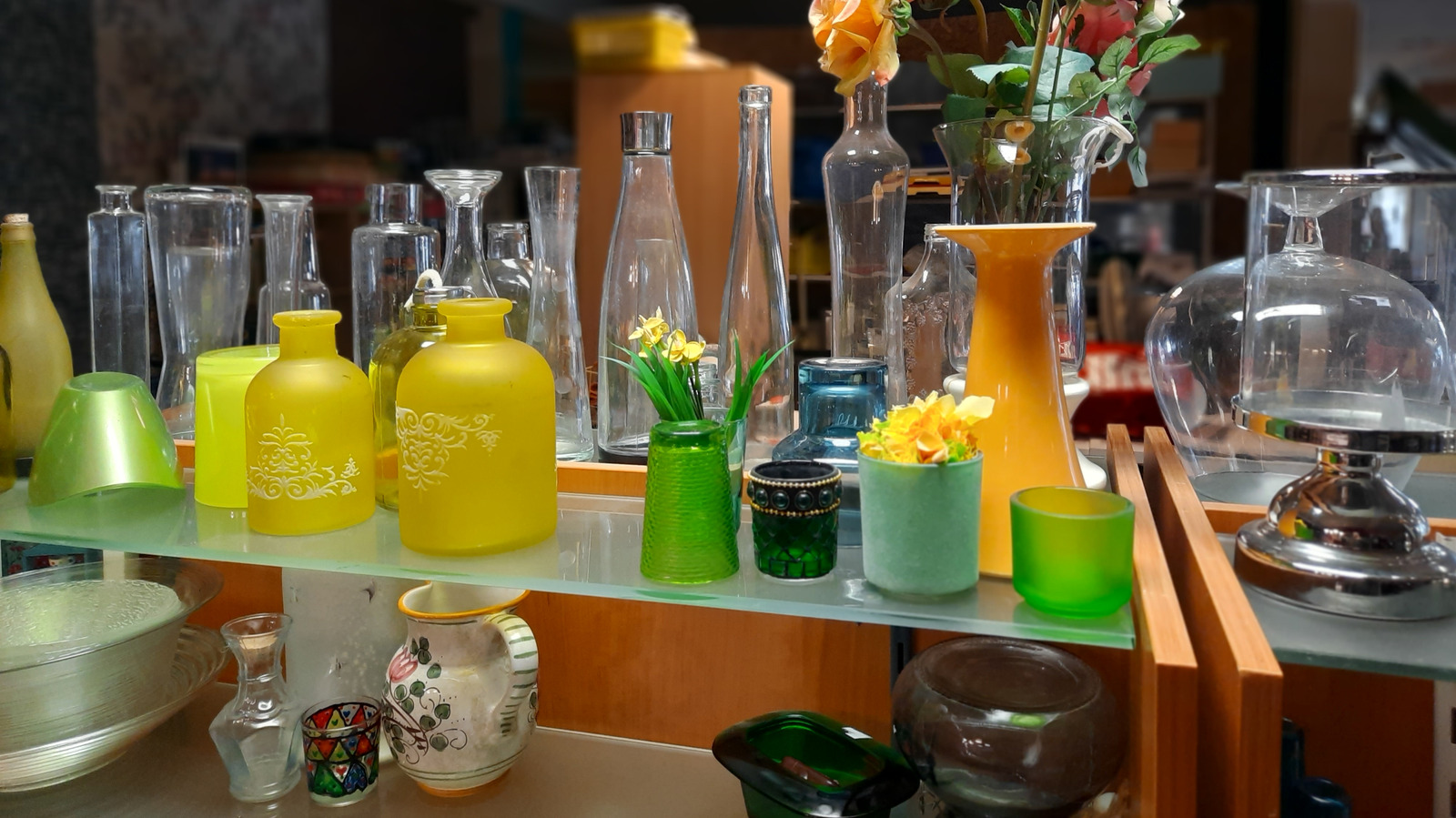
- Swung vases: tall glass vases with pulled, flared rims. The silhouettes read instantly mid-century on a shelf or credenza.
- Scandinavian-style art glass: thick, simple forms, often in smoke, amber, or clear, with clean bases and a very calm presence.
- American studio pottery: hand-thrown pieces with earthy glazes and signed bases. Marks vary a lot, so condition and workmanship matter.
- Everyday mid-century planters and bowls: not rare, but wildly useful for styling, and often priced well.
Condition checks I never skip
I love a little patina, but I do not love structural damage. Here is my quick checklist before I commit.
Ceramics
- Rim and foot chips: the most common thrift damage.
- Crazing: fine crackle lines in the glaze. Often cosmetic, sometimes charming. Avoid if the piece will hold water long-term.
- Hairlines: use your phone flashlight and look from multiple angles.
- Repairs: feel for lumpy glue, mismatched sheen, or paint touch-ups.
Glass
- Flea bites: tiny chips on the rim that catch on your finger.
- Cloudiness: may be hard water etching, which often does not fully clean off.
- Cracks: look through the glass with the flashlight. Internal fractures can hide until the light hits them.
If you are also buying larger vintage pieces on the same trip, it helps to know how picky to be. I put my “inspection brain” in the same mode as when I am evaluating upholstery and frames, and this guide helps with that mindset: Buying vintage mid-century upholstered furniture: what to check.
Cleaning basics
This is the part that saves me from ruining a finish the minute I get home.
Glass
- Warm water, a little dish soap, and a soft cloth usually does it.
- Avoid abrasive scrubbers, especially on glossy art glass where micro-scratches show up fast.
- For sticker residue, I start with warm soapy water and patience. If I use an oil-based remover, I wash again afterward so the glass is not slippery.
Pottery and textured glazes
- Stick to gentle soap and a soft cloth. Textured lava glazes can snag sponges and collect fibers.
- Avoid harsh abrasives on matte finishes. That chalky look can burnish shiny in spots.
- If a piece has crazing and you plan to use it as a vase, I keep it dry or use a glass insert. Water can seep into the ceramic body over time.
Pricing and negotiation
For ceramics and art glass, I keep my pricing simple. I am paying for beauty, condition, and how hard it would be to replace the look. A rare maker mark can raise the ceiling, but only if the piece is healthy.
- If it is unmarked: price it like decor, not like a verified collectible.
- If it is damaged: decide whether you would still love it from five feet away on a shelf. If not, leave it.
- If the store negotiates: ask politely when there is obvious damage or a bundle opportunity.
Estate sales can be a sweet spot for better pricing and better provenance, especially when you find a box of “old vases” in a garage. If you have not tried that route yet, I wrote a full guide on estate sales for mid-century modern decor.
How to style ceramics and glass
The fastest way to make thrifted smalls feel like a collection is to repeat one element and vary the rest. Repeat color, repeat material, repeat shape, then let the differences do the interesting work.
My favorite styling recipes
- Three-vase trio: one tall, one medium, one short. Keep them in the same color family, like amber, smoke, and clear.
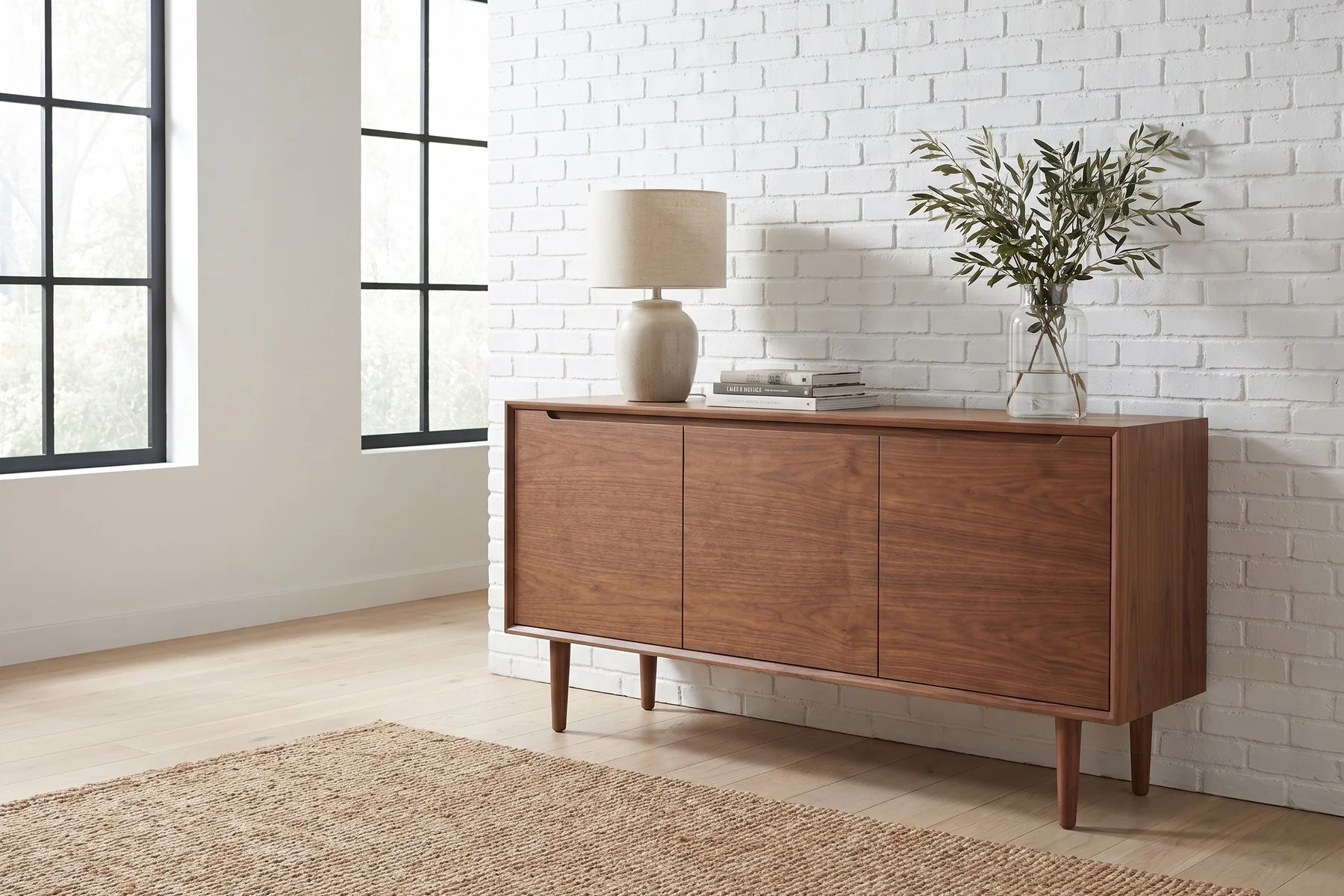
- Wood plus glass: set art glass on walnut, teak, or cane for contrast. (This is gorgeous on a credenza.)
- Texture stack: pair a fat lava vase with a smooth, glossy art glass bowl so both stand out.
- Color echo: pull one glaze color into a pillow or art print so the piece does not feel random.
If you want a ready-to-use surface to build a vignette around, a credenza is my forever favorite. Here is how I approach it step-by-step: how to style a mid-century credenza with vintage decor.
And if you are trying to make your colors feel “mid-century” without turning your room into a theme set, these guides help you choose a lane: earth tones vs jewel tones and retro color palettes for a mid-century modern kitchen.
What I would thrift first
If you are standing in your first thrift store aisle wondering where to begin, here is my short list of beginner-friendly targets that tend to be easy to style and hard to regret.
- Amber or smoke glass bowls: they work on coffee tables, entry consoles, and dining tables.
- One statement vase: tall enough to read across the room, even empty.
- A textured West German-style piece: because texture does half the decorating for you.
- A small bud vase: perfect for a single stem and great for learning your preferred shapes.
Quick FAQ
Is all bubble glass vintage?
No. Controlled bubbles are a technique used in many eras, including modern decor. Look for overall form, finishing on the base, and signs of handwork rather than relying on bubbles alone.
Can I use crazed pottery as a vase?
Sometimes, but be cautious. Crazing can allow water to seep into the ceramic body over time. If you love the piece, use a glass insert or display it dry.
What if I love a piece but it is not authentic?
If it is well-made and it makes your space feel good, it belongs. I collect for lived-in homes, not museums. The goal is to capture the spirit of mid-century design, one thrift shelf rescue at a time.