
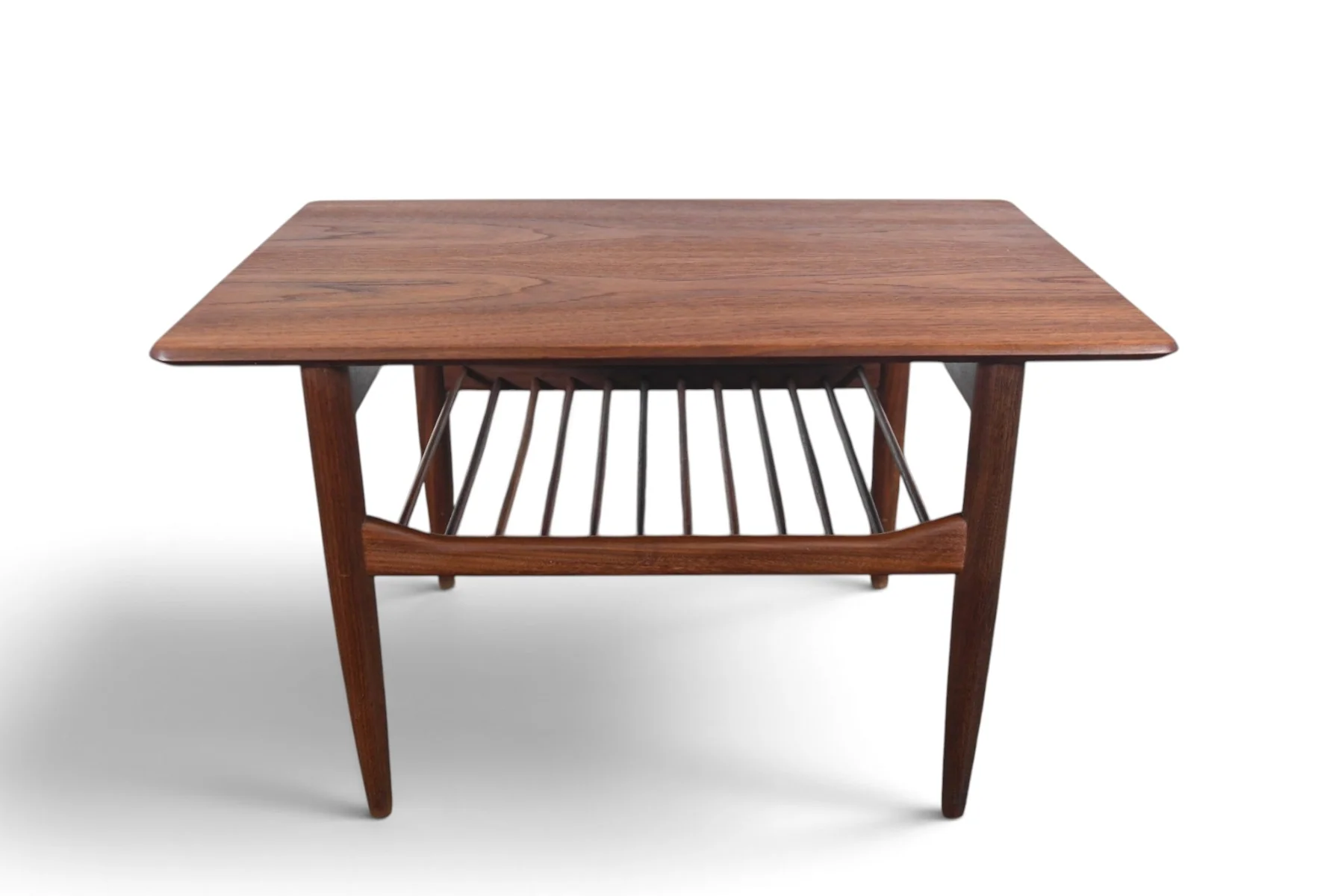
I still remember the first time I brought home what I was sure was a “score” from a thrift store: a walnut end table with tapered legs, $65, sitting under fluorescent lights like it had been waiting for me. When I got it home and looked closer, the “walnut” was a printed faux-wood laminate finish that had bubbled at the corners, and the legs were a little too chunky to be mid-century. It was a perfectly usable table, but it was not a $65 vintage gem.
After a decade of estate sales, flea markets, and rescuing pieces for my 1958 ranch house, I’ve learned a simple truth: the deal is not the price tag. The deal is the value.
This is my step-by-step system for price checking mid-century modern thrift finds in real time, using your phone and a few reliable clues, so you can confidently decide when to buy, when to negotiate, and when to walk away.
What “value” means for thrifted MCM
Before you open a visual search tool, it helps to define what you are actually trying to price check. In my world, a piece has three different values:
- Resale value: What similar items are selling for right now in your market.
- Decor value: What it’s worth to you to get the look, scale, and function you need.
- Restoration value: The cost in time and materials to make it usable and beautiful again.
A $40 vintage chair with a blown webbing seat and cigarette odor is not a $40 chair. It is a $40 chair plus repair time, supplies, and risk. If you like buying vintage upholstered pieces, my deep-dive on what to inspect first is here: Buying Vintage Mid-Century Upholstered Furniture: What to Check.
Step 1: Do a quick authenticity check
This is the fastest filter I use before I spend time researching. If I spot two or more red flags, I treat it as “MCM-inspired” and price it like modern used furniture.
Quick clues that can signal true vintage
- Joinery: Dovetails in drawers, tight corner blocks, and solid construction can be a good sign, but they are not definitive on their own. Some true vintage pieces use simpler joinery too, and some modern pieces use dovetails.
- Materials: Real wood (often walnut, teak, rosewood, oak) and quality veneer, not a printed or foiled faux-wood laminate finish.
- Hardware: Older drawer pulls, inset handles, brass accents, or well-worn original screws.
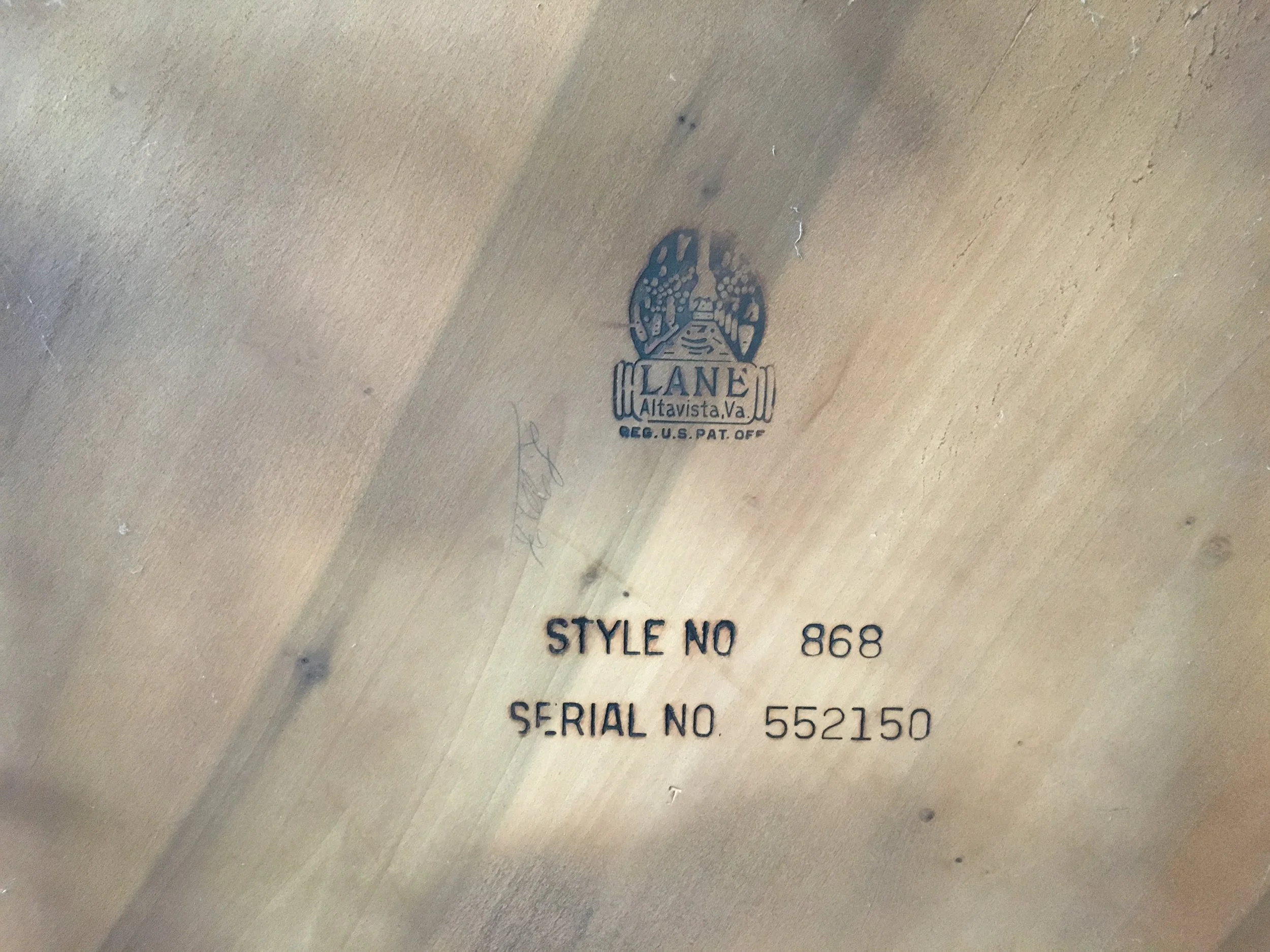
- Underside evidence: Old dust, aged staples, original glides, manufacturer stamps.
Common “not vintage” tells
- Stapled-on plastic feet and obvious flat-pack hardware. Not a perfect rule, but it often points to newer mass-market construction.
- Perfectly new-looking surfaces with faux distressing.
- Odd proportions that mimic the style but feel off (chunky legs, heavy overhangs).
If you can flip a piece, always check for a label, stamp, or tag. When you find one, it’s gold for pricing. I keep a running reference list in my head, but this guide can help you decode what you’re seeing: Mid-Century Maker Marks, Tags, Stamps, and Serial Numbers.
Step 2: Use visual search with intention
Visual search tools (like Google Lens) are my first-pass. They can be incredibly helpful, but they can also throw you into a rabbit hole of incorrect matches. The trick is giving it a clean shot and then verifying what it suggests.
How to scan
- Take two photos: one full piece, one tight detail (hardware, leg shape, logo, drawer pull, bracket).
- Shoot straight on when possible. Angled photos can confuse matches.
- Include distinguishing features: unusual pulls, sculpted handles, signature base shapes.
What to look for in results
- Multiple consistent matches across different sites that show the same details.
- A maker name that repeats, especially paired with a model number.
- Listings that show the underside or interior construction so you can compare.
What to ignore
- “1stDibs effect” pricing. High-end curated sites can be wildly inflated compared to local resale.
- One-off results with mismatched legs, pulls, or drawer layout.
- “Mid-century style” listings that are clearly modern reproductions.
My rule: Lens is a clue generator, not a price tag generator.
Step 3: Check sold prices
If you only do one thing to price check, do this. Asking prices are hopes. Sold prices are reality.
Where to look
- eBay Sold Items: Best for smaller pieces and anything shippable (lamps, clocks, mirrors, chairs, barware).
- LiveAuctioneers or similar auction platforms: Helpful for designer names and higher-end furniture categories, but remember results may include a buyer’s premium and other fees that skew the “real” price. Also, auction results can reflect provenance, restoration, and regional demand, so compare like-for-like.
- Local marketplace sold comps: Ideal for large furniture where shipping changes everything. In some areas, Facebook Marketplace shows a “Sold” filter. If yours does not, I look for recent “Pending” items, repeated price drops, and how long similar pieces sit before disappearing.
How to search sold listings effectively
- Use specific descriptors: “teak Danish credenza sliding doors” beats “mid century cabinet.”
- Filter to sold and completed and sort by most recent when possible.
- Compare condition: refinished vs original, veneer damage, missing hardware, pet scratches.
- Watch for shipping distortion: A $250 lamp with $80 shipping is not the same as a $250 lamp picked up locally.
- Include dimensions when you can: A 48-inch credenza and a 72-inch credenza are not the same purchase, even if the style is similar. I measure quickly (or eyeball and confirm later) and add the closest width or height term to my search.
- Match the material when possible: teak, walnut, oak, rosewood, and even “teak veneer” vs “solid teak” can shift pricing more than people expect.
If you want a quick mental shortcut, I average 3 to 8 sold results that truly match, then adjust for condition and my local market.
Step 4: Adjust for condition
This is where a lot of “thrift deals” quietly fall apart. Vintage is allowed to be imperfect, but some problems are expensive, permanent, or both.
Common issues and my rule-of-thumb ranges
| Issue | Why it matters | My quick adjustment |
|---|---|---|
| Veneer chips or bubbling | Hard to repair invisibly, can spread | Subtract about 20% to 50% unless you love the piece |
| Water rings or heat marks | May sand out, may be deep | Subtract about 10% to 30% |
| Structural wobble | Fixable, but time-consuming | Subtract about 10% to 25% |
| Missing hardware | Replacements can be pricey and hard to match | Subtract about 10% to 30% |
| Musty smell or smoke odor | Can linger in wood and upholstery | Subtract 50% or more, or pass |
| Upholstery tears or collapsed cushions | Reupholstery often costs more than the chair | Price as a frame unless it is a rare designer piece |
I’m not saying you should avoid projects. I love projects. I’m saying you should pay project prices.
Step 5: Designer or decorative
Not every beautiful mid-century piece is a famous name, and that’s fine. But designer attribution changes the pricing conversation fast, so it’s worth doing a quick check.
How to verify designer claims
- Look for a label or stamp first. Many pieces were tagged at the time of sale.
- Match the construction details to known examples, not just the silhouette.
- Be cautious with common misattributions where any Danish-looking item gets assigned a famous maker.
When I’m unsure, I treat it as “unattributed vintage” and only pay what makes sense for my home and my budget.
Step 6: Do the all-in math
I keep this checklist in my head while I’m standing in the aisle holding a wobbly teak nightstand.
The quick all-in checklist
- Purchase price
- Supplies: oil, wax, sandpaper, wood glue, clamps, gentle cleaner, brass cleaner
- Replacement parts: glides, screws, missing pulls
- One-time tool purchases (only if you do not already own them)
- Transport: rental, gas, blankets, straps
- Your time (even if it is “fun time”)
If the all-in number creeps close to the price of a ready-to-use piece in similar style, I pause. Sometimes I still buy it because the shape is perfect or the wood tone matches my space. But I make that choice on purpose, not on adrenaline.
Lighting can surprise people
Vintage lamps and sconces can be incredible deals until you remember rewiring. If a cord is brittle, a socket is loose, or something feels sketchy, I automatically add “possible rewire” to the budget and treat the price tag accordingly. When I’m unsure, I call a local lamp shop and ask what they typically charge to rewire a similar fixture, just to sanity-check my numbers.
Step 7: Spot overpricing
Thrift stores are pricing up anything that looks remotely mid-century. Here are a few patterns I’ve seen again and again.
Overpricing red flags
- “Vintage” paint job on a piece that would be more valuable in its original finish.
- Missing drawers or swapped hardware paired with a premium price tag.
- Generic pieces priced like icons just because they have tapered legs.
- Damage framed as patina when it is actually delamination, rot, or warping.
When I’m on the fence, I remind myself: there will always be another credenza. If you want more places to hunt beyond the usual thrift loop, I listed some of my favorite overlooked options here: 7 Overlooked Local Spots to Score Authentic Mid-Century Modern Furniture.
A pricing rubric I use
Here’s the framework that keeps me from overpaying when I’m excited.
- If it’s a common, unattributed vintage piece in great condition: I’m comfortable paying up to about 60% to 80% of what I see in recent local resale pricing.
- If it needs moderate work: I aim for about 30% to 50% of resale value.
- If it needs major repair or reupholstery: I price it like a project frame unless it’s a verified maker or a unicorn piece.
This isn’t about flipping. It’s about protecting your budget so you can keep collecting slowly, thoughtfully, and with joy.
No signal in the store
Some of my best buys happened in dead zones with zero service. If that’s you, here’s the offline method.
Offline quick decision method
- Photograph the details (underside, inside drawers, hardware, joints, any markings).
- Measure fast (even a rough width and height) so you can search smarter later.
- Set a personal risk cap before you decide, a number you can live with if it turns out to be a dud.
- Prioritize function and form over name. Does it fit your space? Is the scale right? Is it comfortable?
If your risk cap is $25 and the tag says $75, that’s an easy no, and you just saved yourself three weekends of regret-sanding.

FAQ
Is Google Lens accurate for mid-century furniture?
It’s accurate enough to be useful, especially for recognizable silhouettes, but it’s not a final answer. Treat it like a lead. Verify with maker marks and sold comps.
Why are some online prices so high compared to thrift stores?
Curated online shops often include restoration, photography, marketing, storage, and shipping logistics in their pricing. That can be fair for their business model, but it can inflate your expectations when you are trying to judge a dusty thrift store piece.
Should I buy a damaged piece if it’s teak?
Teak is wonderful, but teak does not cancel out delaminating veneer, missing parts, or a wobbly frame. If you love the piece and the price reflects the work, go for it. If the price assumes perfection, I walk.
How can I tell if an item is truly mid-century or just mid-century style?
Start with construction and underside evidence, then look for maker marks. If you want to get better at decoding labels and serial numbers, this guide is the best starting point: Mid-Century Maker Marks, Tags, Stamps, and Serial Numbers.
Confidence beats perfection
Every thrifter overpays sometimes. I still do. But when you get in the habit of checking sold comps, reading the construction clues, and doing your all-in math, you start making fewer “oops” purchases and more of the kind that make your home feel like it has a real story.
That is the magic of mid-century style to me. Not museum perfection. Just honest pieces, saved from the corner of a thrift store, getting a second life in a modern home.
If you want more hunting tips, start here: Vintage Hunting & Thrifting.