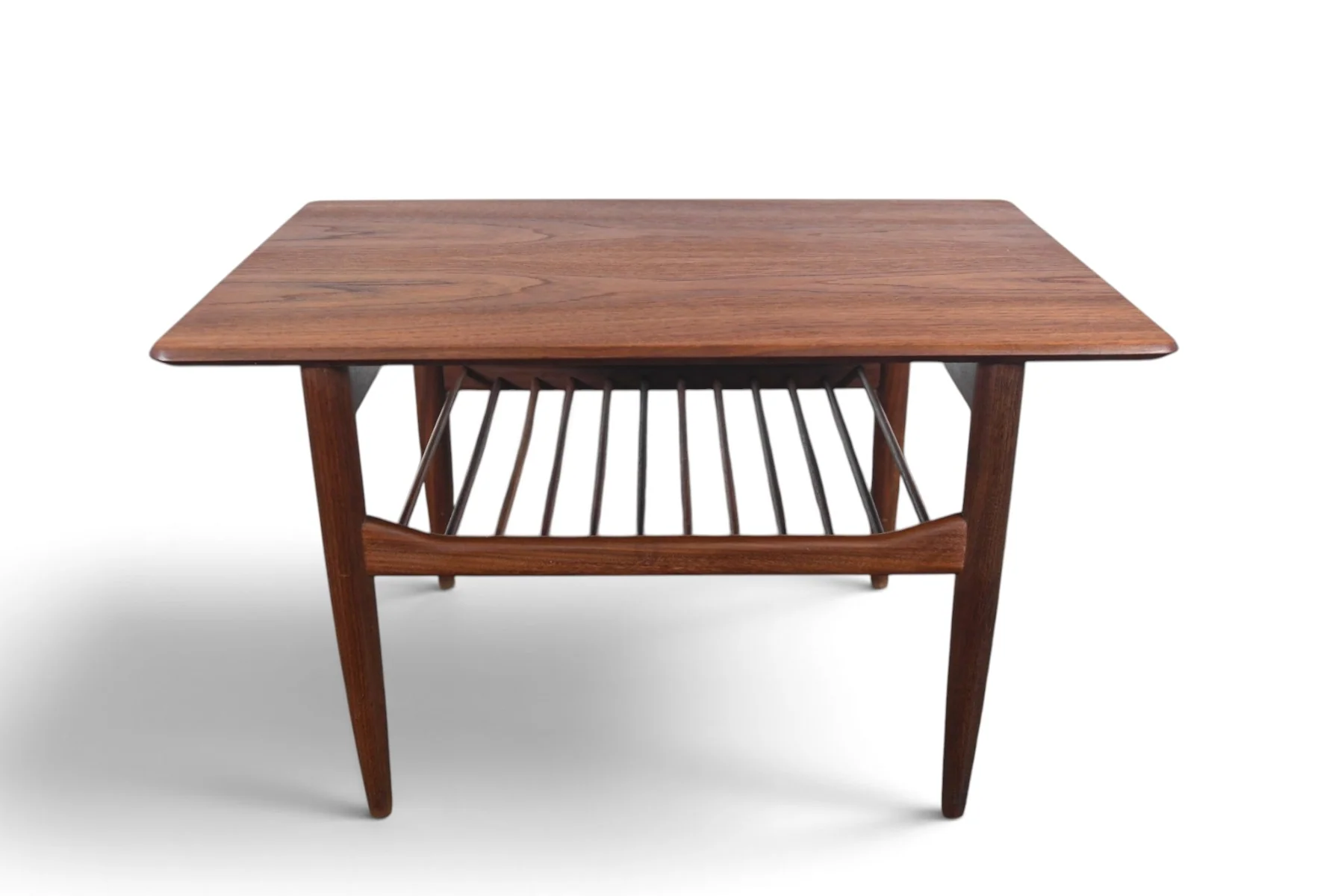

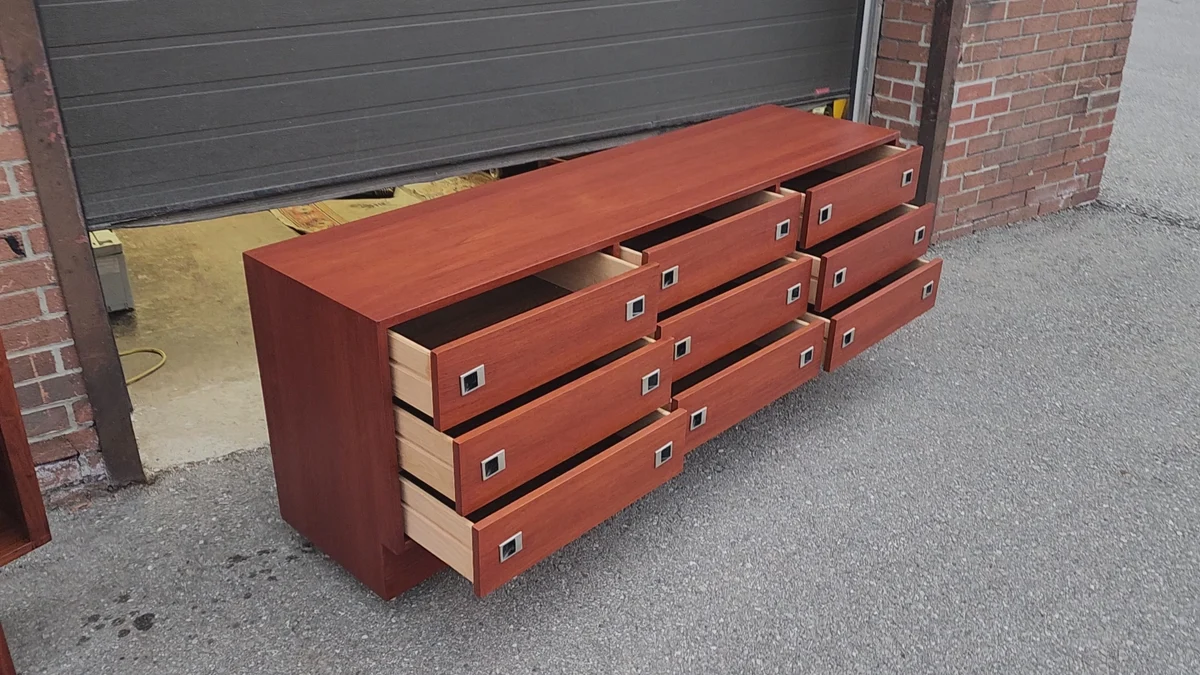
My love for mid-century modern started in my grandparents’ 1960s living room, where everything felt solid and calm. Walnut casegoods that sat square. Drawers that still glided. Legs that did not wobble when you set down a cup of coffee.
Fast forward to my own weekends of estate sales and thrift runs, and I’ve learned something the hard way: a piece can look like a dream from six feet away and still be a structural nightmare up close. Scratches, haze, and a tired finish are usually fixable. Structural problems can be repaired by a skilled restorer, but they are often not worth taking on at thrift-store prices or on a normal DIY timeline.
Here are five red flags I treat as walk-away warnings when I’m thrifting mid-century wooden furniture, especially veneered case pieces like dressers, credenzas, and nightstands.
90-second structural check
I do this quick routine even when I am trying to be “just browsing.” It saves so much regret.
- Rock test: Put both hands on the top and gently rock. Wobble can be loose joints or a racked case.
- Square test: Step back and look at the silhouette. Does it lean, twist, or look like a parallelogram?
- Drawer test: Open drawers halfway and wiggle them side-to-side. Excess play can signal worn runners, broken guides, or a case that is out of square.
- Smell test: Put your nose near the wood. A musty odor can point to water damage or mold, but it can also be smoke, pet odors, mothballs, or heavy cleaners used to mask storage funk.
- Flashlight check: Look underneath and inside corners for repairs, cracks, and insect holes.
If the piece passes that, then I start caring about finish, style, and price. If you want help deciding what something is worth once it passes the safety test, I use the same process every time in How to Price Check Vintage Mid-Century Thrift Finds.
1) Failed joinery
This is the big one. Mid-century wooden furniture depends on strong joinery: dowels, dados, rabbet joints, corner blocks, and well-fitted glue surfaces. When those fail, the whole piece loses integrity.
What it looks like
- Gaps you can see at corners where panels meet
- Legs that wiggle even when the floor is level
- Aprons pulling away from the case
- Cracked wood around screws or brackets
- Previous “fixes” like L-brackets everywhere, drywall screws, or globs of construction adhesive
Why it matters
Regluing a clean, tight joint is one thing. Rebuilding a joint that is blown out, missing wood, or repeatedly repaired is another. On veneered casegoods, structural failure can also lead to veneer cracking because the carcass shifts every time the piece is moved.
My walk-away line
If I can move the structure with my hands (not just a loose handle or drawer pull), and the joint is split or missing material, I pass. If you are newer to vintage buying, this is one of the safest boundaries to keep.
2) Out-of-square cases
A racked case is when the furniture body has shifted out of square. Think of a rectangle pushed into a parallelogram. It happens after rough moves, long-term uneven loading, or moisture exposure that softens glue joints and lets the structure creep.

How to spot it
- Doors that do not align or have uneven gaps
- Drawers that bind, rub, or pop open on their own
- Back panel looks bowed or pulled away at a corner
- The top overhang is uneven from left to right
Why it is hard to fix
Squaring up a case often requires disassembly, clamping in multiple directions, and sometimes replacing internal supports. Even then, veneered panels can crack during the process. If the structure has been distorted for years, you may be fighting memory in the wood and stretched fastener holes.
When I still consider it
Only if the rack is minor and clearly caused by something simple like a loose back panel that can be reattached, or one broken corner block that can be replaced. Otherwise, I save my energy for a piece that starts life square.
3) Serious water damage
Water is the quiet destroyer of mid-century wood furniture, especially anything with veneer over plywood or particleboard cores. A small ring is cosmetic. Water that soaked in and swelled the substrate is structural.
Signs it went beyond the finish
- Swollen edges: The perimeter looks puffy, rounded, or lumpy
- Bubbling: Veneer looks raised in blisters
- Delamination: Layers of ply separating like pages
- Soft spots: Press gently with your thumb and the surface gives
- Black staining with odor: A musty smell plus dark discoloration can indicate moisture problems that may include mold
Why it can be a dealbreaker
Once the core swells, it often never returns to flat. Even if you sand and refinish, you are refinishing a shape that is permanently distorted. Delaminated plywood loses strength. Soft particleboard turns crumbly when you try to clamp or screw into it.
My walk-away line
If an edge feels spongy, if layers are separating, or if I see swelling around feet (common from wet mops and basements), I pass. You cannot refinish your way out of structural swelling.
4) Major veneer failure
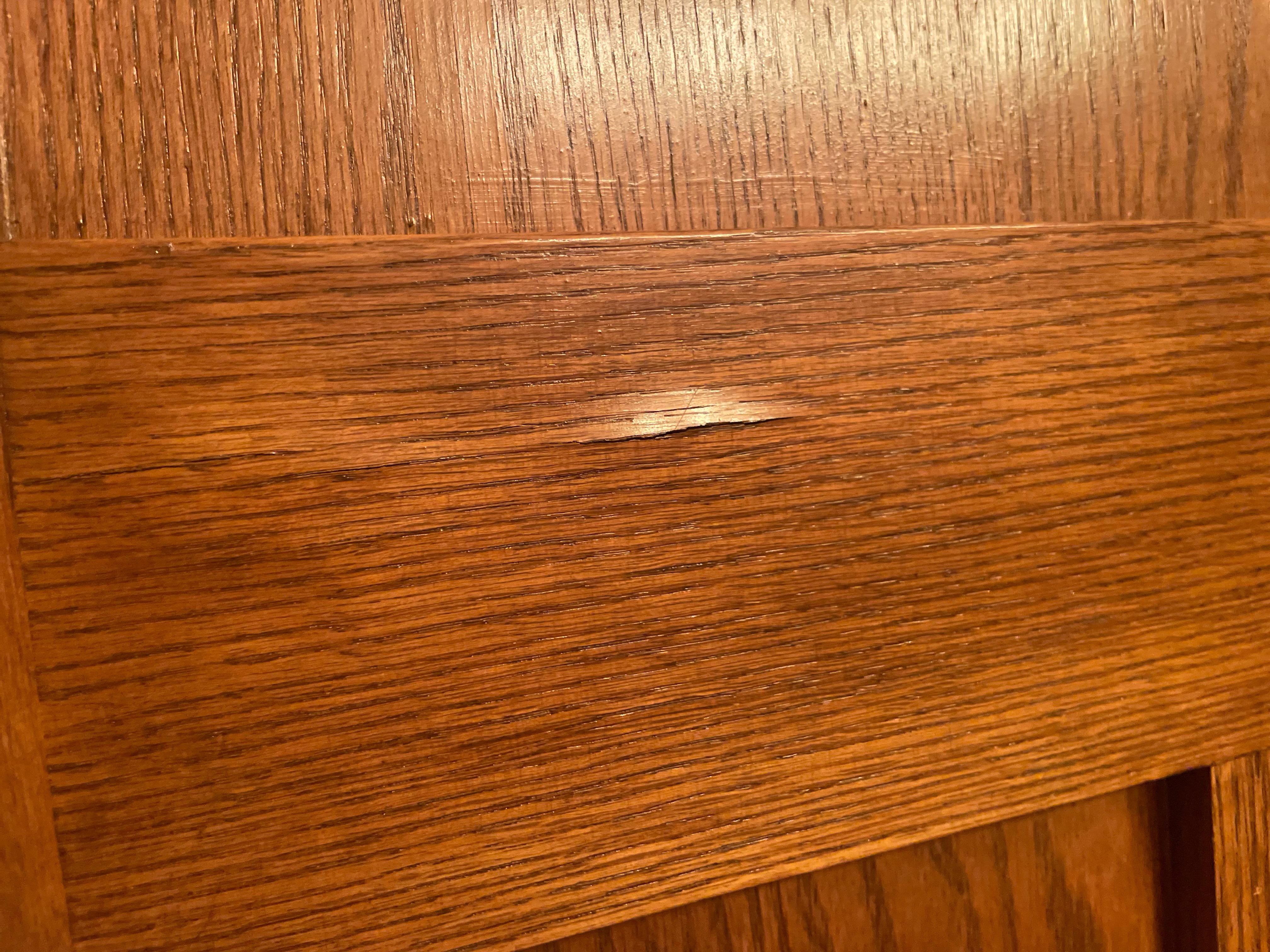
I am a huge fan of veneered teak and walnut. Veneer is authentic to the era, and it is part of what gives mid-century pieces those broad, calm planes. But veneer has rules. When it fails badly, repairs become a full resurfacing project.
What to look for
- Lifted edges: Veneer curling up at seams or corners
- Ripples and waves: The surface looks like it has hills and valleys
- Cracks across the grain: Often from dryness, heat, or movement underneath
- Missing chunks: Especially on front edges of dressers and credenzas
When it is a real problem
Small lifts can sometimes be reglued if the veneer is intact and the substrate is solid. The red flag is when veneer is lifting because the core has swelled, warped, or broken down. In that case, you can glue it down today and it will still telegraph unevenness. Missing veneer on a highly visible spot can be patched, but matching grain, thickness, and color takes time and a good donor source.
My walk-away line
If a large surface like a top, door, or drawer front has widespread bubbling or rippling, I pass unless the price is basically “practice piece” low. You will spend more hours than you think trying to make it look calm again.
5) Active insect damage
Tiny holes in wood can be old, inactive history. They can also be an active infestation you bring home to your other furniture. I take this one seriously, especially with thrifted pieces that have lived in sheds, barns, or damp basements.
What to look for
- Fresh, pale frass: Fine powder collecting under holes or in drawers
- Clusters of small round holes: Often 1 to 3 mm, especially on undersides
- Soft tunneling: Wood that feels fragile around the holes
- New holes in finished surfaces: A bad sign that activity continued after finishing
Why it is a dealbreaker
Most people use “woodworm” as a catch-all, but the culprits are usually different types of wood-boring beetles. Whatever the exact species, the practical issue is the same: if activity is current, you risk bringing it into your home. Even if you treat an active infestation, you may be left with structurally weakened rails, legs, or drawer parts.
My walk-away line
If I see fresh powder or feel punky wood around holes, I pass. No bargain is good enough to gamble with the pieces already living in your home.
Backs and drawer bottoms
This one is so common it deserves its own quick check. Missing or failing backs and drawer bottoms can be an easy fix, or a clue the piece has been stressed, dragged, or stored somewhere damp.
What I check
- Back panel: Is it present, attached, and not bowed, broken, or pulling off at the corners?
- Drawer bottoms: Do they sag, crack, or drop out of the grooves when you lift the drawer slightly?
- Fastener chaos: Random nails, staples, or screws all over the back can mean repeated racking or repairs.
My walk-away line
If the back is failing and the case feels racked, I treat it as a structural problem and move on. If it is simply a loose hardboard panel and the case is still square, I might negotiate and plan to reattach it properly.
Quick safety habits
I still do the smell test, but I do it smart. If a piece seems moldy or buggy, I keep my face out of enclosed drawers, avoid rubbing my eyes, and wash my hands after. And if I ever did buy something questionable to treat or repair (rare), I would isolate it away from my other furniture until I was confident it was clean and inactive.
What is usually fixable
Just to keep things encouraging, here are a few common thrift-store issues that look scary but often are not fatal.
- Finish haze and water rings that do not come with swelling
- Surface scratches that do not cut through veneer
- Loose hardware like pulls and knobs
- Sticky drawers caused by grime, old wax, or simple alignment issues
- Wobble from missing levelers or glides (as long as the joint itself is solid)
If you are also thrifting chairs and sofas, the checklist changes a bit. I keep a separate mental script for upholstery in Buying Vintage Mid-Century Upholstered Furniture: What to Check.
Walk away, negotiate, or buy
When I am standing in a thrift aisle trying not to overthink, I ask myself three questions.
- Is the structure stable today? If no, I usually walk.
- Is the problem cosmetic or structural? Cosmetic issues can be priced into the project.
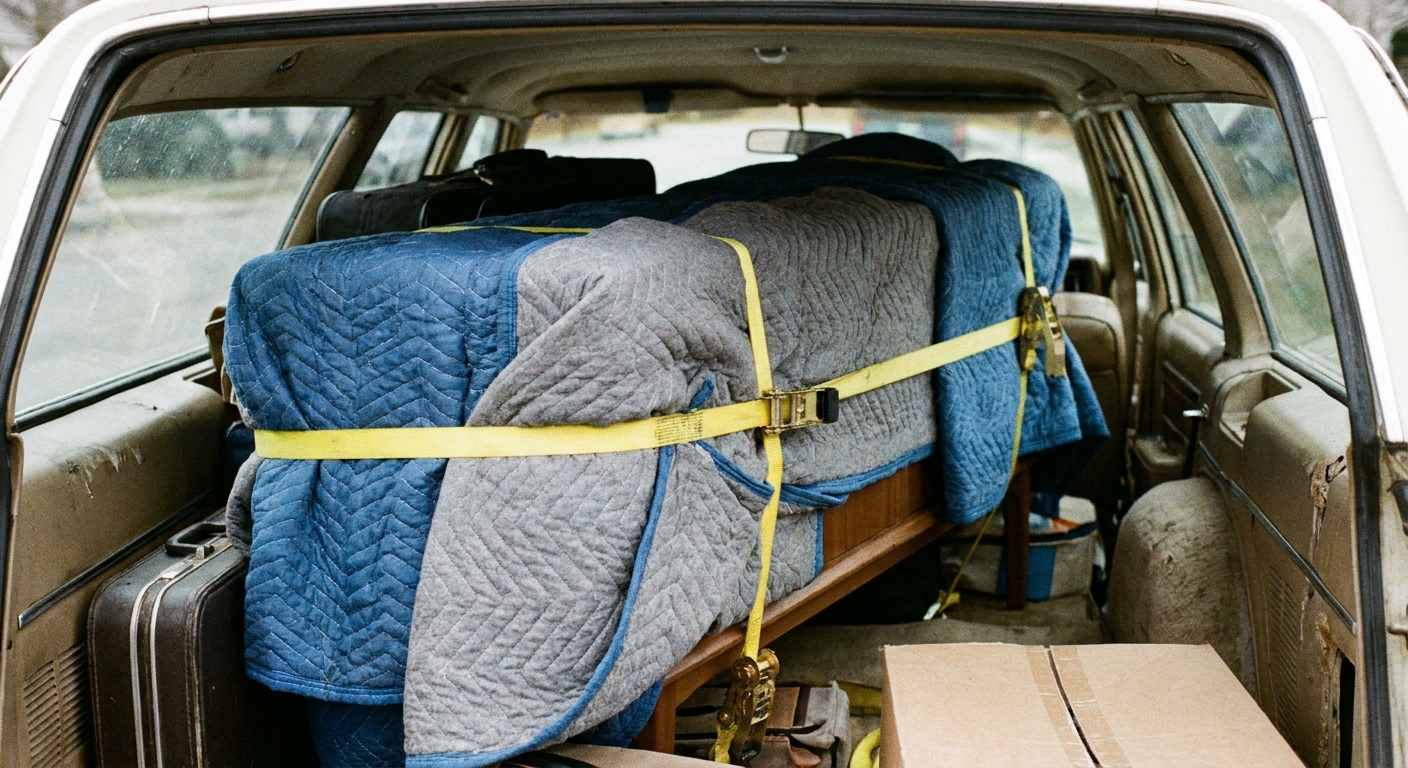
- Can I transport it without making it worse? A fragile piece can turn into a box of parts on the ride home.
If you do buy, moving matters more than people realize. I learned that after one too many “it fit in the car somehow” adventures. This is how I do it now: How to Safely Move Thrifted Mid-Century Modern Furniture.
Quick FAQ
How can you tell if veneer is real wood or laminate?
Veneer is a thin layer of real wood, so you will usually see natural grain variation and seams where sheets meet. Laminate often has a more repeat-pattern look and wraps around edges differently. Both can be period-appropriate. Veneer tends to show up on many higher-end mid-century casegoods, while laminate is common on pieces designed to take hard wear, especially tops.
Are loose joints always a no?
Not always. A single loose chair rung or a slightly wiggly leg can be a straightforward reglue if the wood is not split and the joint is not wallowed out. Multiple loose joints, cracked wood at stress points, or heavy metal bracing repairs are when I back away.
Does maker information change whether you should buy a damaged piece?
It can, mainly for resale or restoration priority. If you are curious about identifying what you found, I keep a running guide to tags, stamps, and serial numbers here: Mid-Century Maker Marks, Tags, Stamps, and Serial Numbers. Even then, structural damage is still structural damage.
The thrift rule I learned late
If a piece is telling you, with its joints and panels and warped surfaces, that it does not want to be furniture anymore, believe it.
There will be another dresser. Another credenza. Another sweet little nightstand with tapered legs and just the right pull. The win is bringing home something you can actually live with, not something that becomes a frustrating, wobbly reminder in the corner of the garage.
And if you want more places to hunt for the good stuff, I rounded up some of my favorite under-the-radar options in 7 Overlooked Local Spots to Score Authentic Mid-Century Modern Furniture.