
I can still picture my grandparents’ 1960s living room like it was a set from an old magazine: warm walnut everywhere, a low-slung credenza that seemed to float, and those perfect, tapered legs that made even heavy furniture look light on its feet. Fast forward a few decades and I have spent a lot of weekends dragging dressers out of estate sales and peering under tables with my phone flashlight, trying to answer the same question you are probably asking right now.
Is this the real thing, or a modern replica wearing a vintage costume?
The good news is you do not need to be a dealer to get it right. Authentic mid-century modern wood furniture tends to “tell on itself” through construction, materials, and small details that are hard to fake convincingly at scale. Here is how I check a piece in real life, starting with the fastest clues and moving into the nerdy stuff.
Start with a quick check
Before you get lost in maker’s marks, take a quick pass to see whether the piece behaves like mid-century design.
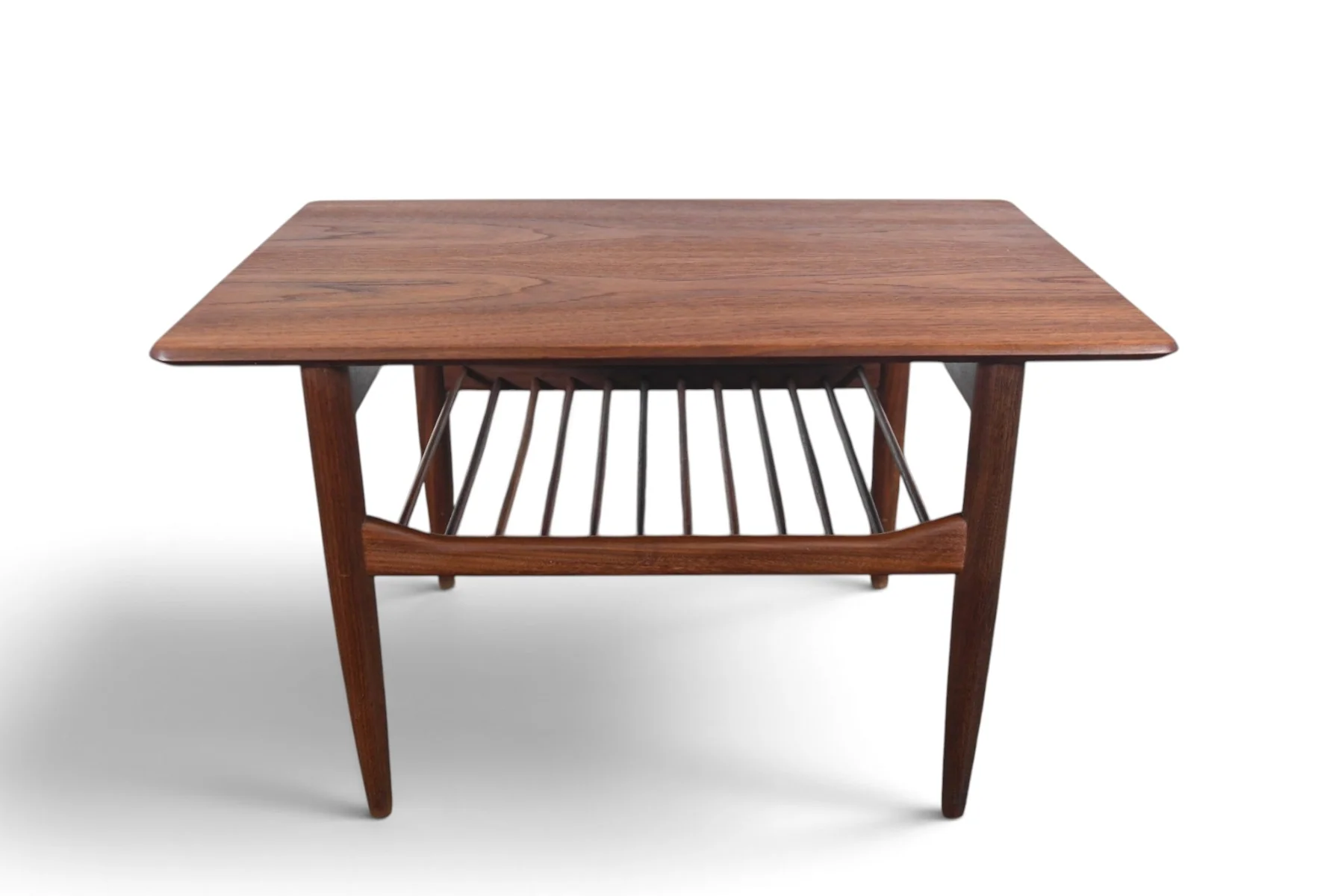
- Proportions: Many authentic MCM case pieces sit low and long. Legs are usually slim and set in from the edges, not bulky at the corners.
- Weight: Vintage can sometimes feel surprisingly heavy for its visual lightness, especially when there is a solid frame or a thick plywood core. But weight varies a lot by maker and line. Plenty of authentic pieces use lighter secondary woods or veneered cores, so do not use “heavy” as a pass fail test.
- Consistency: If the style is screaming “1962” but the construction looks brand new, trust your instincts and investigate.
This is also where it helps to know the era you are shopping. A 1970s piece can still be “mid-century modern” in the broader sense, but materials and silhouettes shift. If you want help narrowing that down, I keep a cheat sheet on decade clues here: How to date mid-century modern thrift finds (1950s vs. 1970s).
Construction gives it away
When I am deciding between authentic vintage and a newer reproduction, joinery is usually the tie-breaker. Many mid-century makers built for daily life, and you can see it in how parts connect.
Drawer joinery
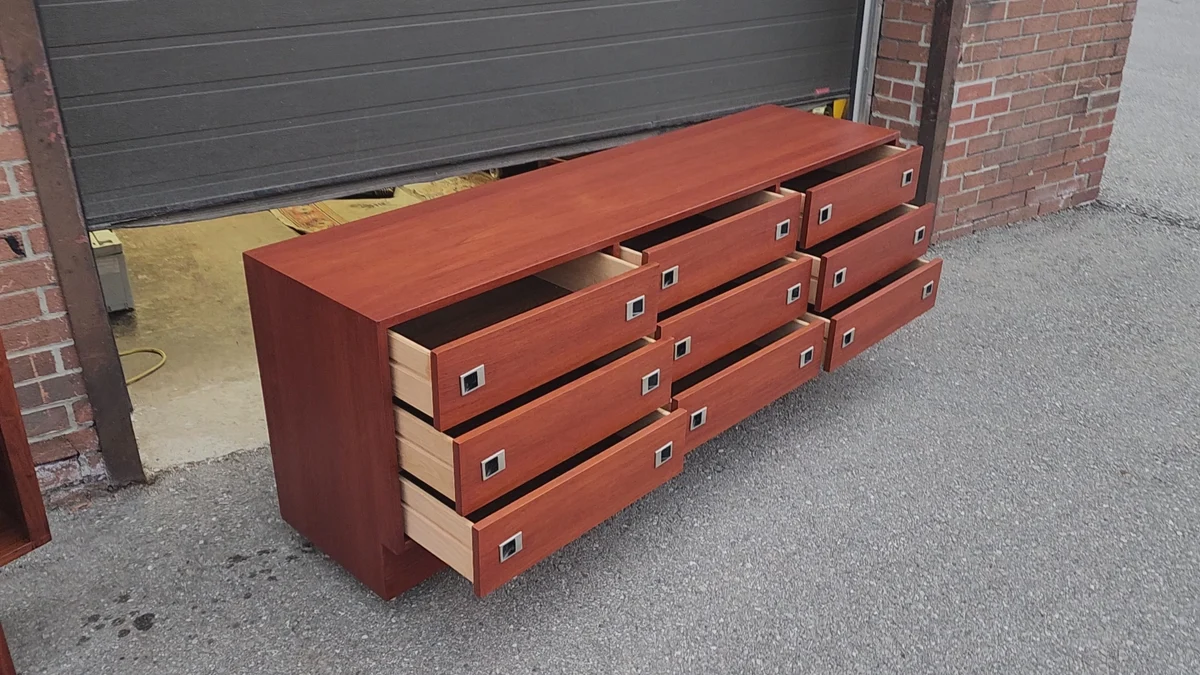
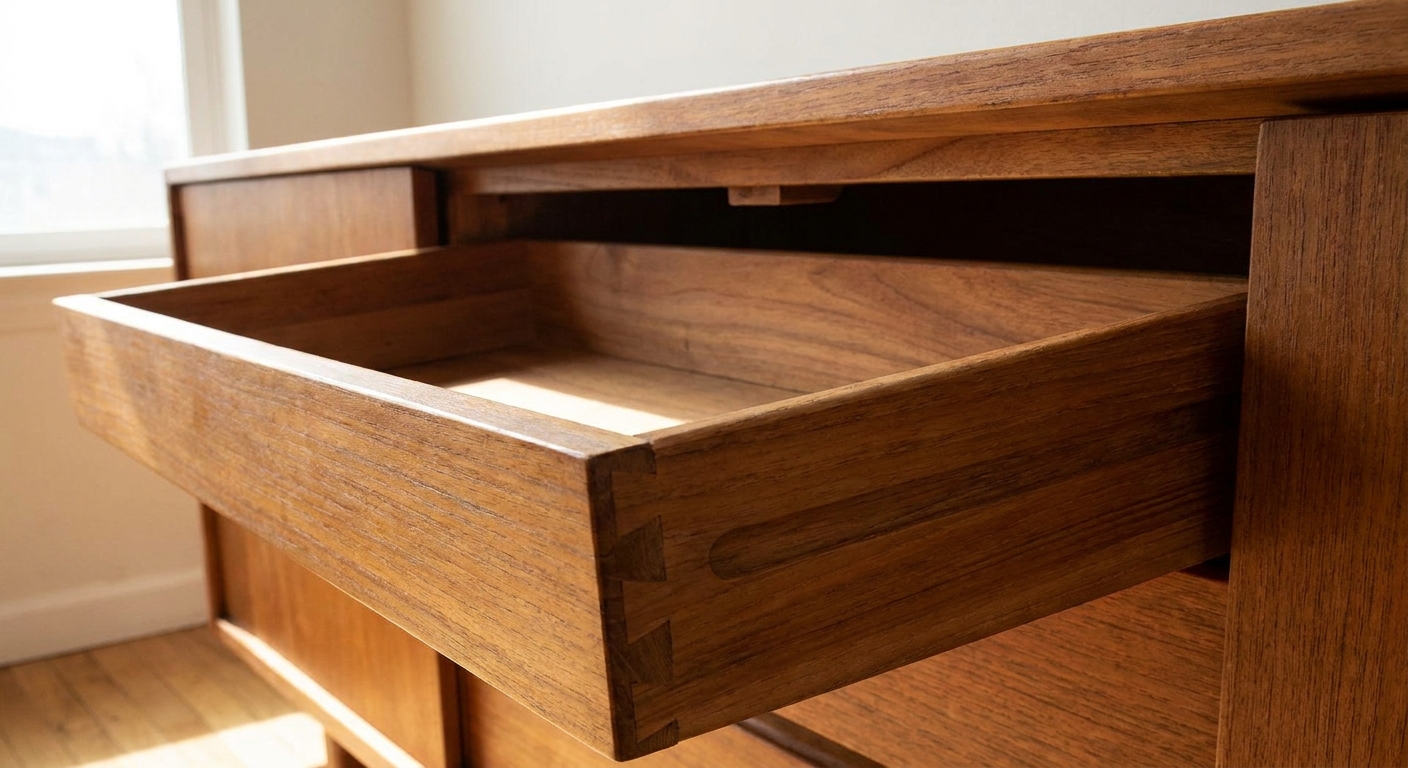
- Dovetails: Common on better-quality dressers and case pieces. Look for crisp, interlocking “fingers” at drawer corners. Hand-cut dovetails may look slightly irregular, while machine-cut are more uniform. Both can be authentic.
- Box joints (finger joints): Also common and absolutely period-appropriate, especially in Danish and American production lines.
- Solid-wood drawer boxes: Often maple, birch, or another light hardwood. Thin, stapled particleboard drawer sides are a modern economy move.
Fasteners and staples
I still treat fasteners as a clue, not a rule. Screws, bolts, wooden dowels, and glued joinery are common on authentic pieces. Staples are not automatically bad, but I pay attention to where they show up.
- Not usually alarming: A neat staple line holding a dust cover, webbing, or a drawer bottom, especially if everything else looks period-correct.
- More concerning: Staples doing structural work, like holding a leg block, supporting a stretcher, or pinning together major joints where you would expect joinery or screws.
Check underneath
Flip the piece or crouch down with a light. Here is what I check:
- Corner blocking and braces: Solid reinforcement at stress points is a great sign.
- Back panels: Vintage backs are often thin but neatly fit, sometimes set into grooves. A bright white, freshly cut back panel can be a replica clue, but it can also mean the piece was repaired. Also, some late-1960s and 1970s pieces used hardboard backs, so consider the full story before you rule it out.
- Drawer runners: Wood-on-wood runners are common. Metal slides can appear on later pieces, but shiny modern ball-bearing slides on a “1950s” dresser raise questions.
If you want a deeper structural checklist for thrifted wood furniture, I wrote this specifically for red flags you can spot fast in a driveway or thrift aisle: 5 structural red flags to avoid when thrifting mid-century wooden furniture.
Wood and veneer clues
Mid-century furniture is famous for its wood, but it is also famous for its veneers. Veneer is not a bad word in vintage. Some of the best designs rely on beautiful veneer over stable cores.
One nuance I always keep in mind while I am playing detective: refinishing and staining can disguise wood species, and oxidation can shift color over decades. So I treat wood ID as a strong hint, not a courtroom verdict.
Teak
What it looks like: Often golden to medium brown with darker streaks and fairly straight grain. Depending on age, sun, and finish, it can look warmer, darker, or more muted.
Common authentic tell: Danish teak pieces frequently use teak veneer over a plywood core. Check edges and the underside. You might see a different secondary wood where it will not show.
Walnut
What it looks like: Rich brown with variation that can lean chocolate, sometimes with cathedral grain patterns on large surfaces.
Common authentic tell: Walnut veneer book-matched across cabinet doors or drawer fronts. A mirror-image grain pattern is often a sign of intentional design, not fakery.
Rosewood looks
Higher-end pieces sometimes feature dramatic, richly striped veneers. You will also see plenty of “rosewood-look” finishes and veneers in later production and reproductions. If you spot bold striping at a suspiciously low price, inspect closely for printed faux grain or repeating patterns that look too identical from panel to panel.
Veneer vs. solid wood
- End grain: Solid wood shows end grain. Veneer does not.
- Edges: Look at the edge of a tabletop or cabinet door. Veneer may wrap around, or you may see a thin seam where it meets edge banding.
- Grain behavior: Solid wood grain continues naturally around edges. Veneer grain can stop abruptly at a seam.
Replica pieces sometimes use thick, plastic-like laminate or photo-printed surfaces that mimic wood. Under bright light, those surfaces can look a little too uniform and flat.
Maker marks
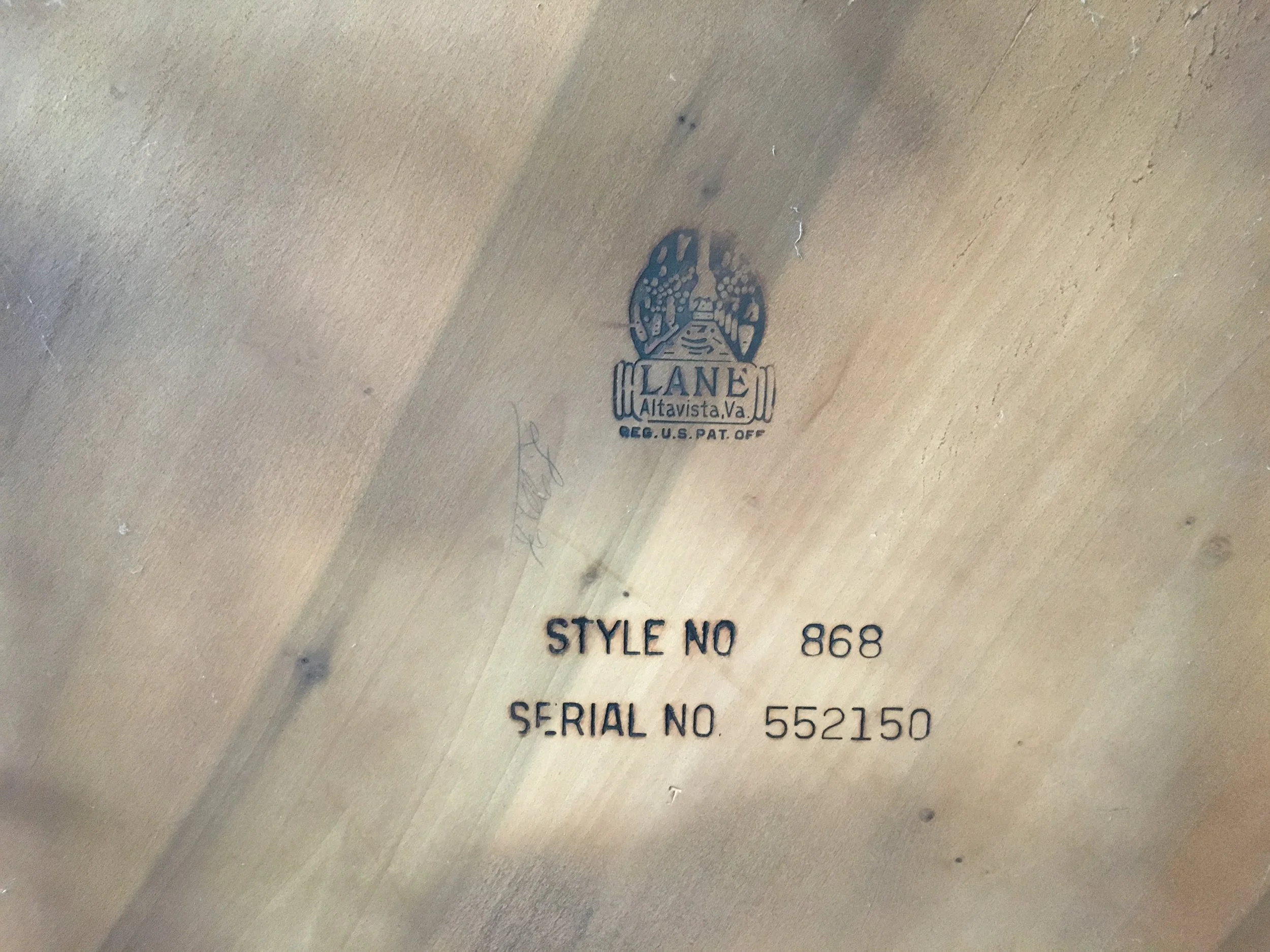
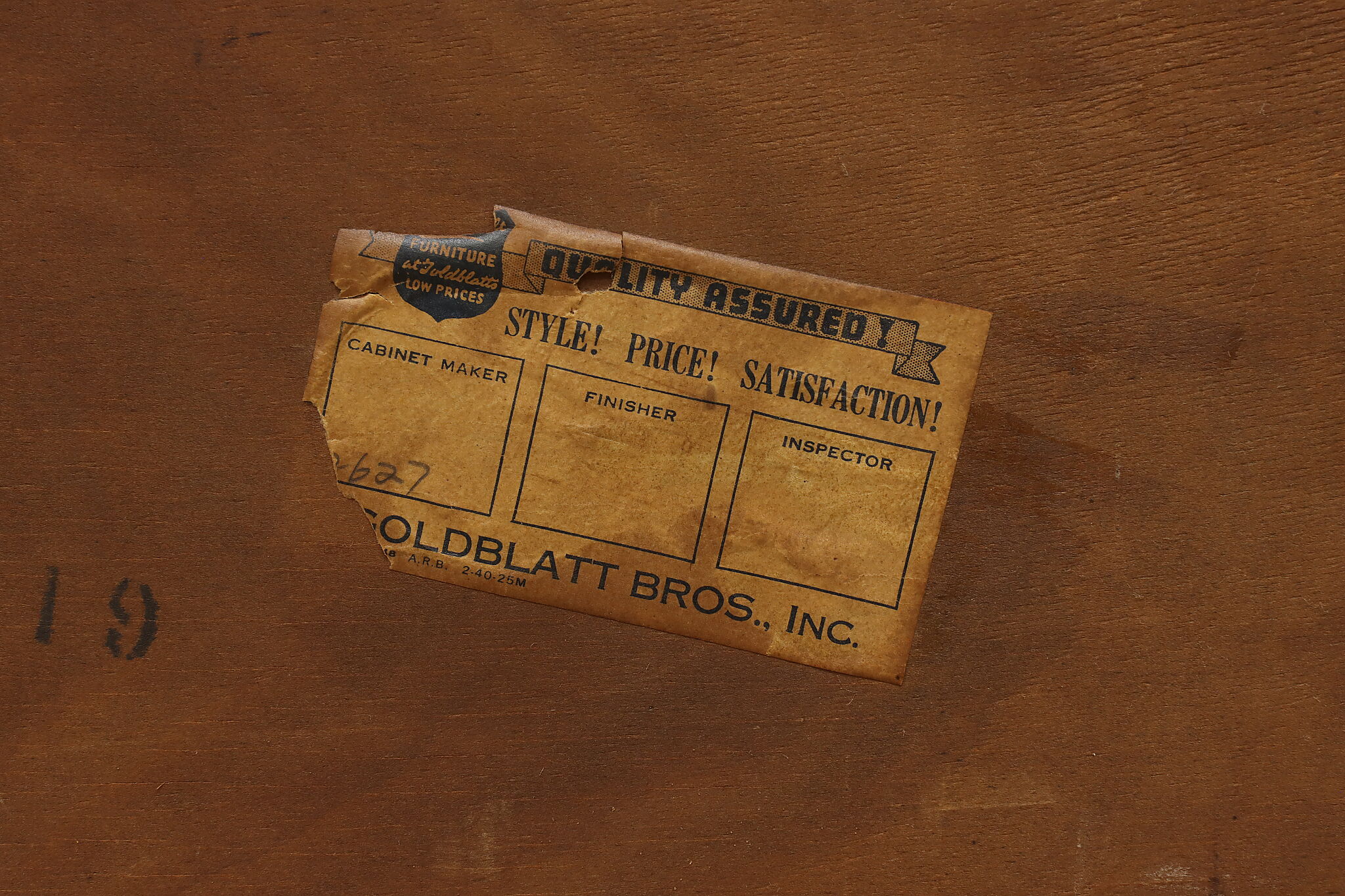
When a piece is marked, it is like finding a birth certificate. But many authentic pieces are unmarked, so treat labels as helpful evidence, not the only proof.
Where marks hide
- Inside top drawers or on the drawer side
- On the back panel near a corner
- Underneath case pieces or tables
- On the underside of chair seats
Types of marks
- Foil or paper labels: Often partially missing. Age and wear are normal.
- Ink stamps: Can be faint, especially on unfinished wood.
- Branded stamps or burned marks: More durable, often on higher-end production.
- Serial numbers or model numbers: Great for research if you can read them clearly.
If you want help decoding what you find, I keep a dedicated guide here: Mid-century maker marks, tags, stamps, and serial numbers.
Hardware details
Hardware is one of my favorite tells because it is both highly specific to the era and expensive to reproduce convincingly.
Pulls and knobs
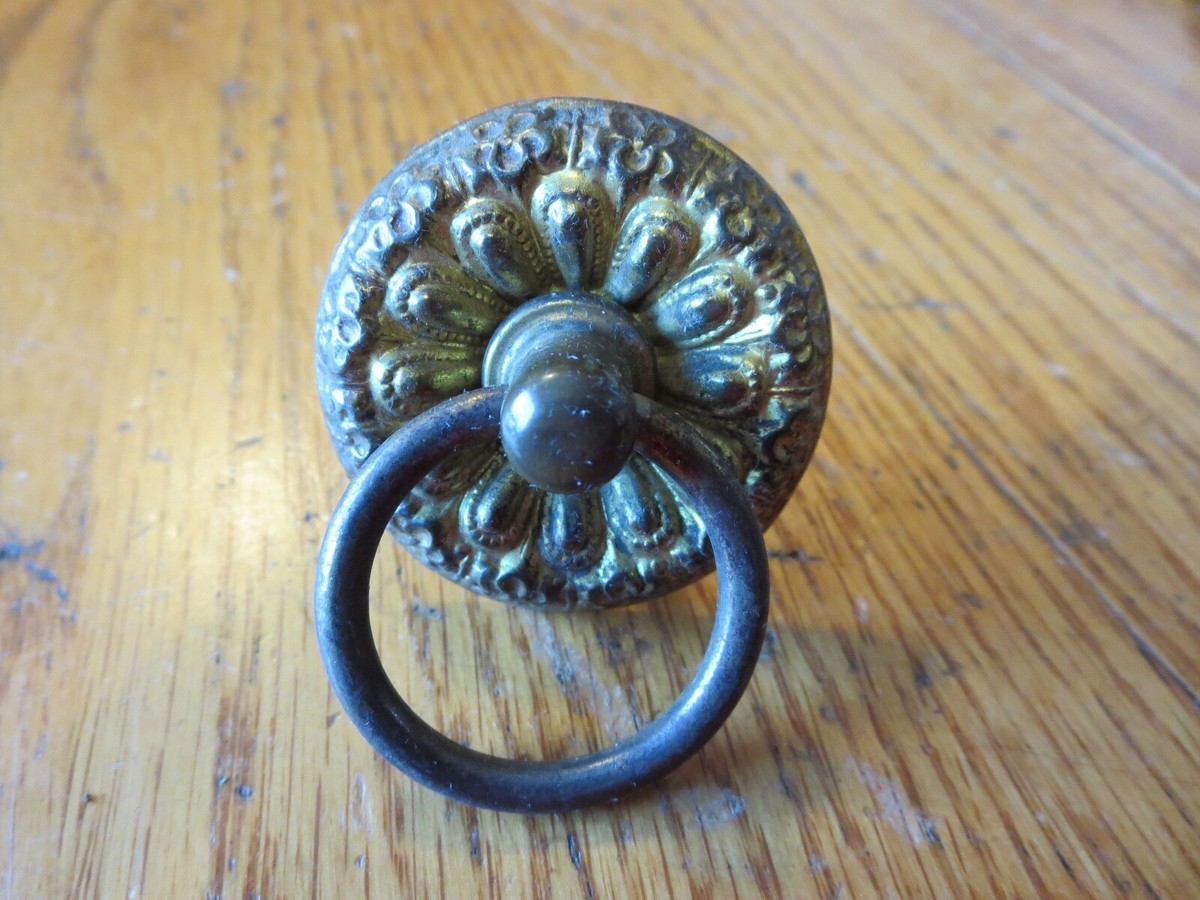
- Patina that makes sense: Brass and aluminum age in believable ways. If a piece claims to be 60 years old but every pull looks freshly cast, question it.
- Attachment and holes: Remove a drawer and look at how the pull is attached. Period pulls often use machine screws and simple plates. Also check for extra holes or “shadow marks” that suggest hardware was swapped.
- Correct styling: Many authentic pulls are minimal, sculptural, or integrated. Chunky, overly ornate pulls can be a later replacement or a style mismatch.
Legs and feet
Tapered legs are everywhere in MCM, but look at how they connect:
- Threaded inserts and hanger bolts: Common and sturdy on authentic case pieces.
- Dowels and angled brackets: Also common.
- Wobbly screw-in legs into soft composite: More typical of newer budget furniture, or an older piece that has been repaired poorly.
Edges and profiles
Real mid-century case goods often feature thoughtful details like beveled edges, lipped drawer fronts, subtle finger pulls, and gentle radius corners. Replicas sometimes exaggerate these or make them too sharp and perfect.
Finish and wear
I love a well-cared-for vintage piece, but authentic age usually leaves evidence. The trick is remembering that restoration exists. A piece can be truly vintage and still look “too nice” because it was refinished last year.
- Sun fading: Tops near windows often lighten, especially on teak.
- Micro scratches: Fine surface scratches are normal, particularly on tabletops.
- Edges: Veneer edges might show tiny chips or softening from decades of cleaning.
A replica can look perfectly uniform in tone, with no variation on the top versus sides. Also watch for thick, glossy polyurethane finishes on pieces that are marketed as Danish modern. Many originals have a softer sheen, often oil or a satin lacquer that ages differently. Refinishing can change that sheen, and aggressive sanding can soften edges and even remove evidence like stamps or labels, so always weigh finish clues alongside construction.
Replicas vs revival pieces
I like to separate these three buckets in my own head:
- Vintage: Made in the mid-century era, even if it has been repaired or refinished.
- Revival or neo-MCM: Made later, but in a mid-century style, and usually sold honestly as new or newer.
- Replica: A piece trying to pass as older or higher-end than it is, often by copying iconic details while using cheaper materials.
Common exceptions
These are the things that can trick you into calling a real piece fake, or a fake piece real.
- Replaced backs: A newer back panel does not automatically mean the whole piece is new. Look for older screw holes, aged interior wood, and period joinery elsewhere.
- Swapped hardware or legs: Check for extra holes, mismatched patina, and different screw types. One new pull on an old dresser is common. A full set of brand-new pulls can be a sign of a flip, not necessarily a replica.
- Refinishing: A refinished top can erase wear patterns and shift wood color. It can also remove paper labels.
- Random stickers: Moving-company tags and estate-sale stickers happen. But a fresh modern compliance label paired with brand-new hardware and zero age elsewhere is worth a closer look.
Replica warning signs
- Particleboard core with peeling “wood” film: Authentic veneer can lift, but it does not usually peel like plastic wrap.
- Identical grain on multiple drawers: Nature repeats, but not that neatly. Printed faux grain is often a repeat pattern.
- Only modern manufacturing stickers: A brand label is fine, but a modern compliance sticker plus brand-new hardware plus zero age marks does not add up for “vintage.”
- Oddly high leg height on case goods: Some reproductions lift pieces too far off the ground to look more “modern.” Many originals sit lower.
- Suspicious story pricing: “Vintage designer teak” at a price that is too good, paired with vague photos, is a common setup for disappointment.
Pricing is its own skill, especially when a seller is using the word “MCM” loosely. If you want my process for sanity-checking value before you buy, start here: How to price check vintage mid-century thrift finds.
My 5-minute checklist
- Check the silhouette: Does it feel true to mid-century proportions?
- Open a drawer: Check joinery and drawer box material.
- Look underneath: Check bracing, back panel, and leg attachment.
- Scan for marks: Back, underside, inside drawers.
- Study the surface: Veneer behavior at edges, believable wear, and finish sheen.
If three of these five checks feel right, I usually keep digging. If three feel wrong, I walk away unless the piece is priced like a modern piece and I simply love it for what it is.
FAQ
Can authentic mid-century furniture be unmarked?
Absolutely. Labels fall off, ink stamps fade, and some manufacturers never marked every piece consistently. Construction and materials matter more than a missing tag.
Are dovetail joints required for authenticity?
No. Dovetails are a quality clue, not a universal rule. Many authentic pieces use box joints, dowels, and other period-correct joinery.
Is veneer a sign a piece is fake?
Not at all. Veneer is extremely common in authentic mid-century furniture, especially on large flat surfaces like credenzas and dressers. The key is whether the veneer is real wood and whether the build quality matches.
What if I love a replica anyway?
Then it is doing its job. My only advice is to buy it with clear eyes and pay “new furniture” pricing. Authenticity matters most when you are paying vintage prices, or when you care about collecting and preserving original design history.
Where I find good pieces
Authentic MCM furniture shows up in all kinds of places, but I have the most consistent luck with estate sales and local listings where the furniture has stayed in the same family for years. If you are building your hunting route, these guides can help: