
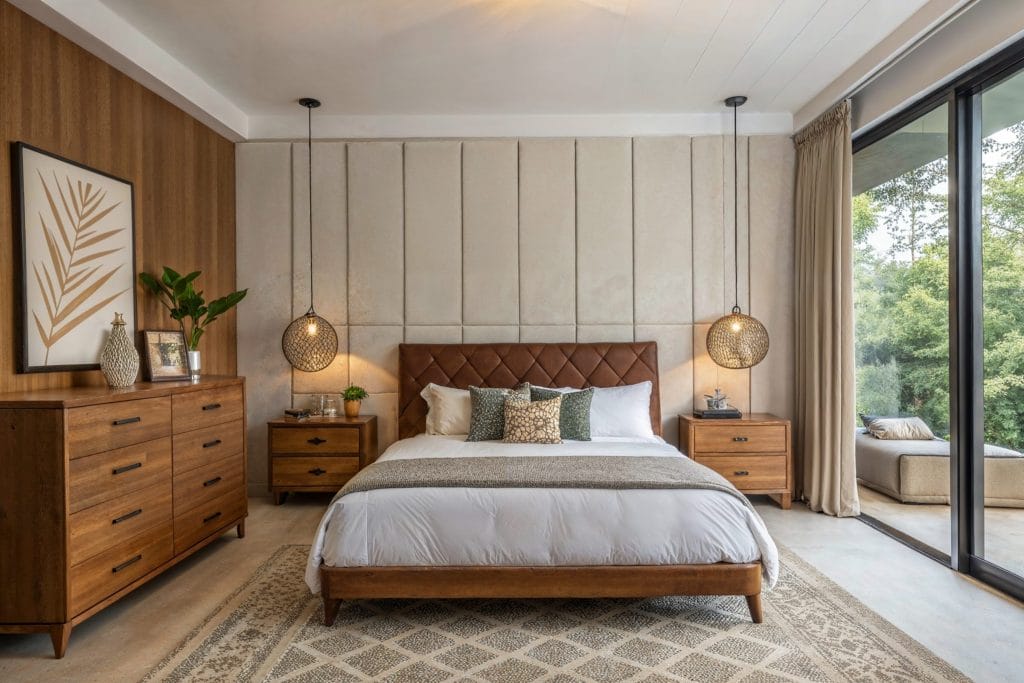
The guest bedroom in my 1958 ranch used to be the room we shut the door on when someone knocked. Beige walls, a tired hand-me-down dresser, and lighting so harsh it made everyone look like they were under interrogation. I wanted it to feel like a little mid-century oasis instead. The kind of room where a friend can set down their bag, take one look around, and exhale.
This makeover is my favorite kind: mostly thrifted, a little scrappy, and anchored by a few details that do the heavy lifting. The starring trio was secondhand mid-century nightstands, bold geometric bedding, and vintage art that made the whole space feel collected rather than decorated.
The plan: cozy first, mid-century always
When I'm building a guest room, I work backward from how I want someone to feel. Not just how I want it to photograph. For this room, the goal was warm, quiet, and intentionally retro without looking like a time capsule.
- Comfort cues: soft lighting, layered bedding, a clear spot for a suitcase, and a surface for a phone and water.
- MCM cues: warm wood tones, clean lines, geometric pattern, and art with a little punch.
- Budget cues: thrifted case goods, spend where you touch, and skip anything that needs major structural repair (like loose joints, cracked rails, or signs of active woodworm).
If you're hunting your own pieces, I keep a running mental checklist from my thrift weekends. If you want a deeper dive on spotting issues before you buy, start with 5 Structural Red Flags to Avoid When Thrifting Mid-Century Wooden Furniture.
Step 1: Start with the thrifted nightstands
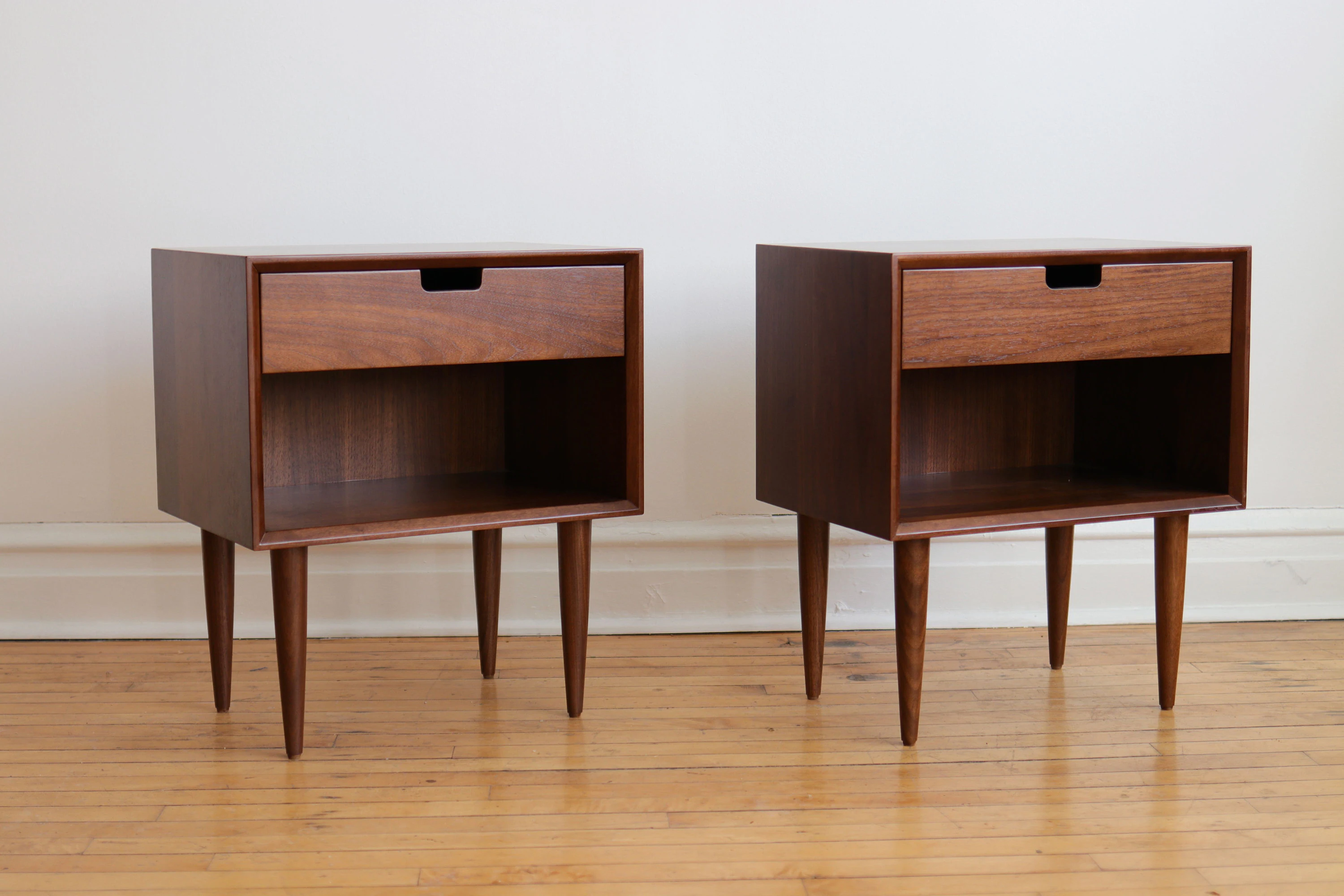
Nightstands are my favorite guest-room anchor because they're practical and they instantly signal, “this room is set up for you.” I found a mismatched pair about six weeks apart, and instead of fighting it, I leaned into the collected look.
What I look for in secondhand nightstands
- Height: close to mattress height (within a few inches) so they feel intentional.
- One drawer minimum: guests love a place to stash a charger, lip balm, or glasses.
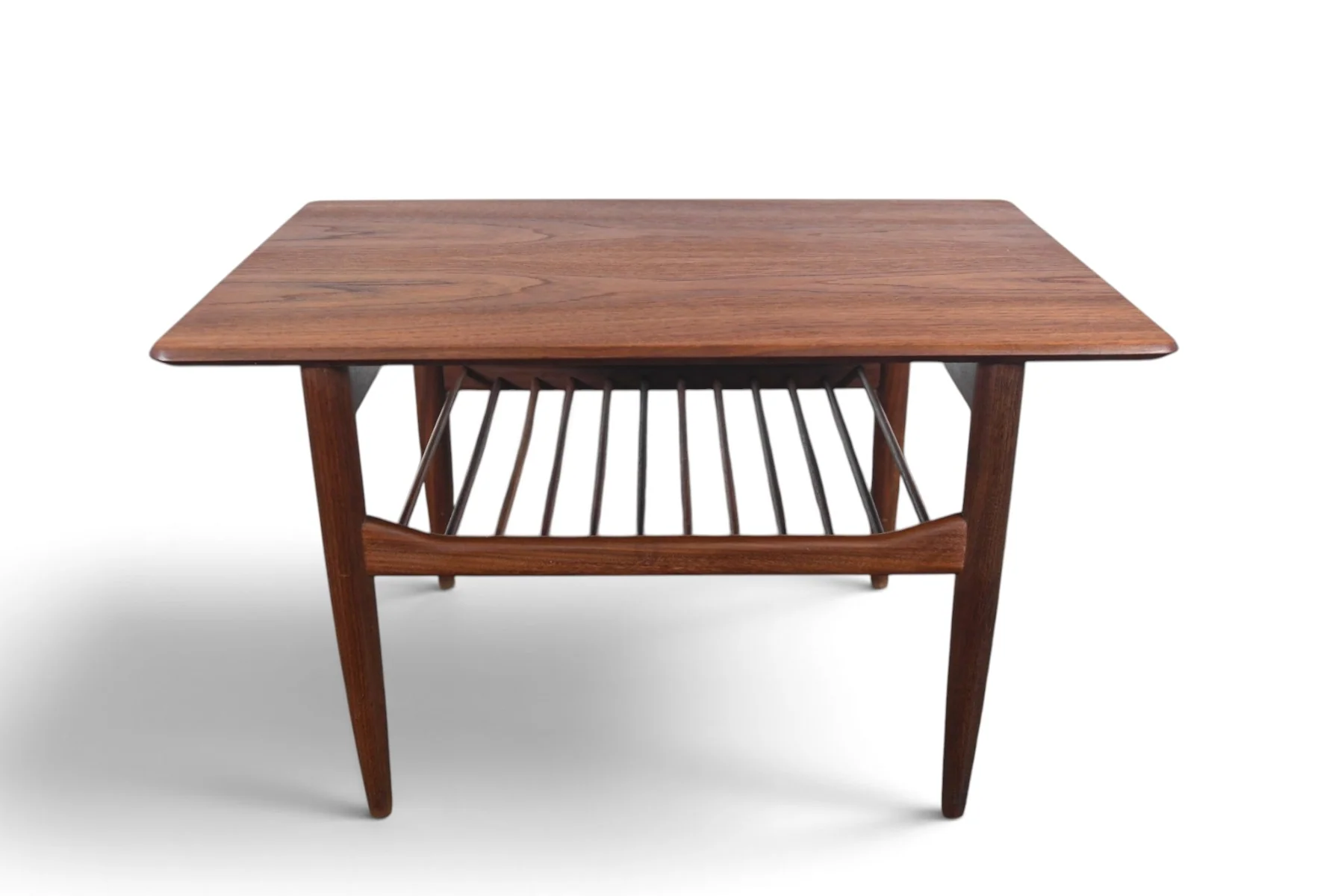
- Legs and lines: tapered legs, simple pulls, and clean faces read mid-century even when the maker is unknown.
- Veneer condition: light edge wear is fine, but bubbling or missing chunks takes more time than I want for a guest room.
Before handing over money, I do a quick price reality check on my phone and a gentle wiggle test. My full method is in How to Price Check Vintage Mid-Century Thrift Finds.
How I made mismatched nightstands feel like a pair
- Unified hardware: I swapped both pulls to simple warm metal so the nightstands spoke the same language.
- Matched lamps: identical lamps on top made the mismatch look intentional, not accidental.
- Same styling: each got a small tray, a coaster, and a book so the silhouettes felt balanced.
Step 2: Choose bold geometric bedding
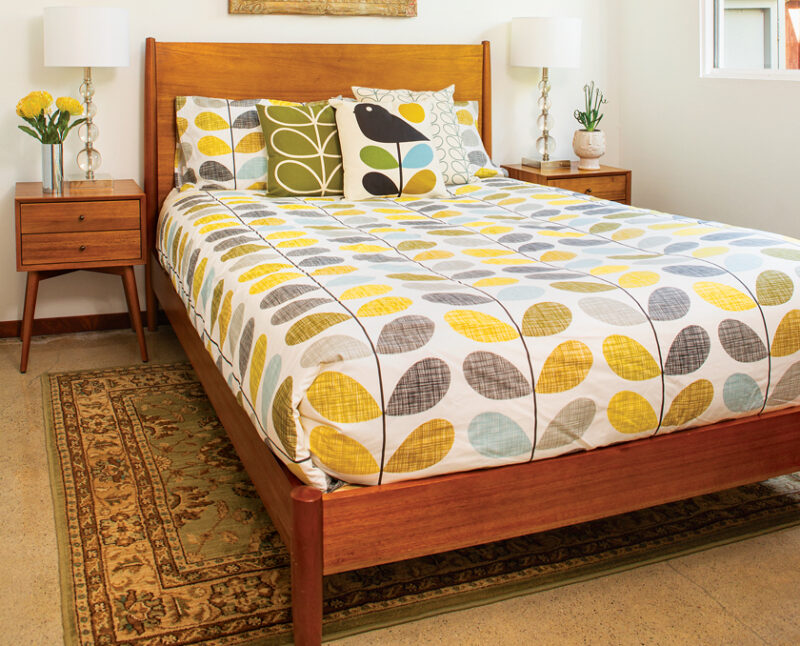
For me, geometric bedding is the fastest shortcut to mid-century energy, but it can go loud fast. My trick is to pick one bold pattern, then build a quiet supporting cast around it.
My bedding formula for a guest room
- Base layer: crisp solid sheets in warm white, oatmeal, or a soft clay tone.
- Statement layer: a duvet or quilt with a geometric print (think mod blocks, chevrons, or atomic-inspired shapes).
- Softener: one textured throw, like a nubby weave or a simple knit, folded at the foot of the bed.
- Pillows: two sleeping pillows plus one lumbar or smaller accent pillow to keep it welcoming, not fussy.
- Backup cozy: I always stash an extra blanket in the closet. Guests run hot and cold, and I'd rather be overprepared than have someone layering a decorative throw at 2 a.m.
If you're torn on color direction, here's what usually works in my house: earth tones tend to feel instantly restorative, while jewel tones often read more dramatic and hotel-like. Both can be very mid-century. I break down the vibe difference in Earth Tones vs. Jewel Tones in Mid-Century Style.
Step 3: Swap the harsh lighting
Lighting is where a guest room goes from “spare room” to “stay awhile.” I like to layer at least two sources: bedside lamps plus something ambient, even if that ambient is just a warm bulb in a simple ceiling fixture.
What I changed
- Bulbs: warm white, usually around 2700K (I find 2200K to 3000K is the sweet spot depending on your paint and wood tones) so everything glows instead of going gray.
- Shades: linen or textured shades to soften the light.
- Switches: if you can, put lamps on an easy-to-reach switch or smart plug so guests don't fumble in the dark.
If you love the sparkle of mixed metals in mid-century rooms, you can absolutely blend finishes here. I keep it cohesive by repeating one finish at least twice. More on that approach in Mixing Brass, Copper, and Chrome in Mid-Century Modern Style.
Step 4: Deal with the walls
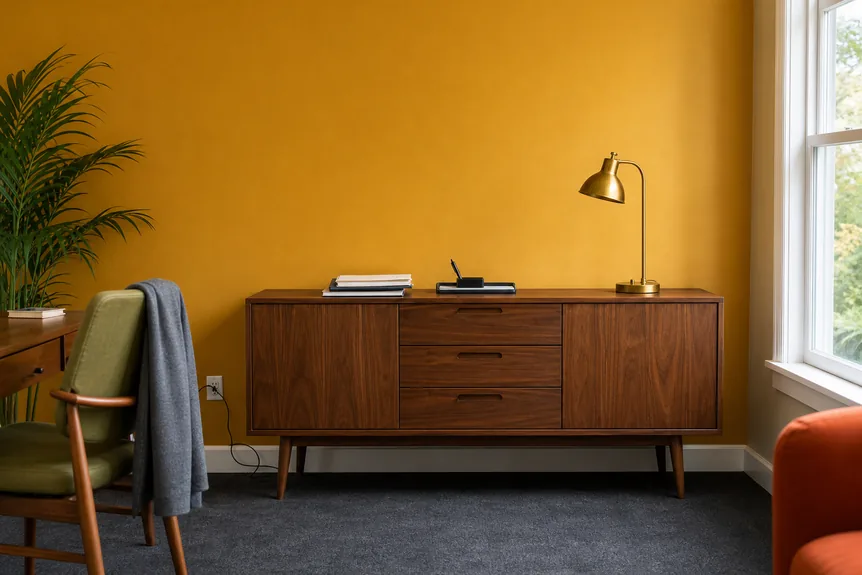
I had to address the beige. I didn't go wild, but I did warm it up so the room felt less rental-bland and more period-friendly. If you want the easiest route, a warm off-white or soft greige is forgiving, plays nicely with walnut and teak, and won't fight bold bedding.
The other thing that helps more than people expect is editing what's on the walls. I pulled down anything too small and too high, then rebuilt the wall art with intention so it felt calm instead of cluttered.
Step 5: Add vintage art with a story
Vintage art is where the room stops feeling like a set. I always look for pieces that have a “someone loved this” quality, even if they cost less than dinner. A linen-backed print, a moody landscape, a cheeky abstract, or a little bit of brass-framed kitsch can all work.
How I built a simple wall moment
- One hero piece: a larger print above the bed to set the tone.
- Two supporting pieces: smaller frames on the adjacent wall to pull the color palette through the room.
- Consistent spacing: even with mixed frames, consistent gaps make it look intentional.
If you want the full play-by-play on getting a mid-century gallery wall to look collected instead of cluttered, I have you covered: Mid-Century Modern Gallery Wall.
Step 6: Make it guest-ready
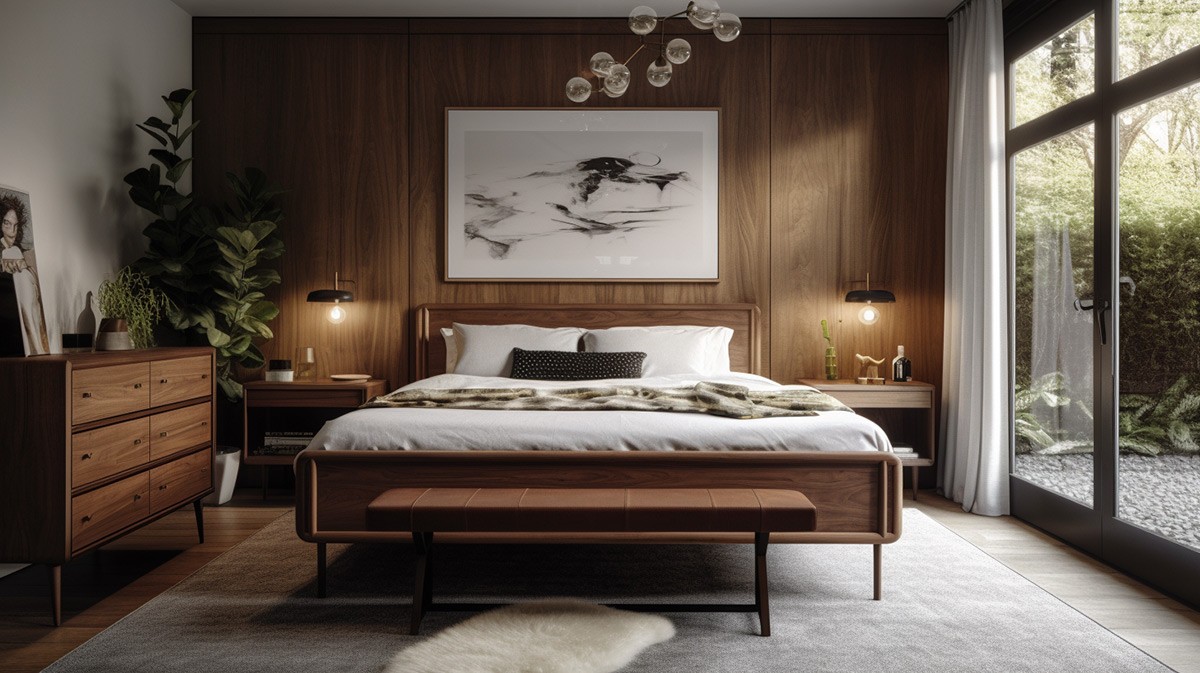
The best guest rooms aren't overstyled. They're prepared. I aim for “pretty, but usable,” which feels very mid-century in spirit anyway.
The small details I never skip
- A clear surface: at least half of one nightstand stays open for a phone and water glass.
- Outlet access: a simple power strip tucked behind the nightstand (with enough slack to actually reach).
- Mirror check: a mirror that isn't hidden behind a door or too high to use.
- Storage cue: a few hangers, and an obvious place to set a suitcase.
- Texture: one soft rug underfoot or right beside the bed for that cozy first step in the morning.
- Window comfort: I like light-filtering curtains at minimum, and I go blackout if the room gets early sun. If you're deciding what works with mid-century lines, Mid-Century Modern Window Treatments is a helpful starting point.
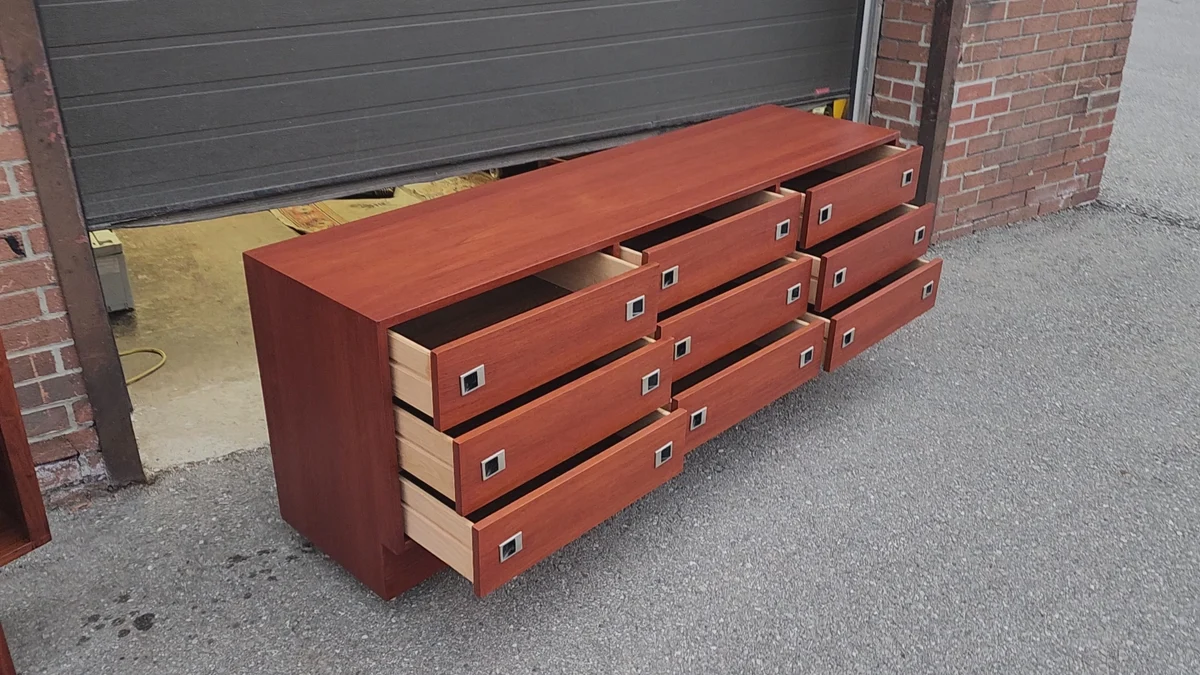
And if your guest room furniture is thrifted, please don't skip the safety step. I learned this the hard way hauling a teak dresser down my hallway. Here's my process now: How to Safely Move Thrifted Mid-Century Modern Furniture.
My budget breakdown approach
When I say “on a budget,” I mean I chose where to splurge and where to be patient. In this room, I spent the most on bedding and the least on decor. I also kept myself honest with rough ranges so I didn't accidentally turn a thrift project into a full retail haul.
| Category | Where I saved | Where I spent |
|---|---|---|
| Nightstands | Thrifted and lightly cleaned up (often $20 to $80 each in my area) | New matching hardware only |
| Bedding | Kept sheets simple and solid | Geometric duvet or quilt as the statement (this was my biggest line item) |
| Lighting | Secondhand lamp bases when possible | Good shades and warm bulbs |
| Art and decor | Thrift frames, vintage prints, found objects (often $5 to $30 per piece) | Professional framing only if it's truly special |
Thrift tips that made it work
This makeover worked because I didn't try to find everything in one day. I set a short list, measured the room, and kept my standards clear. Patient thrifting beats frantic shopping every time.
- Measure before you go: bed width, ideal nightstand height, and the wall space over the headboard.
- Use better keywords: sellers don't always know what “mid-century” means, so searching creatively helps. My go-to list is in Secret Search Terms for Mid-Century Modern on Facebook Marketplace.
- Shop the overlooked spots: some of my best bedroom pieces came from places that aren't the trendy vintage mall. Try 7 Overlooked Local Spots to Score Authentic Mid-Century Modern Furniture.
- Negotiate kindly: especially for sets and case goods. My gentle haggling rules live here: 10 Pro Tips for Haggling at Flea Markets for Mid-Century Modern Finds.
Quick checklist: my cozy formula
- Warm wood near the bed: thrifted nightstands, even if they're not a perfect pair.
- One bold geometric pattern: bedding does the heavy lifting.
- Soft layered light: warm bulbs, textured shades, and two light sources minimum.
- Vintage art with presence: one hero piece plus a couple of supporting frames.
- Guest-friendly function: charging access, clear surfaces, and an easy place to put things.
If you're in your own makeover era, you can browse more house stories and room plans in Room Makeovers & Tours. It's my favorite corner of Century Hue, because it proves over and over that mid-century magic isn't about perfection. It's about warmth, intention, and a few really good thrift finds.