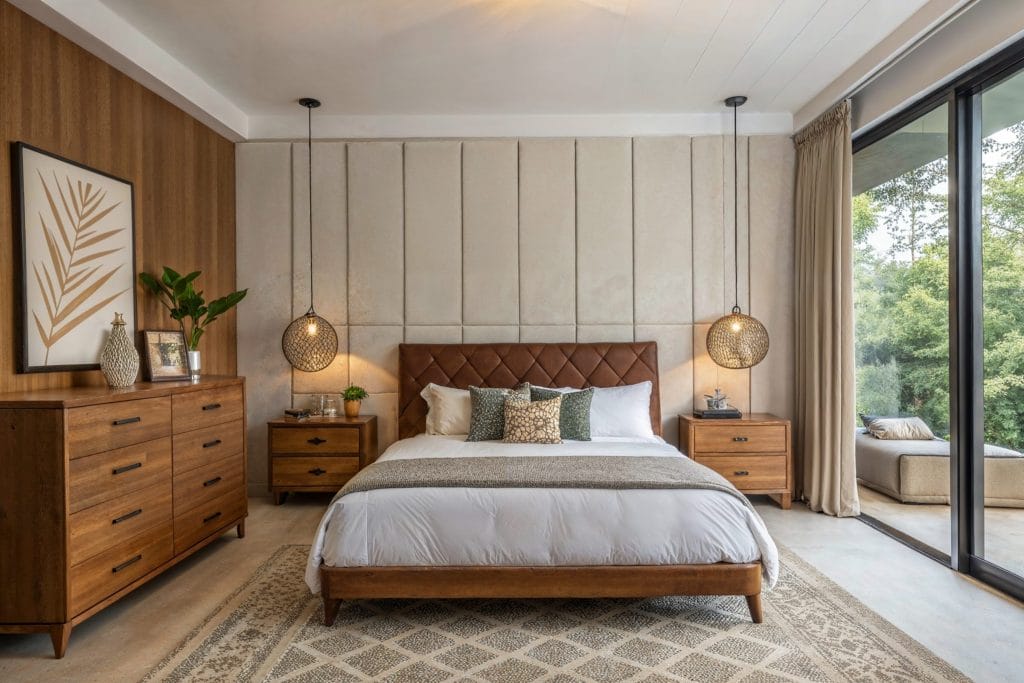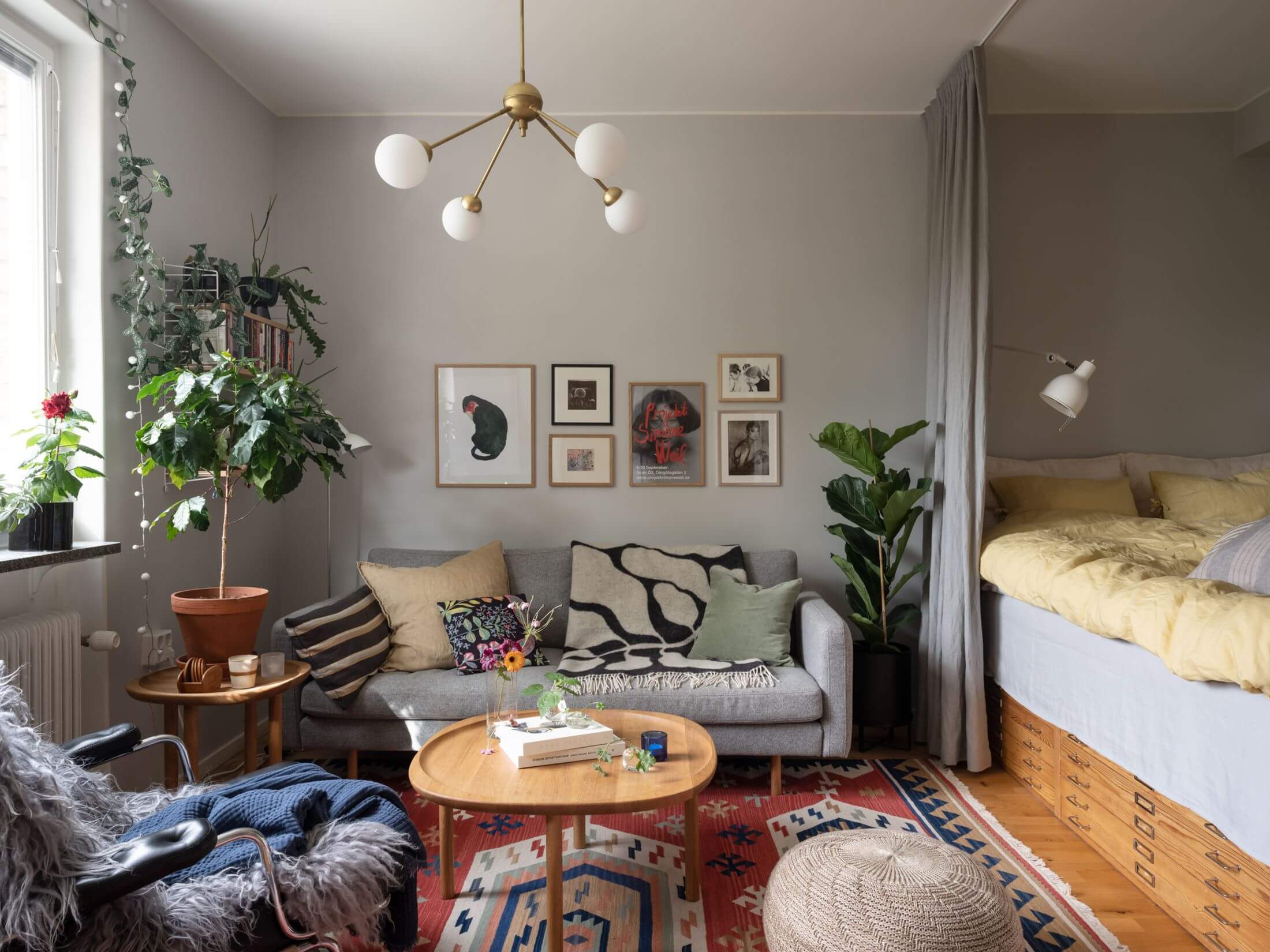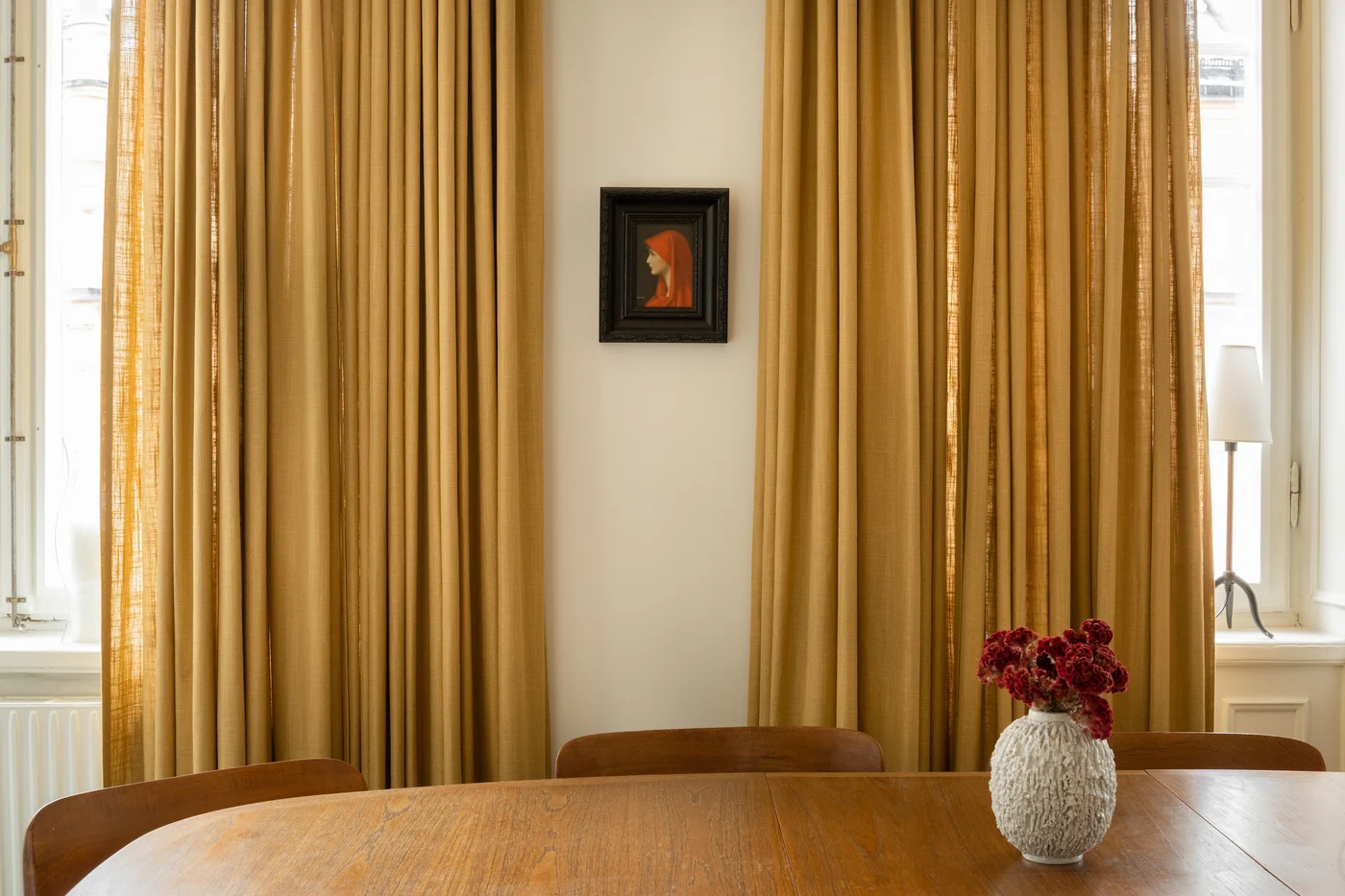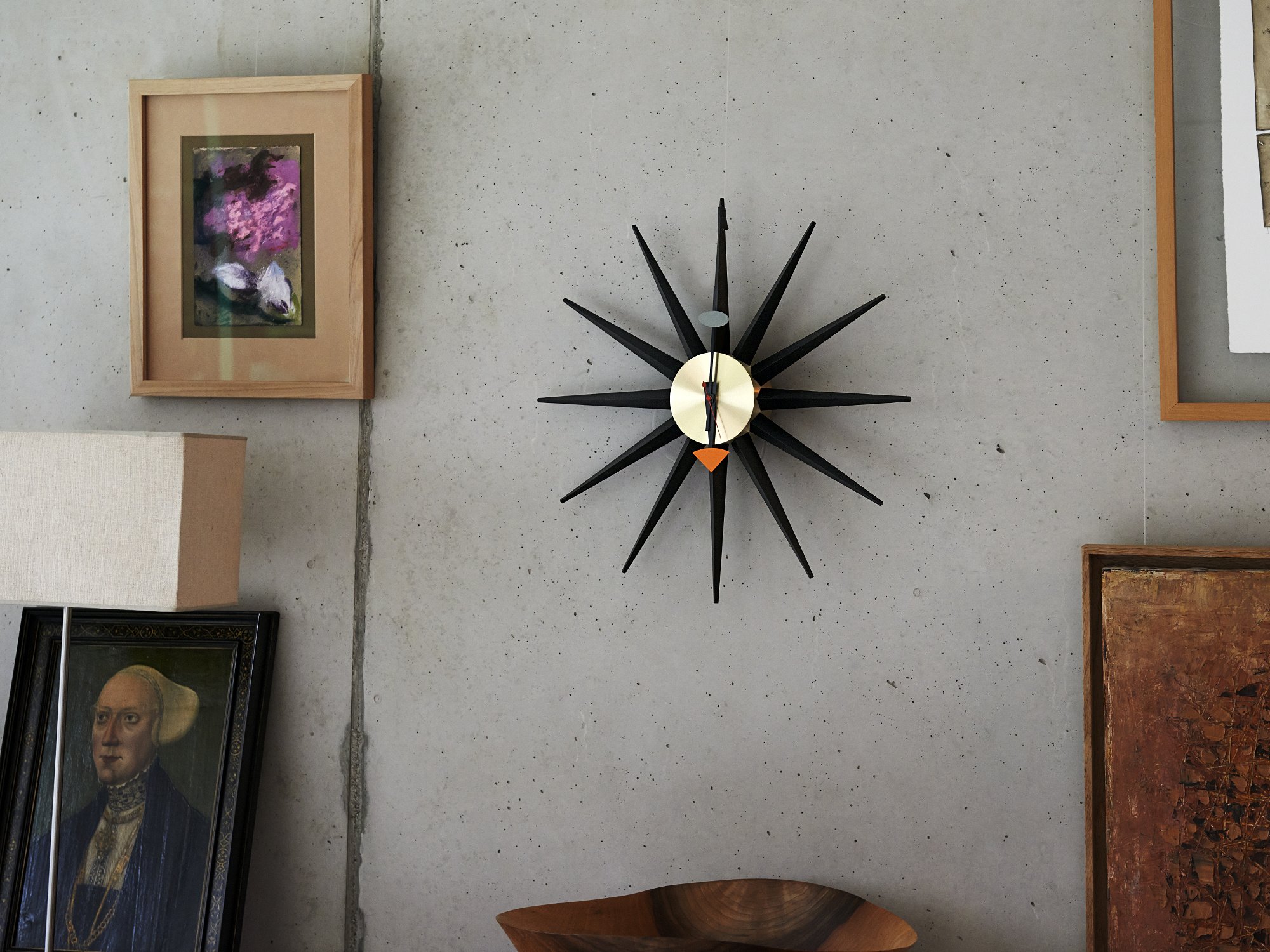

The smallest bedroom in my 1958 ranch is the one that taught me the most about mid-century modern furniture. I had fallen hard for a low platform bed and a sweet little peg-leg dresser, but the room itself was doing that classic small-space thing: one door swing here, one vent there, and suddenly your “simple layout” feels like a game of Tetris.
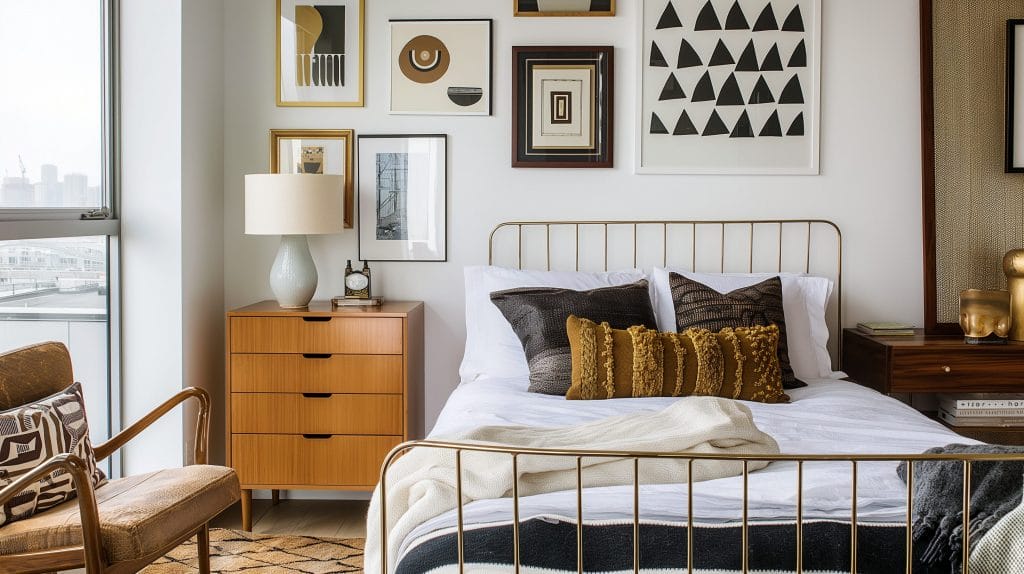
The good news is that a lot of mid-century pieces happen to play nicely in compact rooms. The silhouettes are lighter, the legs lift pieces off the floor, and the vibe tends to be calm and functional. You just have to plan the layout with intention so the room stays airy, not cramped.
Start with the walkway rule
Before you commit to where anything goes, decide where your body needs to move comfortably. In a small bedroom, circulation is the difference between cozy and cluttered.
- Aim for 30 to 36 inches for the main walking path when you can (door to bed, bed to closet).
- If you cannot hit that, 24 to 30 inches is the compromise I usually aim for in older homes.
- 18 to 24 inches on the “non-traffic” side of the bed can work in a pinch, but it is tight.
- Leave door swings clear including closets, bathrooms, and even dresser drawers.
I like to stand in the doorway and imagine carrying a laundry basket or changing sheets. If I am going to bump my hip on a corner twice a week, it is not the right spot for that piece.
Place the platform bed as the anchor
A platform bed reads as a big, calm rectangle in a room. In mid-century spaces, it is often the visual anchor. In small bedrooms, it can either make the room feel intentional or swallow it whole.
Best bed placements for compact rooms
- Centered on the longest solid wall is usually the cleanest solution. It gives symmetry without adding extra furniture.
- One side against the wall can be a smart compromise if your room is narrow. You lose the matching nightstand moment, but you gain a real walkway.
- Avoid blocking windows when possible. Natural light helps warm wood tones look their best.
Platform bed sizing tips
- Choose a low profile frame to keep the sightline open. A tall headboard can visually “cap” the room.
- Watch the footboard. A solid footboard in a tight room can make everything feel shorter and more boxed in.
- Use under-bed storage carefully. Bins are fine, but avoid storing a rainbow of mismatched totes that peek out and add visual noise.
Make the peg-leg dresser work harder
A peg-leg dresser is a small room’s best friend because the legs expose floor space, which tricks your brain into seeing more room. The placement is what makes it feel sleek instead of squeezed.
Where to put it
- Opposite the bed is classic, but only if you can still open drawers without hitting your shins.
- On the wall closest to the closet can create a natural getting-ready zone.
- At the foot of the bed works only if there is ample space. In most small rooms, this becomes a bottleneck fast.
Depth beats width in tiny bedrooms
If you are shopping, pay attention to dresser depth. A slightly narrower depth often improves how the room feels more than shaving off a few inches of width. Shallow dressers keep pathways open and make drawers easier to access because you do not have to step back as far when they are fully extended.
If you are thrifting and unsure what you are looking at, I keep a quick refresher bookmarked for construction clues and authentic details: How to Spot Authentic Mid-Century Modern Wood Furniture.
Rethink nightstands
Minimalist nightstands are a mid-century staple, but “matching pair” is not a rule in a small bedroom. Forcing two nightstands into a tight layout is one of the quickest ways to create that crowded, furniture-store vibe.
Nightstand options that still feel right
- One nightstand plus a wall-mounted shelf on the other side. It keeps the lightness while freeing floor space.
- A narrow table (10 to 14 inches deep) instead of a boxy cabinet.
- A single nightstand centered on the open side if the bed is against a wall.
Get the height right
For that effortless mid-century look, the top of the nightstand should land close to mattress height. Too tall looks bulky. Too short looks like an afterthought and encourages tabletop clutter because it is harder to use.
Use float and breathe spacing
Mid-century rooms feel good because pieces are allowed to breathe. In a compact bedroom, you can still create that effect with micro-gaps and consistent alignment.
- Leave 2 to 4 inches between the bed and nightstand when possible. Touching furniture reads as jammed.
- Align front legs of nightstands and dressers visually when you can. That clean line feels intentional even if the layout is tight.
- Avoid pushing everything to the corners. A tiny bit of negative space can make the whole room look larger.
Lighting that saves space
Bedroom lighting is where you can get a lot of mid-century character without adding more furniture. If your nightstands are petite, the lamp choice matters.
Small-bedroom lighting ideas
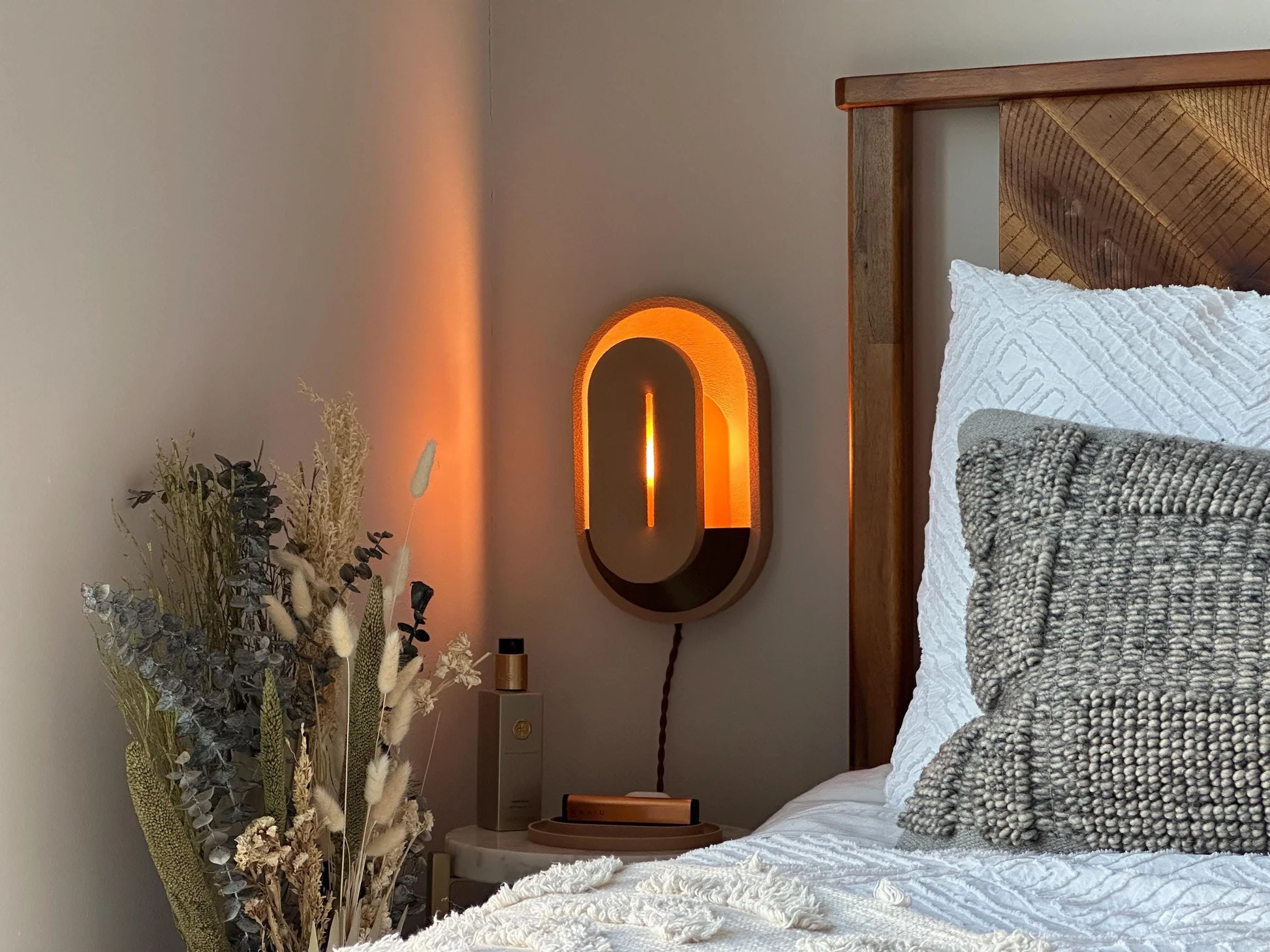
- Plug-in wall sconces above each side of the bed. You get reading light with zero tabletop footprint.
- A slim floor lamp tucked beside the dresser for softer ambient light.
- One statement ceiling fixture plus simple bedside lighting keeps the room from feeling lamp-heavy.
If you love a reading nook vibe but your bedroom is basically bed-only, you will still get great ideas from living spaces. I keep coming back to this guide when choosing warm, cozy lighting: Top Mid-Century Modern Floor Lamps for Cozy Reading Nooks.
Rugs without the postage stamp look
A rug can make a small bedroom feel finished, but the wrong size can make everything feel chopped up. My rule is simple: either commit to a rug that actually reaches under the bed, or skip it.
Easy rug placement rules
- Let the rug tuck under the bed so it frames the bed area instead of floating in the middle of the floor.
- Make sure you can step onto it when you get out of bed, at least on the main open side.
- If a full-size rug will not work, try runners along the sides instead of one tiny rug at the foot.
Desk or vanity in a small bedroom
A lot of small bedrooms have to do double duty. If you need a desk or vanity, treat it like a “zone,” not a random extra piece.
Where it fits best
- By the window if you can, especially for a vanity or laptop desk. Natural light does a lot of heavy lifting.
- On the wall that cannot fit a dresser, using a slimmer surface and a chair that tucks fully in.
- Skip deep desks. A shallow desk keeps circulation intact and feels more in scale with mid-century bedroom furniture.
If you want inspiration for mixing vintage vibes with a practical work setup, this tour nails that balance: Home Office Tour: 1960s Executive Style Meets Ergonomics.
Use vertical space on purpose
In a small room, horizontal sprawl is what makes it feel crowded. Vertical storage helps, as long as it is edited.
- Choose tall and narrow if you need extra storage (a slim cabinet or bookcase) instead of adding another wide, low piece.
- Keep the top surfaces calm. One tray or one catchall is fine. Six little objects reads like clutter.
- Hang art a little higher than you think you should. Pulling the eye up makes the room feel taller.
If you are building a wall moment, this guide is a helpful companion for scale and arrangement: Mid-Century Modern Gallery Wall.
Three layout recipes
1) The classic wall layout
Best for: rooms with one long uninterrupted wall.
- Bed centered on the long wall
- One small nightstand on each side (or one plus a shelf)
- Dresser on the opposite wall
2) The bed to the wall layout
Best for: narrow rooms or rooms with awkward doors.
- Bed pushed to one wall (headboard still looks best on a real wall, not under a window)
- One nightstand on the open side
- Dresser wherever drawers can open fully, often beside the door wall
3) The dresser as nightstand layout
Best for: tiny bedrooms with limited wall space.
- Bed centered or slightly off-center
- A low, narrow dresser placed near the bed to double as one nightstand
- One additional surface only if needed, like a small stool or wall shelf
This last one feels very true to the spirit of older homes. Doubling up functions is practical, and it still looks intentional when the lines stay clean.
Keep the vibe without more furniture
When a room is small, it is tempting to keep adding “solutions”: a chair for clothes, a bench, an extra cabinet. I have done it. It always backfires.
High-impact, low-clutter moves
- Go bold with bedding color instead of extra furniture. A simple duvet in a retro tone does a lot of style work.
- Choose one wall moment like art above the dresser, then keep other walls quieter.
- Use a mirror strategically to bounce light, especially if your dresser sits in a darker corner.
If you are building a palette, I break down what makes earth tones feel calm and what makes jewel tones feel electric here: Earth Tones vs. Jewel Tones in Mid-Century Style.
Before you buy checklist
I keep this mental list on repeat when I am tempted by a gorgeous vintage piece at an estate sale.
- Measure your room and note door swings and closet clearance.
- Measure the furniture’s width, depth, and drawer pull-out space.
- Prioritize leggy pieces and low profiles for an open feel.
- Pick one hero wood tone (walnut, teak, oak) and let it repeat for cohesion.
- Decide if you truly need two nightstands or just want them because it is “supposed” to be that way.
And if you do come home with something wonderful and heavy, move it safely. Vintage case pieces do not forgive rushed lifting. This is my go-to refresher: How to Safely Move Thrifted Mid-Century Modern Furniture.
Common mistakes and fixes
Oversized nightstands
Fix: Swap to a slimmer table, or use a wall shelf and sconce combo to get your surface area back.
A dresser that blocks the getting-ready zone
Fix: Rotate the dresser to a wall where drawers open into free space, even if it is not the most symmetrical arrangement.
Overfurnishing for the complete set look
Fix: Mid-century style reads strongest when it is edited. Let one or two great wood pieces lead, then keep the rest quiet and functional.
FAQ
Can a platform bed work in a very small bedroom?
Yes, especially a low-profile platform with a simple headboard. The key is keeping clear walking space on at least one side and avoiding bulky footboards that visually shorten the room.
Is it okay to mix wood tones in a small mid-century bedroom?
It can look great, but in tight quarters it is easiest to repeat one main tone (like walnut) and bring in the second tone in a smaller way (like picture frames or a small stool) so it feels intentional, not busy.
What if my dresser has to go near the closet wall?
That is common in older homes. If closet access is tight, try a shallower dresser, or shift the bed slightly off-center to open a better path. Function wins in small bedrooms, and the room will still read mid-century as long as the silhouettes stay clean.