
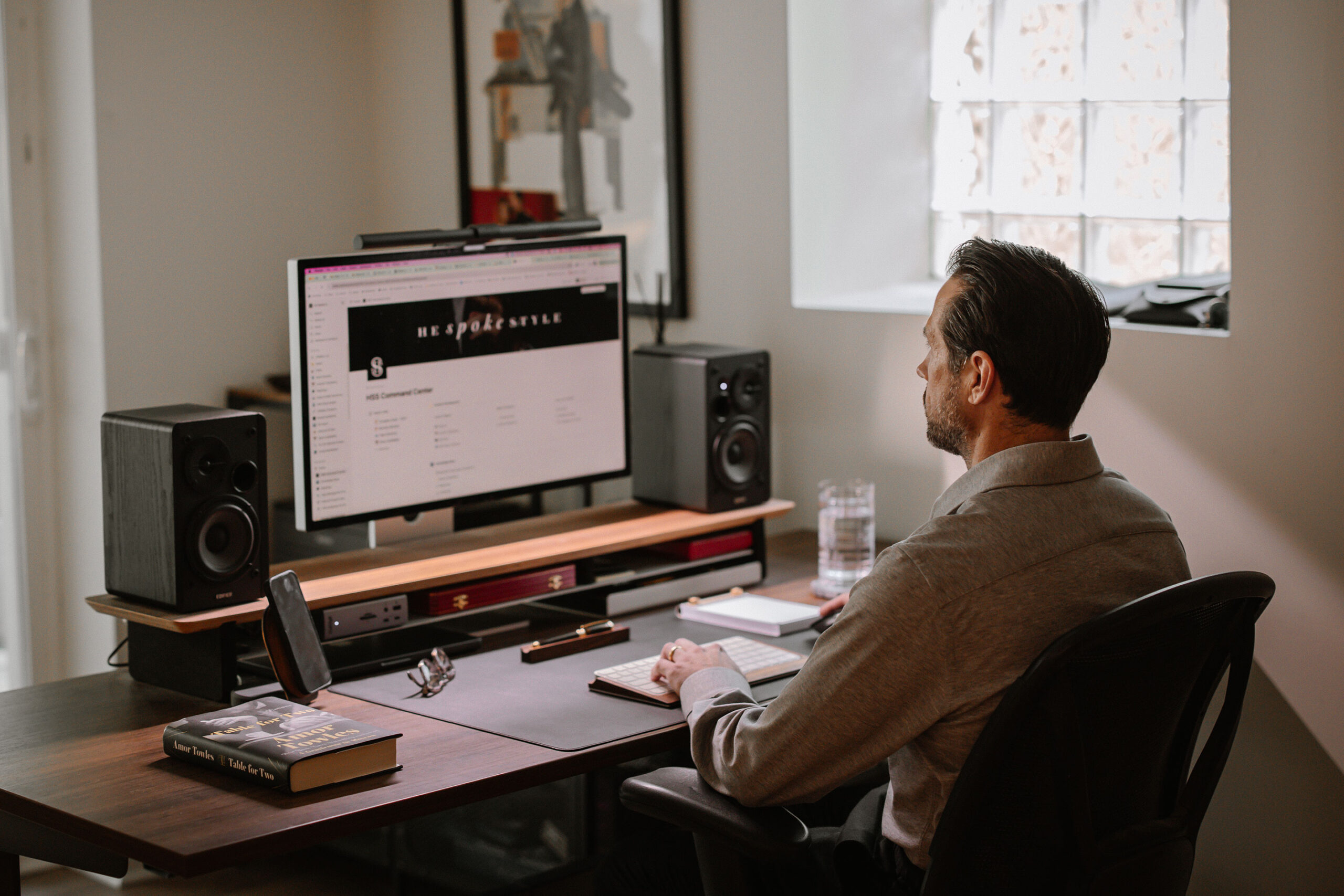
Why I built this office around a 1960s executive feel
I fell for mid-century modern as a kid in my grandparents’ 1960s house. Their study had that calm, capable mood that only a good wood desk can create: warm walnut glow, tidy surfaces, and just enough brass to feel intentional. When I started working from my 1958 ranch house more often, I wanted that same feeling, but I also needed my neck, shoulders, and wrists to survive a full day.
This tour is my favorite kind of compromise: authentic 1960s presence with teak and clean-lined storage, with the ergonomics and tech you actually need now. If you love the look of an executive desk but you also love functioning lower back support, come on in.
The layout: command position, airy feel
The easiest way to make a home office feel like a mid-century suite is to think in zones instead of furniture pieces. Mine is set up with three:
- Work zone: teak desk centered on the longest wall, with space behind the chair so it never feels crammed
- Reference zone: low shelving and closed storage to the side, so the desk stays visually quiet
- Reset zone: a small lounge chair and a standing lamp for reading, calls, and letting your eyes rest
That zoning is the secret sauce. It keeps the room from turning into desk plus piles, which is the opposite of the crisp executive look.
Glare note: I try to place the desk so the monitor sits perpendicular to the window, not facing it and not with the window directly behind it. That one tweak cuts down reflections without making the room feel cave-like.
Star of the room: the teak desk
The desk is vintage teak with a wide, confident top and those satisfying, shallow drawers that make you want to be organized. The executive vibe comes from proportion: broad surface, clean edges, minimal hardware, and a little bit of heft.
What I check before I commit
- Leg and apron stability: no wobble when you type fast or lean on the corner
- Drawer glide: drawers should open without racking, and stop blocks should be intact
- Veneer condition: small chips are fixable, but wide bubbling near the front edge is a headache
- Knee clearance: especially if you plan to add a keyboard tray or sit for long stretches
If you are thrifting desks, the structural checks in 5 Structural Red Flags to Avoid When Thrifting Mid-Century Wooden Furniture are the same ones I use when I am deciding whether a piece is a project or a pass.
Desk sizing that makes it feel office-ready
- Depth: I find 24 to 30 inches is the sweet spot for a monitor plus keyboard without perching at the edge.
- Surface breathing room: I like at least a few inches behind the monitor for cable slack and a lamp base.
- Leg comfort: if the center drawer or apron forces your knees outward, you will feel it by 2 p.m.
My desk surface rules (so tech does not chew up the teak)
- Desk pad, almost always: I use a large pad in a warm saddle tone so the wood still shows around the edges.
- Coasters with real grip: mid-century style loves a low tumbler, but teak hates surprise rings.
- Felt under everything that slides: pencil cups, lamp base, even a small tray.
Teak is resilient, but office life is relentless. Protecting the surface is what keeps it looking like a vintage executive desk instead of a workbench you regret.
Floor protection (the unglamorous part)
Vintage desks can be heavier than they look. I use felt pads under the legs to protect floors and make tiny layout tweaks easier without scraping.
The chair: ergonomic, not gamer
Here is my honest opinion: the chair is the one place I do not force vintage. A true 1960s desk chair can be beautiful, but many of them were not built for eight-hour days, and the height range is often limited.
I chose a modern ergonomic chair with a slim silhouette, a lower back that actually supports me, and upholstery that reads mid-century adjacent. The trick is picking details that echo the era:
- Profile: low to mid back, not a towering headrest
- Color: camel, warm gray, olive, or textured oatmeal instead of stark black
- Legs and base: a simple aluminum base can blend with period metals better than chunky plastic
My quick ergonomic check
- Your feet rest flat, or on a footrest
- Knees bend around 90 degrees, not tucked under you
- Elbows fall comfortably near 90 degrees at the keyboard
- Lower back feels supported without you perching forward
Monitor height goal: I aim for the top third of the screen to sit near eye level, so my neck is not tipping down all day. Keyboard and mouse live close enough that my elbows stay by my sides, not reaching forward.
If the chair disappears visually, it is doing its job for the room. If your back disappears from pain, it is doing its job for you.
Tech that stays visually quiet
The easiest way to break the 1960s executive illusion is a bright tangle of cables and a glowing plastic router sitting on your teak like it owns the place. My rule is simple: modern tech can be present, but it should not be the focal point.
Monitor setup that plays nice with vintage furniture
- Use a monitor arm if the desk can handle it: it lifts the screen to a better height and frees up the surface.
- Pick a monitor in a neutral finish: matte black or charcoal is less disruptive than glossy.
- Bring the monitor forward: so you are not craning your neck while trying to keep the desk “pretty.”
My cable-control system (no drilling into heirloom wood)
- Removable under-desk cable channels: hide the main runs underneath.
- Velcro ties: for bundles that you need to adjust often.
- A single hidden power strip: placed under the desk so cords drop straight down.
- A lidded box for the surge protector: keeps the floor area clean near your feet.
Small caution: some vintage teak finishes and veneers can be sensitive. I test adhesives underneath in an inconspicuous spot and choose removable options, so I am not risking finish pull later.
Also: I keep power strips and chargers ventilated and avoid overloading them. “Hidden” should never mean “heat-trapped.”
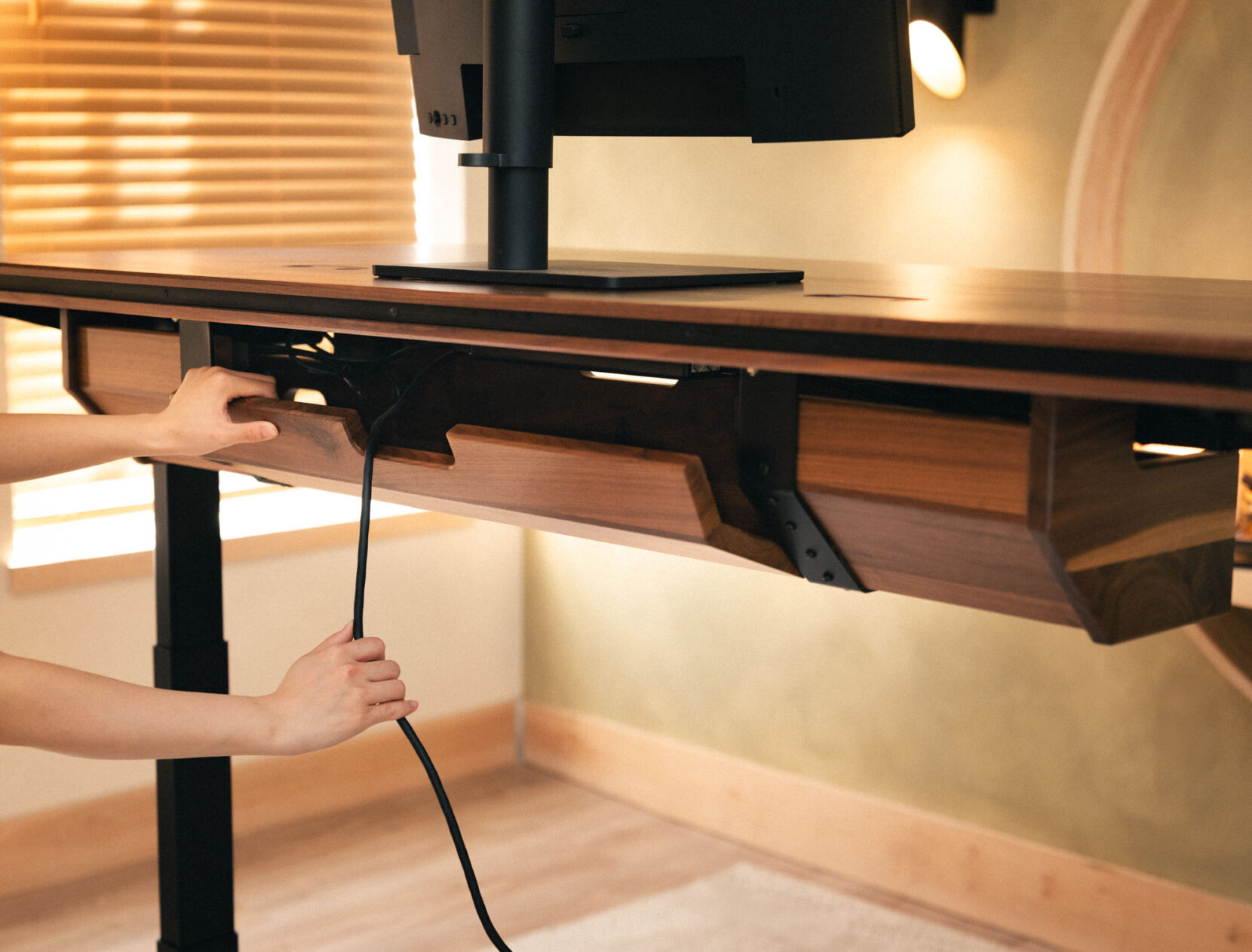
Where I stash the not-pretty essentials
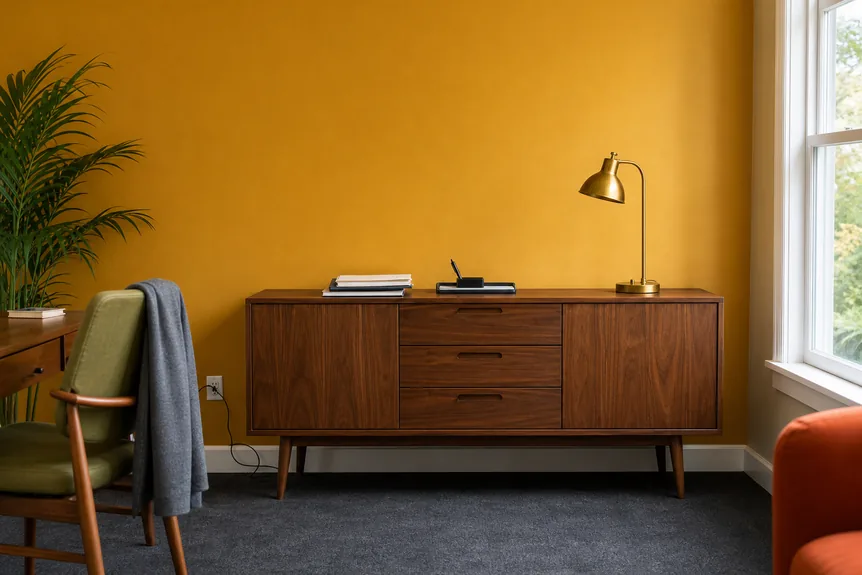
- Wi-Fi router: in a ventilated cabinet, but not packed in tight. I check heat and signal strength, because enclosing it can reduce performance.
- Printer: on a low shelf behind closed doors when not in use.
- Charging station: inside a shallow drawer using a compact multi-port charger, with enough airflow that it does not run hot.
Vintage storage is your best friend here. If you need help hunting, 7 Overlooked Local Spots to Score Authentic Mid-Century Modern Furniture is where I send friends when they swear they have no good vintage near them.
Lighting: warm, not squinty
Mid-century lighting is one of the reasons these rooms feel so livable. But many vintage fixtures were designed for softer ambient glow, and some older designs have lower output, opaque shades, or limited adjustability. For screen work, I layer light on purpose:
1) Ambient light
A ceiling fixture or shaded floor lamp sets the mood. I like warm bulbs that flatter wood tones and keep the room from feeling clinical.
2) Task light at the desk
My desk lamp is where I lean into a little brass. I aim it so it does not reflect in the monitor and does not cast my writing hand’s shadow across the page.
3) Accent light for the shelves
A small plug-in picture light or a tiny lamp on a lower shelf gives that executive library feel. It also helps the room look finished on video calls.
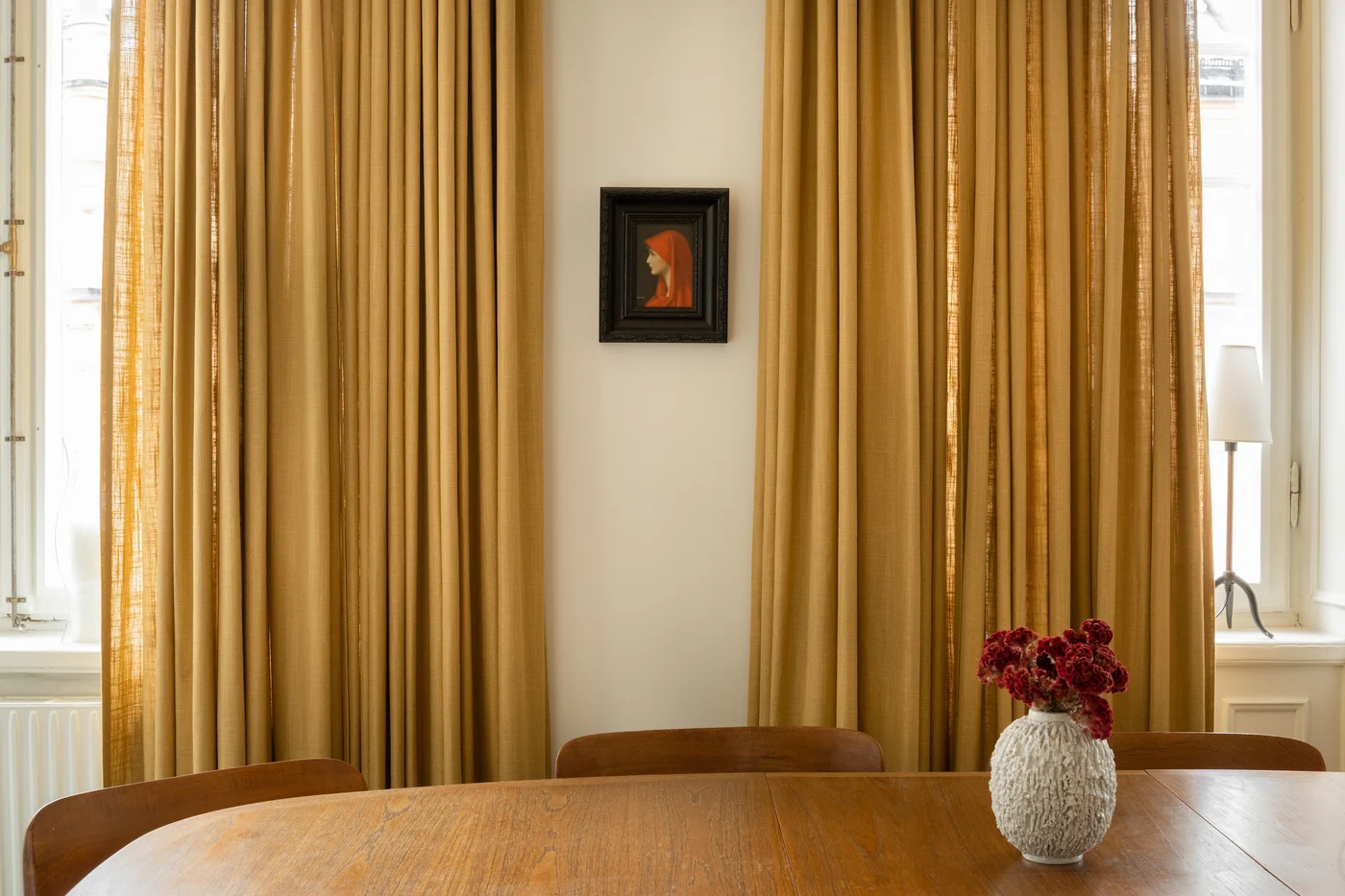
If your office has a lot of window glare, the treatments matter as much as the bulbs. I break down options that fit mid-century style in Mid-Century Modern Window Treatments.
Storage and shelving: tidy is the look
Here is the truth no one puts in glossy tours: the 1960s executive office aesthetic is mostly tidy storage wearing a great suit.
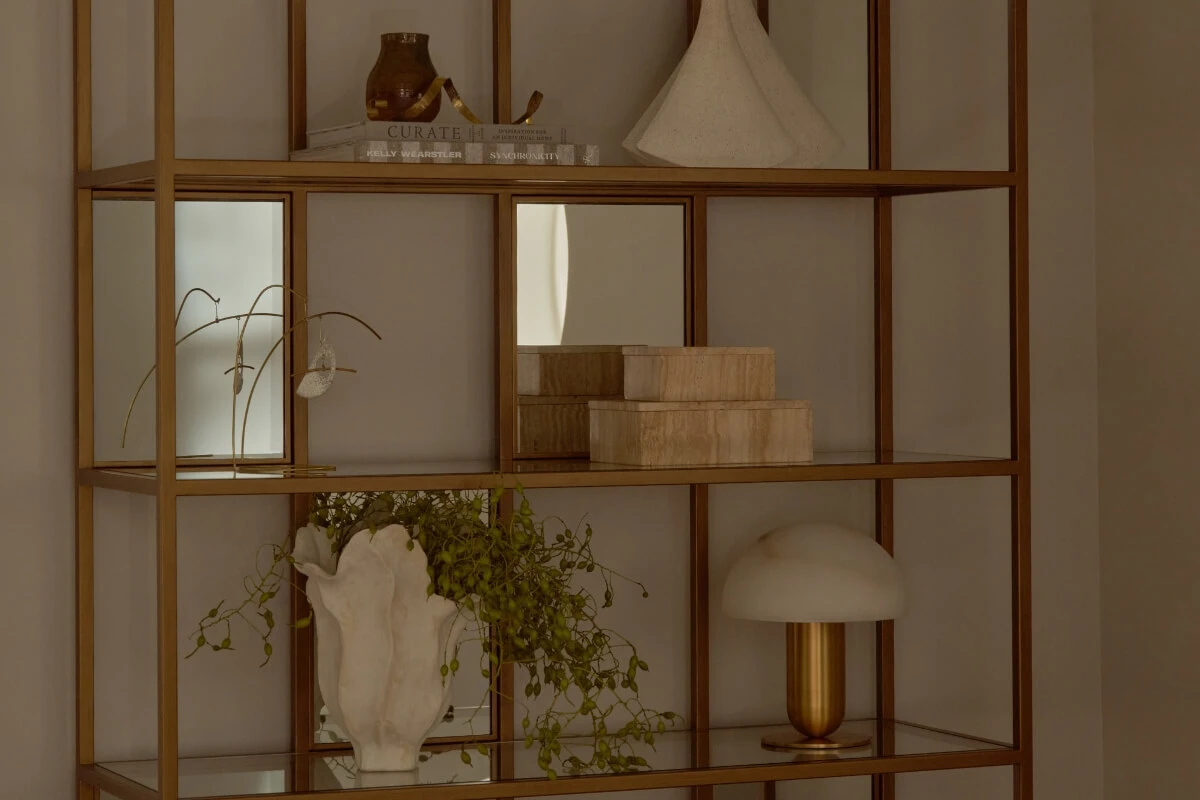
My shelf styling formula
- Bottom shelves: closed boxes, files, and the stuff that would visually shout
- Middle shelves: books stacked both vertical and horizontal for that period-correct rhythm
- Top shelf: one statement object and one organic element, like a sculptural vase and a trailing plant
I keep the color palette tight so the wood stays the star. If you love bolder color, you can still do it, just in controlled doses. My favorite way is to choose one saturated accent and repeat it two to three times around the room.
For more on choosing your room mood colors, Earth Tones vs. Jewel Tones in Mid-Century Style is a helpful read before you buy a rug you cannot return.
Paper, mail, and real life
I keep one shallow tray on the desk, and everything else lives in a drawer. The tray is my pressure valve. It lets me be human without turning my teak top into a paper pile.
Accessories: authentic and useful
I try to add pieces that look like they could have lived in a 1960s office, even if they are doing a modern job.
- Analog clock: a starburst or simple dial clock helps keep the room from feeling screen-heavy
- Pen cup and catchall: one home for small tools, so they do not roam
- Acoustic softening: a textured rug and lined curtains reduce echo for calls
- Art with graphic punch: one bold print or abstract piece behind the desk gives the room authority
If you are building art on a budget, Mid-Century Modern Gallery Wall has my go-to approach for mixing thrifted pieces so it looks curated, not chaotic.
Doorway view: what you notice first
When you step in, the desk is the anchor. The chair tucks in cleanly, and the monitor sits centered over the keyboard, aligned so it feels intentional instead of temporarily set down. The shelving to the side holds the working clutter behind doors, and the visible shelves are styled like a calm vignette: books, one sculptural object, one plant.
The room works for real life because the ergonomic pieces are doing their job quietly. My wrists are supported. My monitor is at a sane height. My lighting is layered. And nothing on the surface fights that warm teak glow I fell in love with in the first place.
Quick fixes if it feels too modern
- Swap the desk lamp shade: a warmer tone or a more streamlined shape can shift the whole mood
- Add one wood element near the tech: a small teak tray for your dock or charger helps it blend
- Hide one category of clutter: cords, paper, or charging bricks, pick one and make it disappear
- Choose one metal and repeat it: brass, chrome, or blackened steel, consistency reads mid-century
If you are mixing metals, I keep it simple and repeat finishes on purpose. Mixing Brass, Copper, and Chrome in Mid-Century Modern Style can help you decide what to pair so it feels collected, not accidental.
FAQ: ergonomics with vintage style
Can I use a vintage executive desk with a standing desk converter?
Yes, but choose a converter with a smaller footprint and add a desk pad underneath to prevent dents. Watch the weight and avoid models that rock back and forth when you type.
How do I keep video calls from looking cluttered?
Put closed storage directly behind your camera angle and style one shelf with a tight color palette. A single lamp on a side surface also reads polished on camera.
Is it safe to drill into a vintage desk for cable grommets?
I usually avoid it. Reversible options like adhesive channels and under-desk mounts help preserve the desk’s originality and resale appeal, especially if it is a piece you may pass along later.
What if my office is small?
Go slimmer: a narrower teak desk, wall-mounted shelving, and one closed cabinet. In tight rooms, executive is more about clean lines and calm surfaces than square footage.