
I have a soft spot for nurseries because they are one of the few rooms where practicality and emotion have to hold hands. You want it to feel calm at 2 a.m., but you also want it to feel like you. For this makeover, my goal was a gender-neutral mid-century modern nursery that nods to the warm walnut-and-optimism vibe of my grandparents’ 1960s house, without turning the room into a themed set.
The finished space is simple and graphic, with a clean-lined crib, a vintage dresser pulling double duty as a changing table, and retro wall art that reads playful instead of precious. It is the kind of room that can grow up gracefully, even when your baby’s preferences change every other Tuesday.
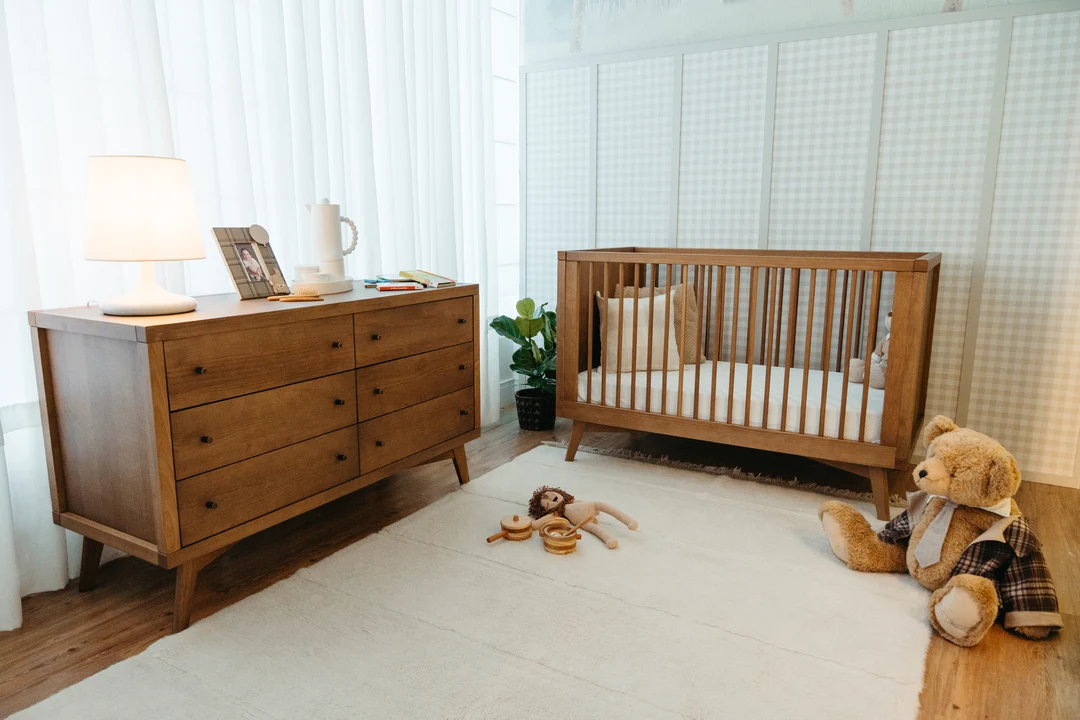
The plan: calm and functional
When people say “gender-neutral nursery,” they often mean “all beige.” Beige can be lovely, but mid-century design gives you better options: warm woods, crisp lines, and color used in deliberate, confident doses.
My three non-negotiables
- Nothing too babyish to age out fast. I wanted art and furniture that still works when the crib becomes a toddler bed.
- Real storage, not just cute storage. If you can stash diapers, swaddles, and spare sheets within arm’s reach, you win.
- Mid-century cues that are authentic. Think tapered legs, walnut or teak tones, and simple geometric shapes, not novelty.
Color palette: warm and simple
I started with a softly creamy wall color because it plays nicely with wood tones and makes the room feel bright without going stark. Then I built the rest like a classic mid-century outfit: a neutral base, warm texture, and one or two punchy accessories.
A gender-neutral palette that still feels MCM
- Base: cream, warm white, or pale greige
- Wood tones: walnut, teak, or oak (keep undertones consistent if you can)
- Accent colors: olive, ochre, terracotta, dusty teal, or muted mustard
- Metal: a small amount of brass or matte black, but not both everywhere
If you love bolder color, you can absolutely do it. I like choosing one “hero” accent shade and repeating it three times around the room (art, textiles, and one small object) so it looks intentional. For more on choosing your mood, I’ve shared my thought process in Earth Tones vs. Jewel Tones in Mid-Century Style.
The furniture: clean lines
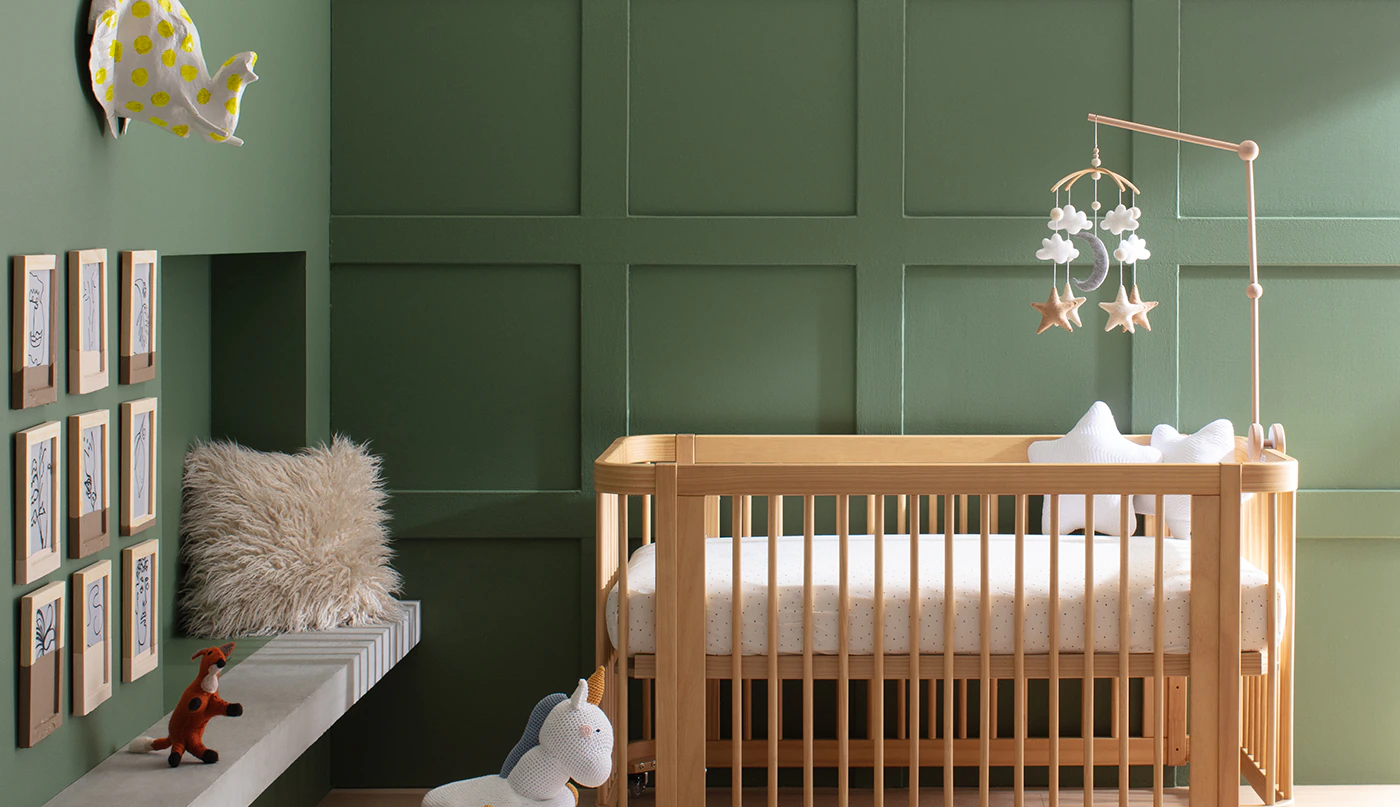
1) The crib: simple silhouette
A clean-lined crib is the easiest way to signal “mid-century” without trying too hard. I looked for:
- Slender slats and a straightforward profile
- A wood tone that reads warm, not gray
- Hardware that disappears (or looks intentionally modern)
Styling tip: let the crib be the sculpture and keep it visually calm. For safe sleep, I keep the crib basically empty: firm mattress, fitted sheet, and nothing loose (no pillows, quilts, or stuffed animals). If I want texture in the room, I put it on the floor (rug), on the chair (a throw for an adult), or in the curtains.
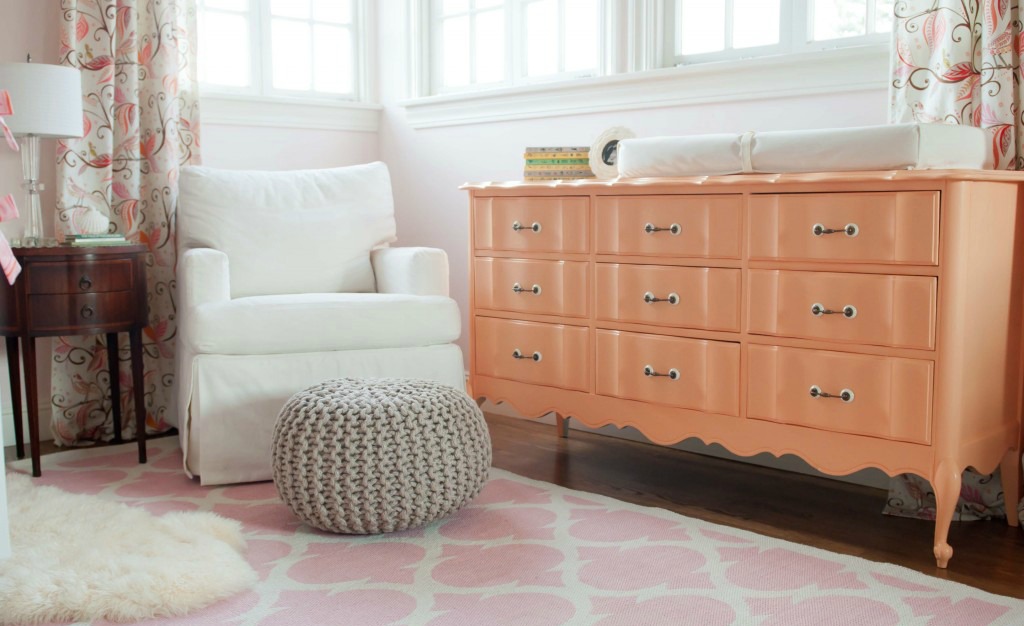
2) Vintage dresser as a changing table
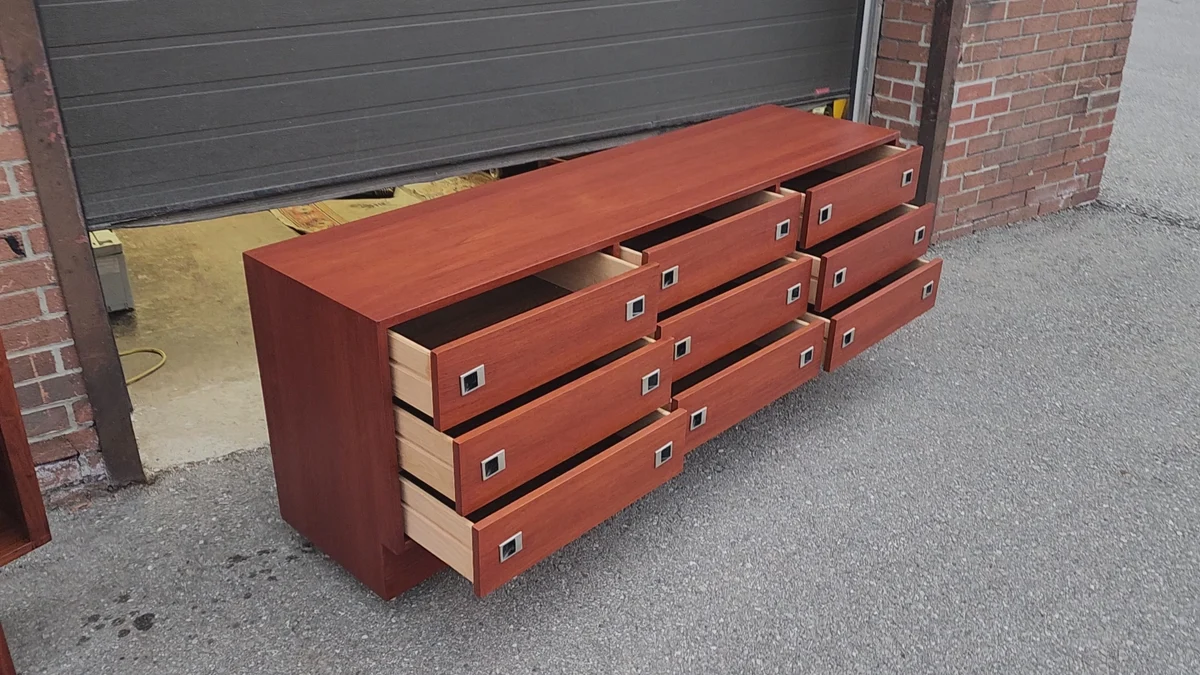
This is the move that makes the whole room feel collected. A low or mid-height vintage dresser with tapered legs reads instantly mid-century, and it gives you drawers that actually hold things.
I chose a dresser with solid wood drawer boxes and a sturdy frame, then topped it with a wipeable changing pad and a shallow tray for daily essentials. Two important caveats: not every dresser is designed to be a changing table, and I treat it like a real safety zone. I made sure the top surface felt stable and comfortable to use, I kept supplies within arm’s reach, and I used a non-slip layer to help keep the pad from shifting (plus a strap if your pad has one). And, of course, I never step away with a baby on top, even for “one second.”
If you thrift or estate-sale shop, this is also one of the best places to put your budget because the piece will still be useful long after diapers are gone. If you are hunting vintage wood furniture, do not skip the quick safety and structure check. I keep a mental list of deal-breakers, and I wrote it all down in 5 Structural Red Flags to Avoid When Thrifting Mid-Century Wooden Furniture.
Layout: easier nights
Mid-century rooms tend to feel calm because the layouts are uncomplicated. I leaned into that. Here is what worked best:
- Changing station near the closet. It reduces the number of steps when you need a fresh onesie fast.
- Crib on a solid wall. I kept it away from windows for a few reasons: drafts, light swings, and the general “tiny climber” future. I also made sure the crib stayed clear of window coverings and any cords.
- A small landing zone by the door. A peg rail or hook strip keeps a diaper bag and a cardigan easy to grab.
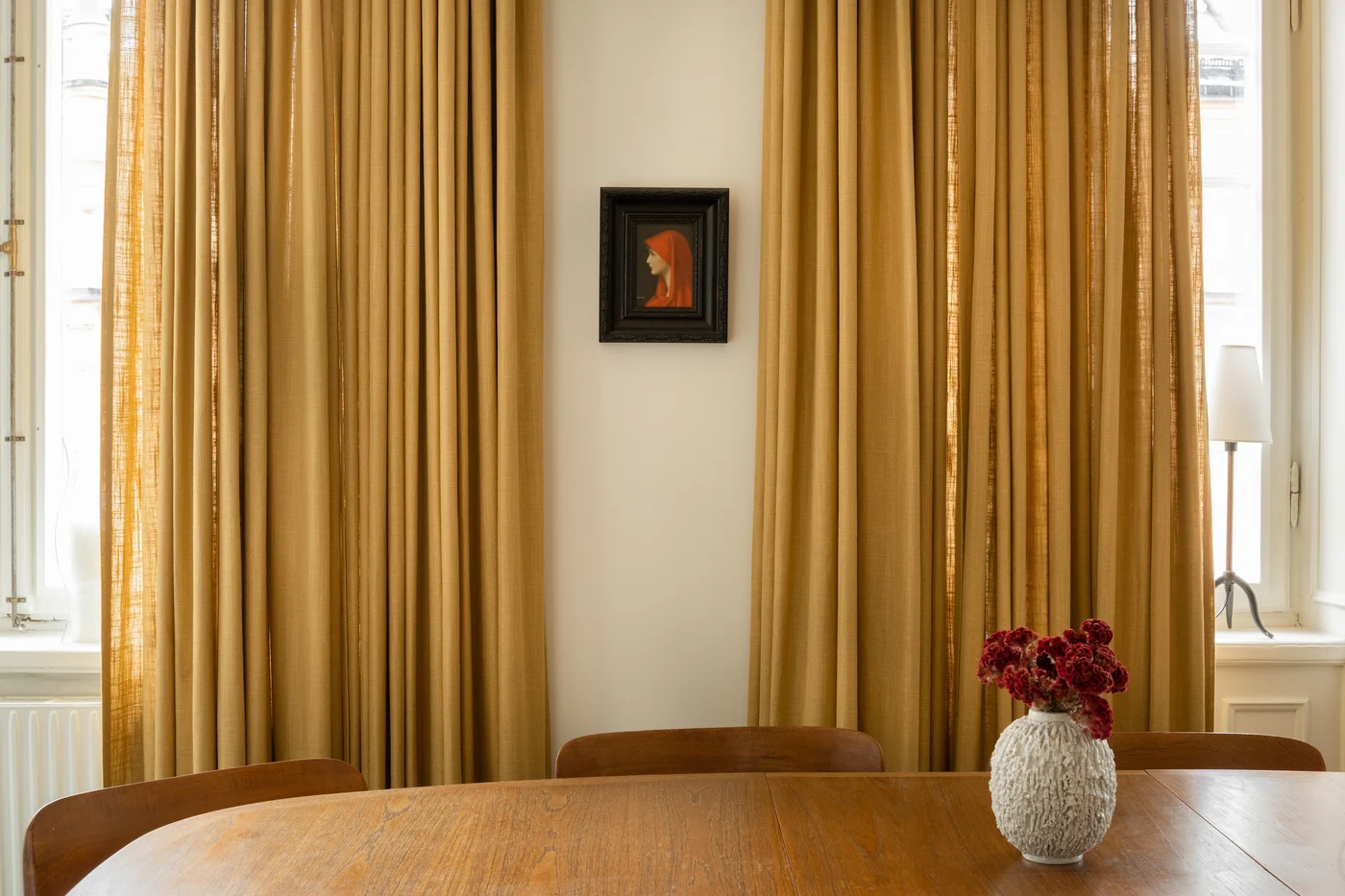
For windows, I like simple silhouettes that feel period-friendly, like tailored curtains or woven shades. If you are deciding between options, Mid-Century Modern Window Treatments walks through the looks that feel most authentic.
Lighting: soft glow
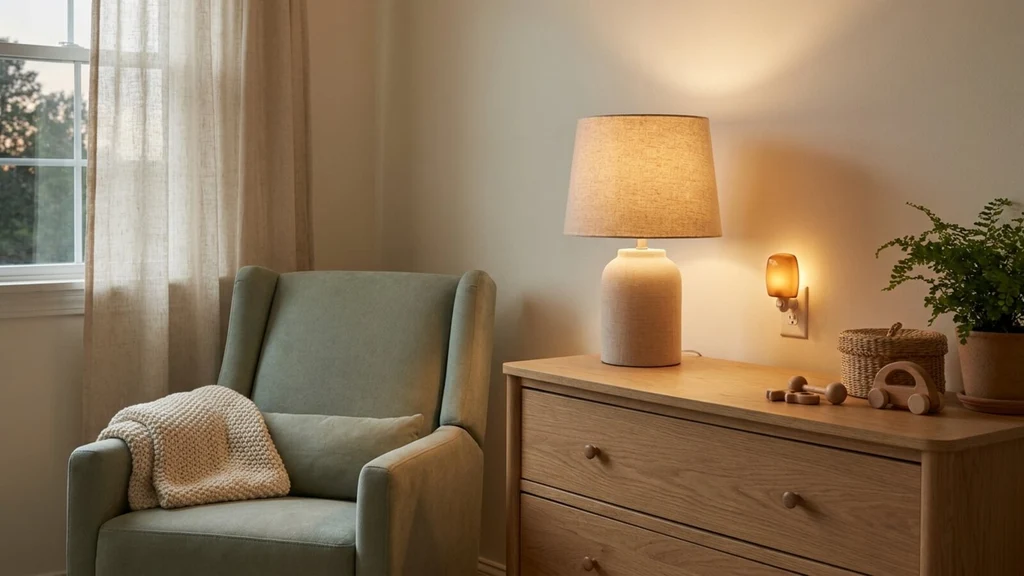
Overhead lighting alone can make a nursery feel like a waiting room. In this space, I layered light the way I do in every mid-century room: one general source, one task source, and one warm “mood” source.
My lighting trio
- Ceiling fixture: something simple and slightly graphic
- Task lamp: a small lamp on the dresser or a nearby surface for diaper changes
- Night light: warm, low, and ideally dimmable
Metal finishes can get chaotic fast in small rooms. If you are mixing finishes, keep it deliberate and repeat each metal at least twice. I break this down in Mixing Brass, Copper, and Chrome in Mid-Century Modern Style.
Wall art: playful, not themed
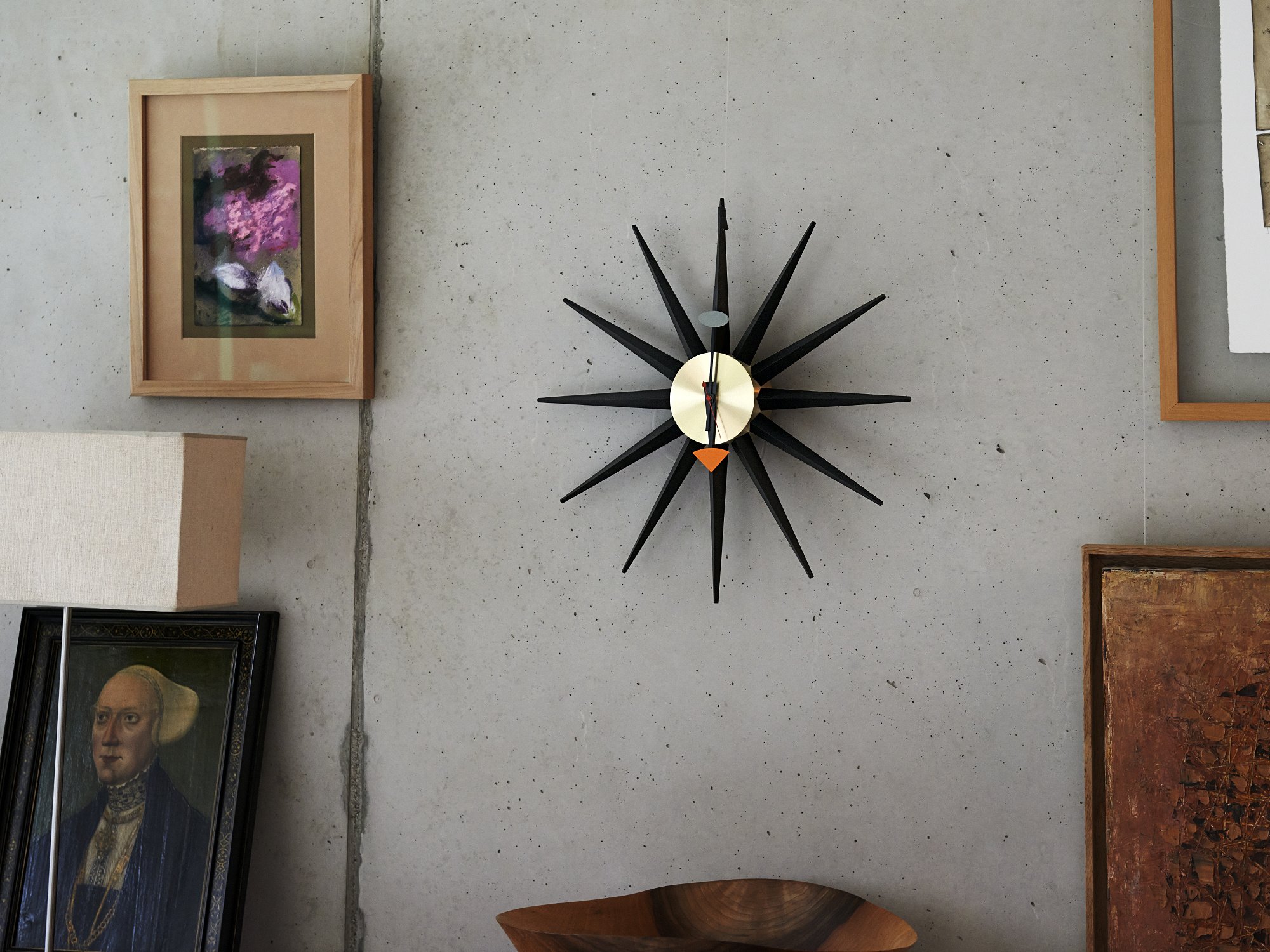
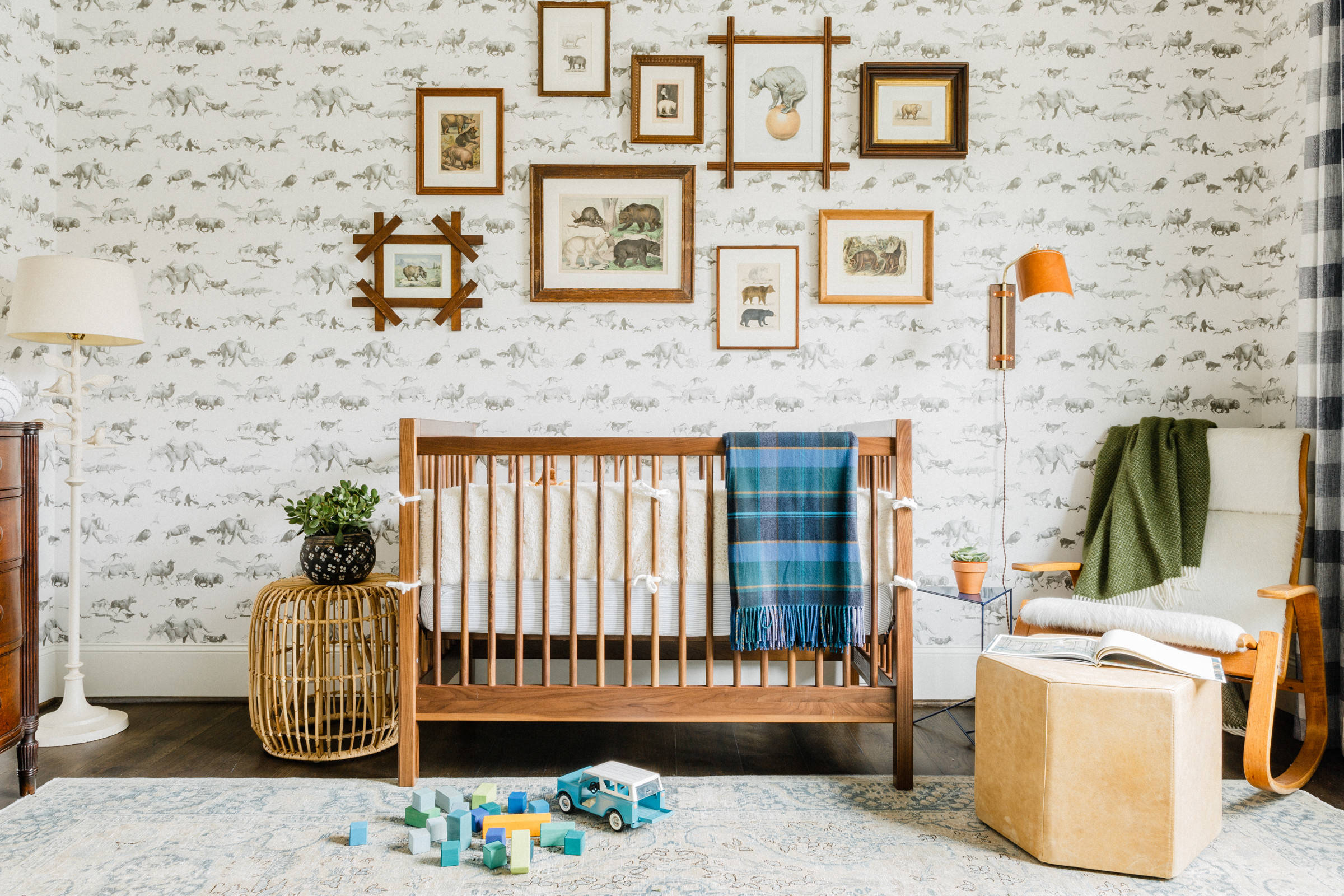
For gender-neutral nursery art, I love anything that feels like it could have lived in a 1960s family room: abstract shapes, gentle color blocking, stylized nature prints, or a small gallery wall with mixed frames.
What I hung
- One larger print with simple geometric forms above the dresser
- Two smaller pieces nearby to create balance, not a perfect grid
- A tactile element like a small woven wall piece to soften all the straight lines
If you want the most mid-century impact for the least effort, a small gallery wall is hard to beat. My approach is in Mid-Century Modern Gallery Wall.
Textiles: cozy without clutter
Mid-century furniture can be crisp and architectural, which is exactly why the soft goods matter. In this nursery, I used textiles to bring in comfort without adding visual clutter.
- Rug: low pile, simple geometry, and forgiving colors
- Glider or rocker: a solid neutral that can move to another room later
- Throw blanket: knit texture for the chair (adult use), not for the crib
- Crib sheet: subtle pattern, like tiny dots or a small-scale grid
My rule: if the rug has pattern, keep the sheet calm. If the sheet has pattern, keep the rug simpler. That little trade keeps the room from feeling busy.
Storage that works hard
Storage is where nurseries go off the rails, fast. Plastic bins multiply. Tiny socks migrate. Here is what kept this room feeling tidy:
My storage basics
- Drawer dividers inside the vintage dresser for sleepers, burp cloths, and swaddles
- A lidded hamper in a neutral tone to hide the inevitable laundry pile
- One open basket for the current rotation of books
- A shallow tray on the dresser to corral small daily items
Keeping most storage closed is the easiest way to preserve that clean-lined mid-century look. Let one or two open items be the “pretty” ones, like board books with graphic covers.
Safety: vintage and baby
I love vintage in nurseries, but I love it with common sense. A few things I always do when using vintage pieces in a baby space:
- Anchor furniture to the wall. The dresser, yes, but also any bookcase or tall cabinet that could tip.
- Make the changing setup secure. Non-slip under the pad helps, and if your pad has a strap, use it. I also keep everything I need within arm’s reach so I am not turning away.
- Check drawers and stops. I want drawers that glide smoothly and do not unexpectedly pull all the way out.
- Be smart about finishes. If a piece is older or has unknown paint or finish history, I treat it like it could contain lead, especially pre-1978. I avoid sanding or stripping until I know what I am dealing with, and if I do refinish, I use lead-safe practices and keep the nursery far away from the dust.
- Watch cords and climbables. I keep the crib away from window covering cords and avoid placing furniture next to the crib that could become a step-stool later.
If you are moving a heavy vintage piece into the nursery, protect both the furniture and your floors. I have a full walkthrough in How to Safely Move Thrifted Mid-Century Modern Furniture.
Where I spent and saved
I treated this room like most of my mid-century projects: I bought the safety-critical pieces new (crib and mattress), then I went vintage for the “soul” (the dresser), and kept everything else flexible. Art, baskets, a lamp, and a rug are the kind of finishing layers you can find at thrift stores, estate sales, or local vintage shops, and they are also easy to swap as your kid grows.
If you are in hunting mode, I keep my favorite sourcing routes in Vintage Hunting and Thrifting, and I also shared a list of underrated places to look in 7 Overlooked Local Spots to Score Authentic Mid-Century Modern Furniture.
The finished room: why it reads MCM
When I stand in the doorway, the space reads mid-century for a few clear reasons:
- Warm wood is the visual anchor, not pastel paint.
- Furniture legs lift pieces off the floor, so the room feels airy.
- Art is graphic and simple, with clean shapes instead of characters.
- Color is limited and repeated, so it feels designed, not decorated.
Most importantly, it feels calm. The kind of calm you want when you are rocking a baby and watching the first early-morning light hit the walls. That is the magic I always chase in mid-century spaces, even the tiniest ones.
Quick checklist
- Clean-lined crib in a warm wood tone (firm mattress, fitted sheet only)
- Vintage dresser with solid structure, set up thoughtfully for changing
- All tall furniture anchored to the wall
- One geometric rug in forgiving colors
- Layered lighting with a warm bulb option
- Two to three pieces of graphic, retro-leaning art
- Closed storage first, with one or two open “pretty” baskets
- Crib placed away from windows and cords