
I still remember the soft glow in my grandparents’ 1960s hallway, the kind that made walnut paneling look even warmer and made every framed photo feel a little more important. It wasn’t a big, dramatic chandelier moment. It was a pair of simple wall sconces doing the quiet work of making the house feel finished.
That’s why I love mid-century modern wall sconces so much. They’re practical, yes, but they also add instant architecture. Add brass and a glass globe, and you get that unmistakable MCM mix of warmth and clean geometry that plays well with both vintage pieces and modern basics.
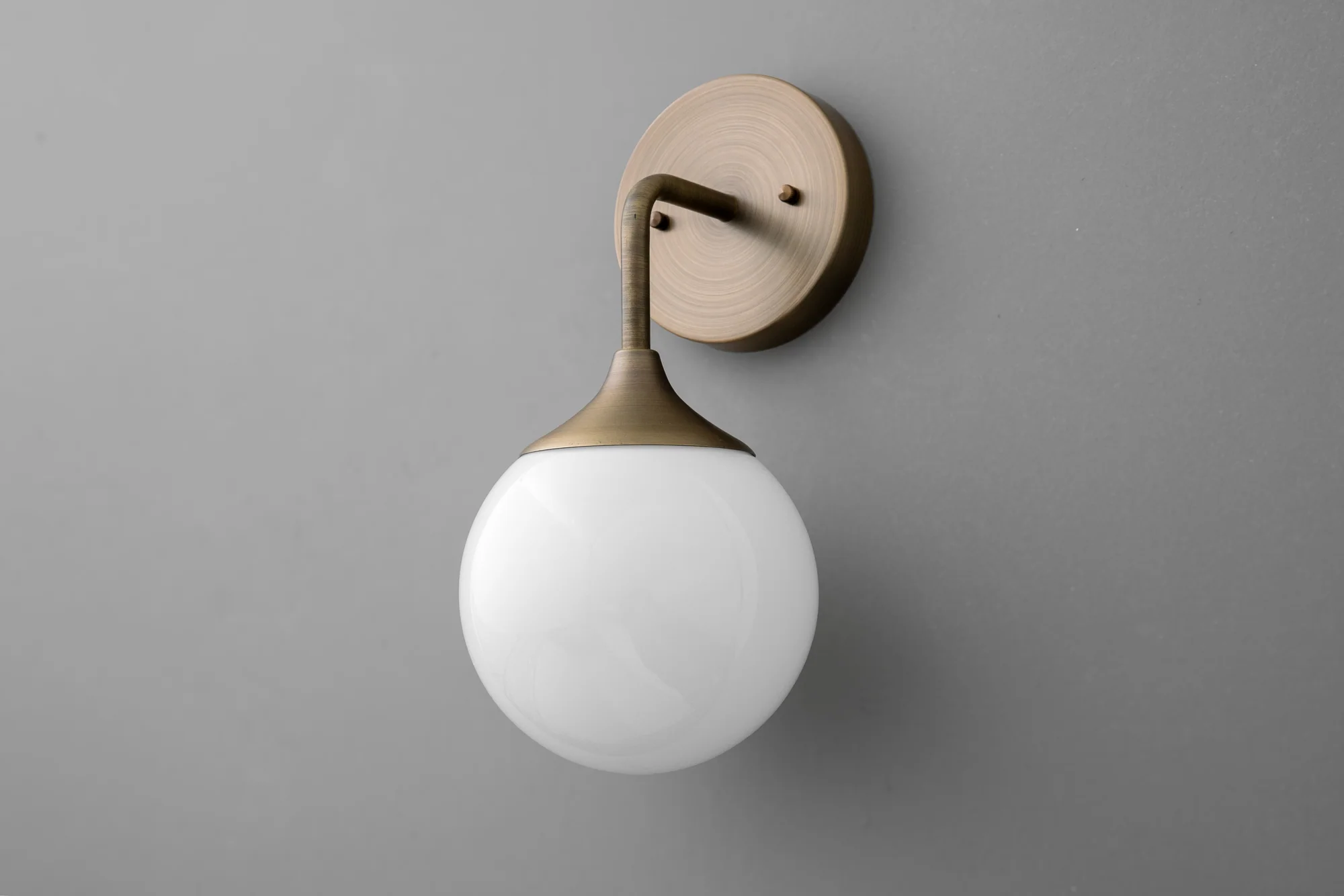
What makes a sconce feel mid-century
Plenty of lights get labeled “mid-century inspired,” but the ones that read authentically tend to share a few details. If you’re choosing between similar options, these cues help you land on the one that will still look right when the trend cycle moves on.
- Simple geometry: globes, cones, cylinders, discs, and clean right angles.
- Warm metals: unlacquered brass, satin brass, aged brass, and sometimes brushed nickel or black accents.
- Opal or milk glass: especially globe shades that diffuse light evenly and hide the bulb.
- Balanced proportions: not too dainty, not oversized, with hardware that looks intentional instead of fussy.
- Purposeful placement: mid-century lighting was typically designed to solve a lighting problem while still looking sculptural.
If you love globes, you’re in good company. That soft, evenly diffused light is one of the easiest ways to make a space feel calm and pulled-together, even when the rest of the room is thrifted and scrappy in the best way.
Choosing brass and globe sconces
Match the brass to the room’s temperature
I think of finishes like undertones in paint. They either harmonize or they fight.
- Satin or brushed brass: my go-to for most homes because it hides fingerprints and feels period-correct without looking shiny.
- Aged or antique brass: perfect if your home already has patina, older door hardware, or warmer woods like walnut and teak.
- Polished brass: can be gorgeous, but it’s the loudest option. Use it when you want the sconce to be jewelry.
If you’re mixing metals, keep it intentional. I have a full breakdown here: mixing brass, copper, and chrome in mid-century modern style.
Choose the globe glass for the job
- Opal or milk glass: best for flattering, even light in bathrooms and hallways.
- Clear glass: brighter and more sparkly, but you’ll see the bulb. Use a warm bulb and a shape you actually like looking at.
- Smoked or tinted glass: moodier and great for living rooms, but it usually lowers perceived brightness. Plan for higher lumens, more fixtures, or layered lighting.
Globe direction and glare
- Globe up: feels softer and a little more ambient in living spaces, and it can hide the bulb better if the glass is clear.
- Globe down: puts light where you need it (great for reading nooks and some vanity setups), but can create more direct glare if you use a clear globe and a bare bulb.
Bulb shape matters with clear globes
When the globe is clear, the bulb becomes part of the design. I usually reach for a globe-style bulb (often labeled G25) for that classic rounded look, or a smaller globe (like G16.5) if the fixture is petite. A standard A19 can work, but it can look a little “bulb-y” in a clear globe if it’s the first thing you notice.
Size before you fall in love
Here’s the quick rule I use: sconces should feel proportional to what they flank. A tiny globe next to a wide fireplace will look like an afterthought. An oversized globe in a narrow hallway can feel like it’s leaning into your personal space.
If you want numbers to sanity-check your choice, this mini cheatsheet gets you close (and you can adjust up or down for your ceilings and scale):
- Tight hallways and small baths: globe diameter about 4 to 6 inches; projection about 4 to 7 inches.
- Standard vanities and average hall widths: globe diameter about 6 to 8 inches; projection about 5 to 8 inches.
- Fireplace walls and big open rooms: globe diameter about 8 to 10 inches (sometimes larger); projection depends on style, but make sure it still clears traffic paths.
These aren’t hard rules. They’re just a helpful starting point so you don’t end up with a “cute in the cart, weird on the wall” moment.
Placement basics
Sconces are one of those details that instantly look “off” when they’re placed without a plan. The good news is you don’t need fancy math. You just need a few dependable guidelines.
Height: start at eye level
Most of the time, I start at eye level and adjust based on ceiling height, the size of the globe, and whatever the sconce is flanking (a mirror, art, a mantel, a headboard).
- General living spaces and hallways: about 60 to 66 inches from the floor to the center of the globe or light source is a solid baseline. In taller-ceiling spaces, many people land closer to 66 to 72 inches.
- Bathrooms near mirrors: roughly 64 to 70 inches to center, then adjust for your mirror height and vanity height so the light hits faces evenly.
- Next to a fireplace: place based on the mantel height and surrounding art so the sconce feels integrated, not floating.
Spacing: think pairs and rhythm
Mid-century interiors loved symmetry, but they also loved repetition and rhythm. If you’re doing a run of sconces in a hallway, keep spacing consistent so the light feels architectural.
- Hallway pairs: use them to mark transitions, like near bedroom doors or at the end of a corridor.
- Flanking features: keep both sconces the same height and equal distance from the centerline of the feature.
Projection: the tight-space detail
“Projection” is how far the sconce sticks out from the wall. In narrow hallways and small baths, a deep sconce can feel like a shoulder-check waiting to happen. If you have limited space, choose a globe that sits closer to the wall or a flatter backplate that keeps the silhouette tidy.
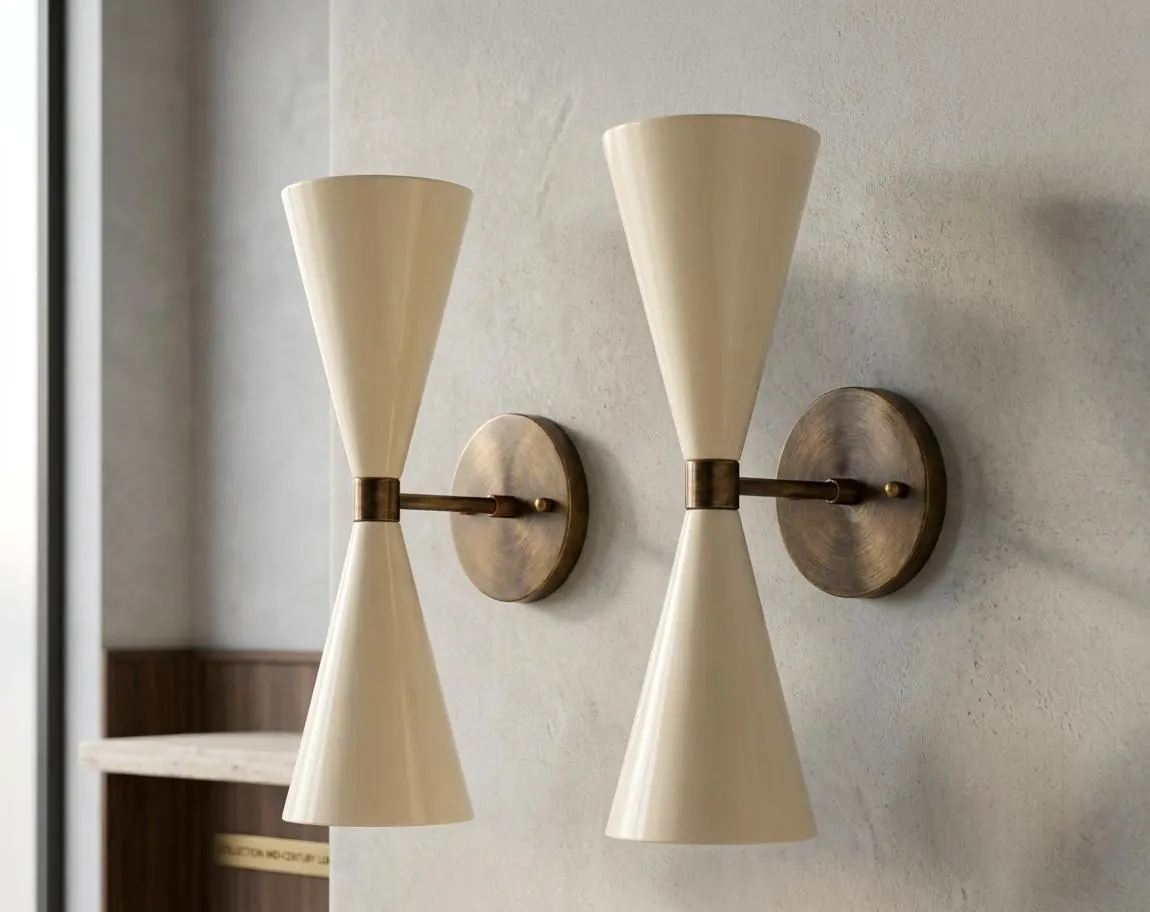
Hallways
Hallways are the easiest place to fall in love with sconces because they do so much with so little. A good pair makes a builder-basic corridor feel like it belongs in an older home with a story.
My favorite hallway approach
- Use opal globes for comfort: harsh light in a hallway makes every transition feel abrupt. Opal glass softens it.
- Choose warm bulbs: 2700K is my sweet spot for that cozy mid-century glow.
- Layer with overhead light if needed: sconces are often ambient. If the hallway is your main thoroughfare, you may still want a ceiling fixture for full brightness.
Where to place them
- At the ends: one at each end makes the hall feel longer and more finished.
- Near artwork: sconces can visually frame a gallery wall moment. If you’re building one, this guide helps: mid-century modern gallery wall.
- By doors: a sconce near a bedroom or bath door reads intentional, like a boutique hotel detail.
Bathrooms
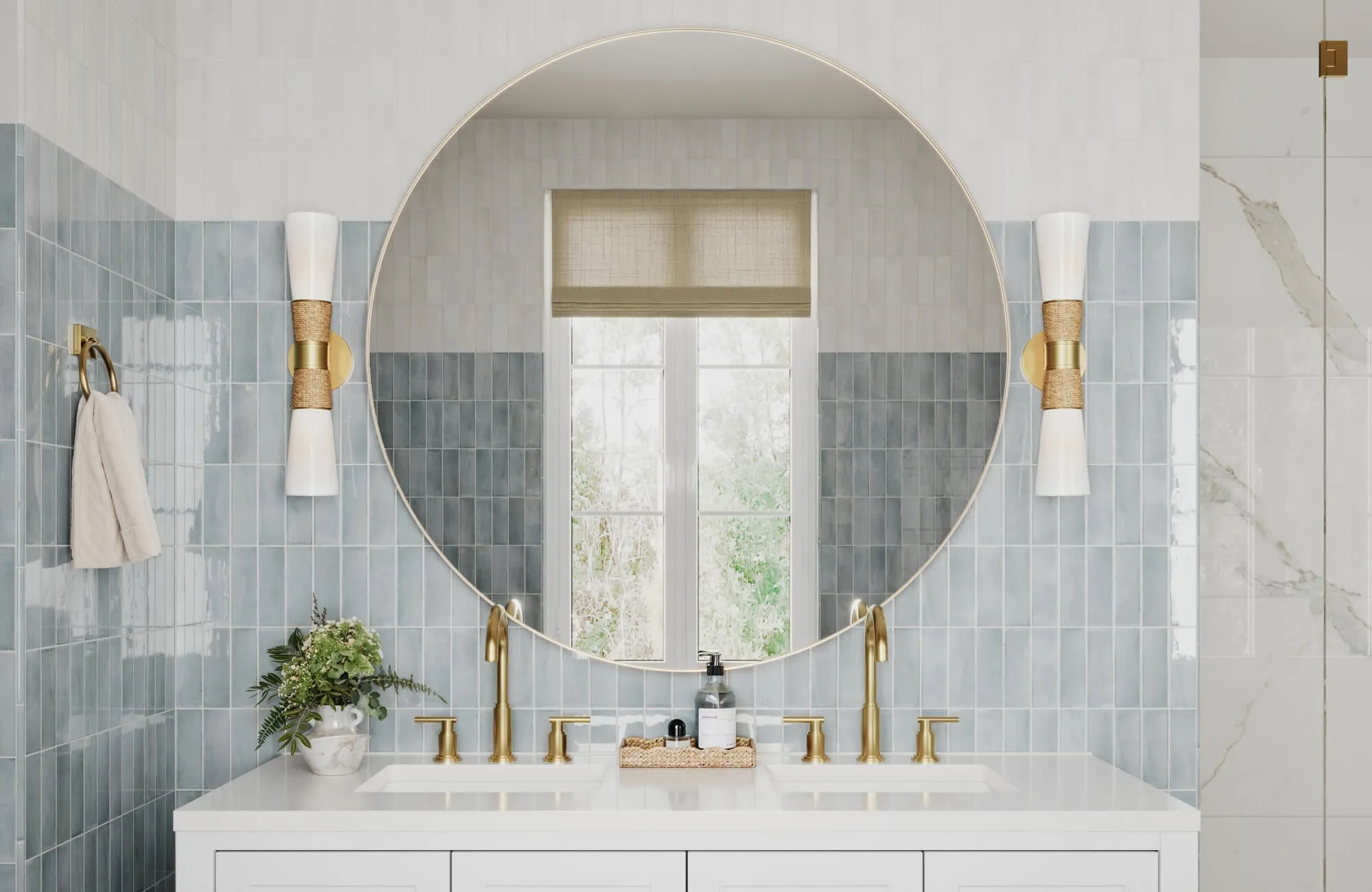
Bathrooms are where globe sconces shine, literally. They give a soft, even glow that makes skin look human and not like you’re about to be interviewed under fluorescent lights.
Mirror lighting that flatters
If you can swing it, two side sconces are the best bathroom move. They reduce shadows on the face way more effectively than a single overhead light.
- On both sides of the mirror: the most flattering option because it lights your face evenly.
- Above the mirror: works when side mounting isn’t possible, but choose a diffuser globe and keep the light warm.
Ratings and safety
- Damp-rated is a good baseline for most bathrooms, especially away from direct spray.
- Some locations require wet-rated fixtures (think near a shower or tub) depending on placement and local electrical code. When in doubt, check the fixture rating requirements for your install zone.
- Use bulbs with good color rendering so paint, tile, and skin tones look accurate. High CRI is a helpful spec to look for.
- Keep glass realistic to clean: clear globes show water spots and dust faster than opal.
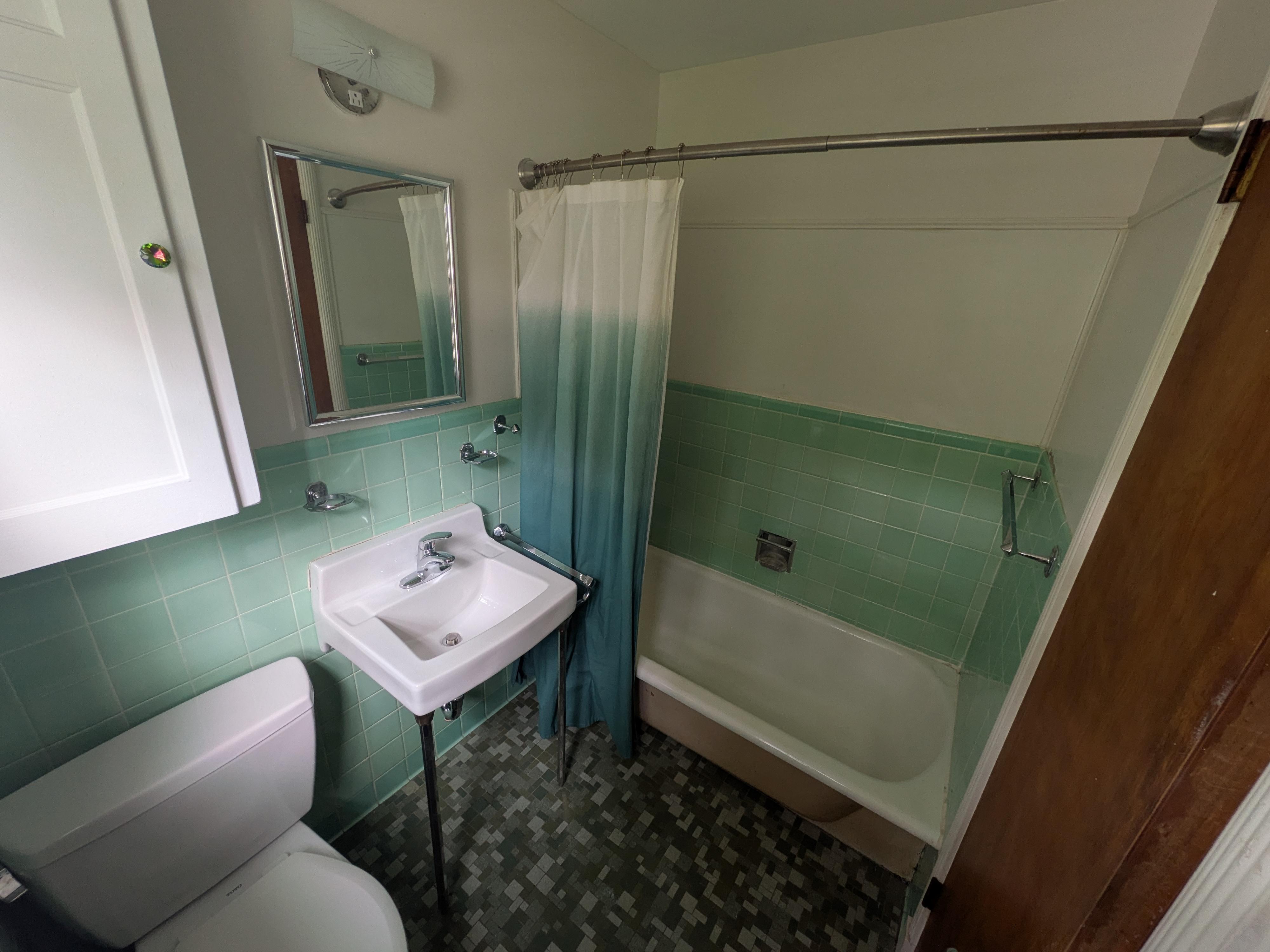
If you’re working around existing tile and want the lighting to feel era-friendly, you might enjoy: mid-century modern bathroom makeover: keeping the vintage tile.
Fireplaces
Putting sconces on either side of a fireplace is one of my favorite “why didn’t we do this sooner” upgrades. It frames the room’s focal point, adds height, and gives you a warm glow for evenings when you don’t want the overhead lights on.
Make them look original
- Match the scale to the surround: chunkier brick or stone can handle a larger globe and a sturdier backplate.
- Respect symmetry: measure carefully so both sides feel balanced, even if the room is slightly imperfect.
- Let the metal tie into the room: if you have brass picture frames, a brass screen, or warm wood tones, brass sconces will look like they belong.
No wiring?
You’ve got options, and none of them require living with a sad, dark fireplace wall.
- Hardwired: the cleanest look. If you’re already patching and painting, this is the moment.
- Plug-in sconces: great for rentals or low-commitment upgrades. Use paintable cord covers to keep it neat, and don’t run cords where they can be pinched or tripped over.
- Battery sconces: fine for mood lighting, but plan for lower brightness and ongoing charging or battery swaps.
Bulbs and brightness
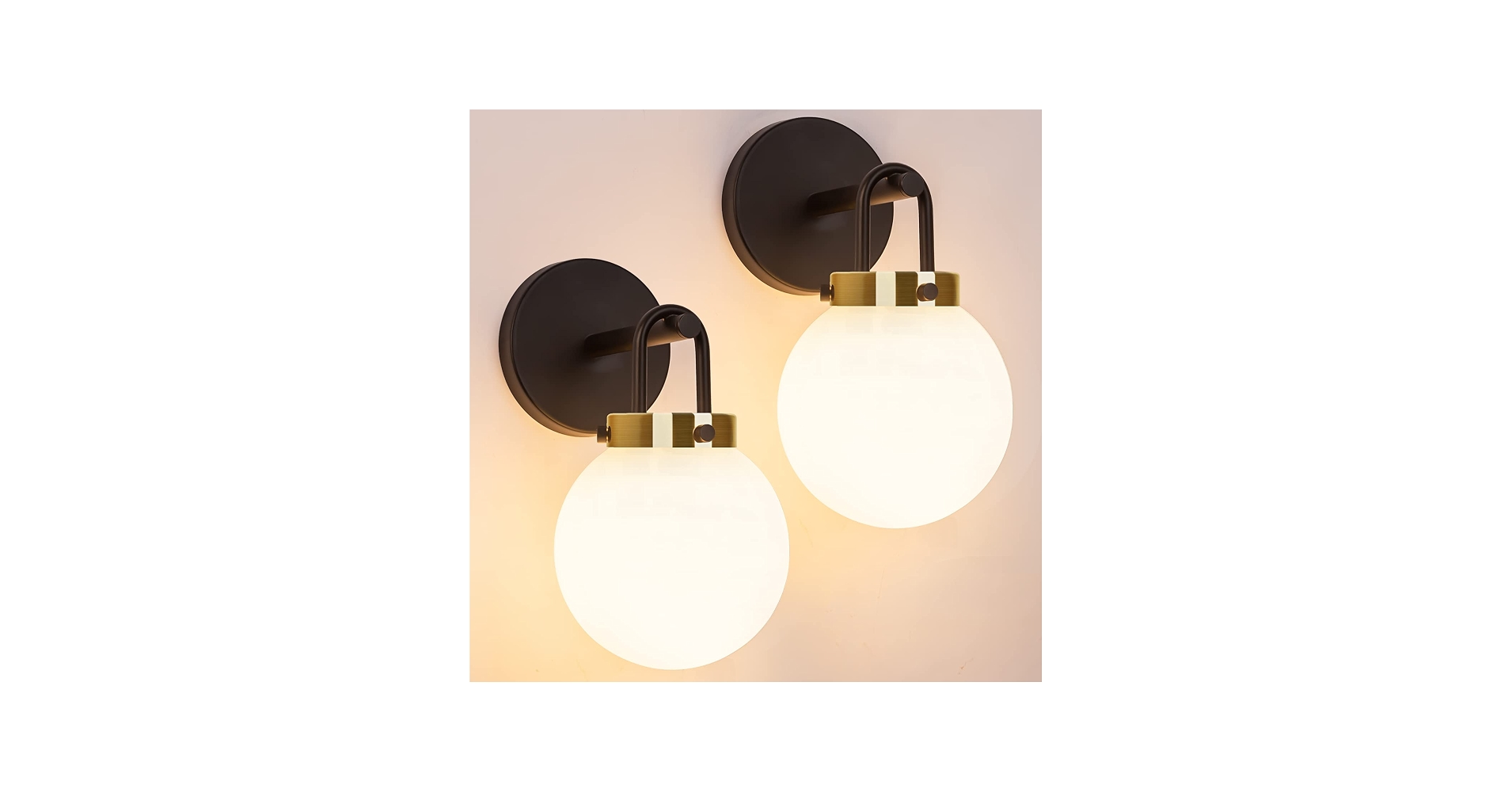
The most beautiful sconce can still feel wrong if the bulb is too cool or too bright. Mid-century lighting looks best when the light reads warm and inviting.
- Color temperature: choose 2700K for a classic warm glow. In bathrooms where you do makeup or shave, some people prefer 3000K, but I still keep it warm when I can.
- Brightness: for ambient sconces, you often want softer output and layered lighting. For vanity tasks, you may want more lumens and two sconces instead of relying on one overhead fixture.
- Dimmers: if you can add one, do. A dimmer makes the same sconces work for mornings and evenings.
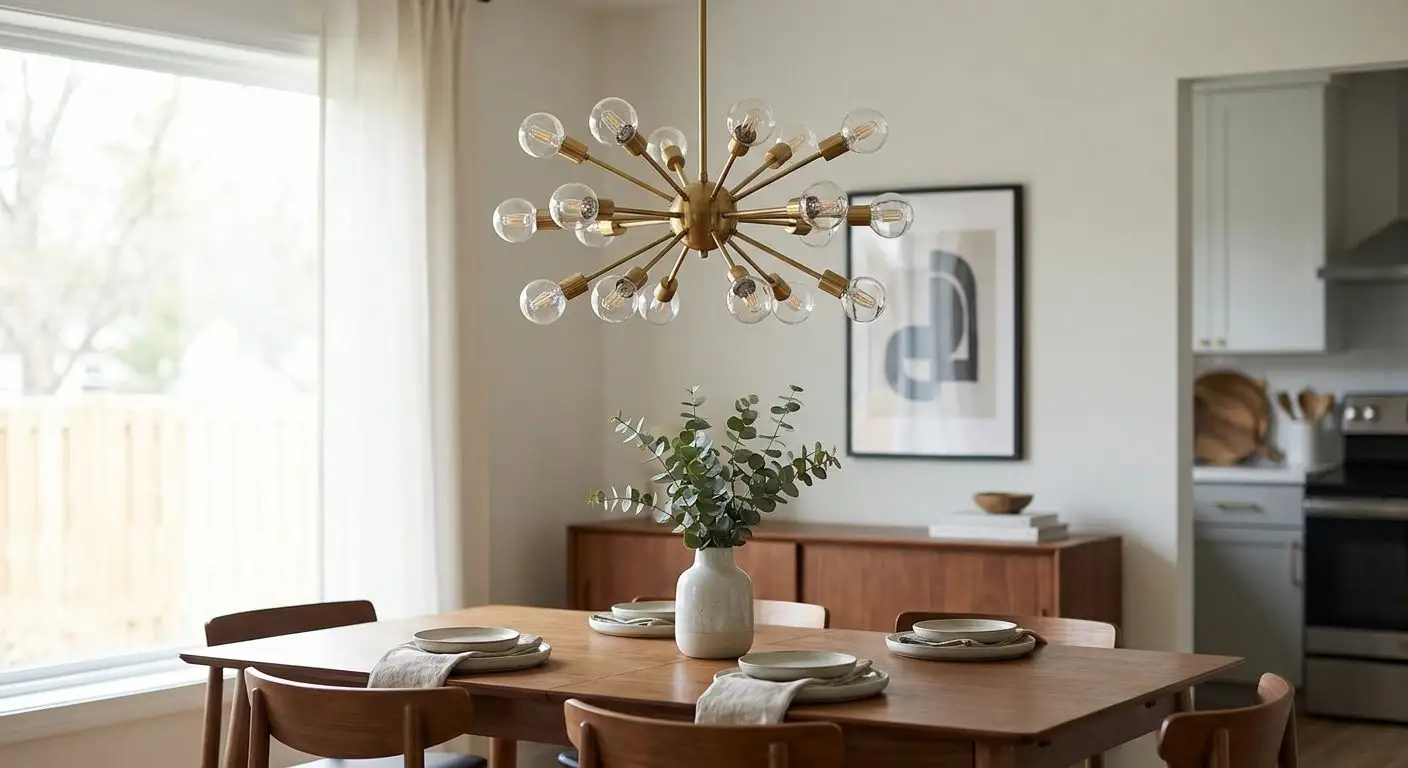
And if you’re pairing sconces with a statement ceiling fixture, sizing matters. This guide can help you avoid the too-small chandelier problem: how to size and hang a Sputnik chandelier.
Install notes
A quick reality check before you order: sconces are simple, but the wall conditions behind them are not always simple.
- Plan for the box: a sconce usually needs an electrical box at the right height and centered where you want the backplate. If you’re retrofitting, an old-work box is common, but wall material and stud placement can change the plan.
- Masonry is its own thing: brick and stone around fireplaces can be trickier than drywall. If you’re not excited to drill into masonry, plug-ins can be the low-drama option.
- Bathrooms may have circuit requirements: GFCI protection and code rules vary by location and situation. When you’re anywhere near water, it’s worth confirming the details.
- When in doubt, hire it out: if you’re not comfortable with electrical work, a licensed electrician can get you a clean, safe install with less stress.
Vintage vs. new
I love true vintage sconces, but I don’t think they’re the only path to a mid-century look. I mix eras constantly in my 1958 ranch because the goal is a home that feels right, not a museum.
When vintage is worth it
- You want original patina and heavier materials.
- You love the thrill of finding something no one else has.
- You’re comfortable checking wiring and budgeting for updates.
When new makes sense
- You need damp or wet ratings for a bathroom location.
- You want plug-and-play installation and consistent quality.
- You need multiple matching sconces for a hallway run.
If you’re shopping secondhand and want to avoid expensive mistakes, start with the basics of identifying what’s truly mid-century: how to date mid-century thrift finds and how to price-check vintage mid-century thrift finds.
Quick checklist
- Finish: satin or aged brass is the easiest to live with day-to-day.
- Glass: opal globes for soft, forgiving light.
- Scale: match the sconce to what it flanks, not just the empty wall.
- Projection: shallower is easier in hallways and tight baths (often 4 to 7 inches is the sweet spot).
- Rating: damp-rated for most bathrooms, wet-rated where required near direct spray (check placement and local code).
- Bulb plan: warm color temperature, decent CRI, dimmer if possible.
- Placement: measure, mark, and step back before committing to holes.
FAQ
How high should I hang mid-century modern wall sconces?
In most spaces, I start around 60 to 66 inches from the floor to the center of the globe or light source, then adjust based on ceiling height and what the sconce is flanking. In taller-ceiling rooms, it’s common to go higher (often closer to 66 to 72 inches). Bathrooms can land a little higher or lower depending on mirror and vanity height.
Are brass and glass globe sconces bright enough for a bathroom?
They can be, especially if you use two sconces on either side of the mirror and choose bulbs with adequate brightness. If you rely on one sconce alone, you may want to layer in overhead lighting for tasks.
Do sconces need to match other metal finishes in the room?
Not perfectly. What matters is that the mix looks intentional. I like repeating each finish at least twice in a space, then choosing one lead metal that shows up most often. If you want to mix confidently, see my guide to mixing metals.
Can I use plug-in sconces to get the look without wiring?
Yes. Plug-in sconces are a great workaround, especially for rentals or rooms where you don’t want to open walls. Take the time to route the cord neatly, avoid trip hazards, and choose a spot near an outlet so you’re not fighting cord length and clutter.